
Can I Eat Soup After Tooth Extraction? Temperature, Texture and Timing Explained
Quick Answer: Can I eat soup after tooth extraction? Yes, for most people. MyHealth Alberta lists thin soup as a good first food, and Nova Scotia Health includes soup for the first two to three days. The key is temperature: let it cool to lukewarm, because hot liquids can restart bleeding, and choose smooth soups before chunky ones.
Soup is one of the first foods people reach for after a dental extraction. It is soft, filling and easy to make ahead. If you are asking can I eat soup after tooth extraction, the official answer is usually yes, with three conditions: it is not hot, it does not need much chewing, and you eat it in a way that does not disturb the blood clot.
This guide explains each condition using official guidance from Alberta, the Canadian Dental Association (CDA), Nova Scotia Health and other public health sources, and notes the one leaflet that disagrees.
Last updated: October 20, 2026. Main sources: MyHealth Alberta tooth extraction pages (current as of July 31, 2024), the CDA’s care after minor oral surgery page, Nova Scotia Health’s After a Dental Extraction guide (September 2026) and SA Dental’s soft food suggestions. Full links are at the end.
Key Takeaways
- Soup is on the list: MyHealth Alberta and Nova Scotia Health both name soup as a soft food.
- Cool it first: hot liquids can restart bleeding (CDA).
- Smooth before chunky: thin or blended soups first; soft noodles and vegetables later.
- Spoon, not straw: no straws for the first few days (MyHealth Alberta).
- Skip spicy, seedy and crunchy toppings such as crackers or crusty bread.
Can I eat soup after tooth extraction? What official guidance says
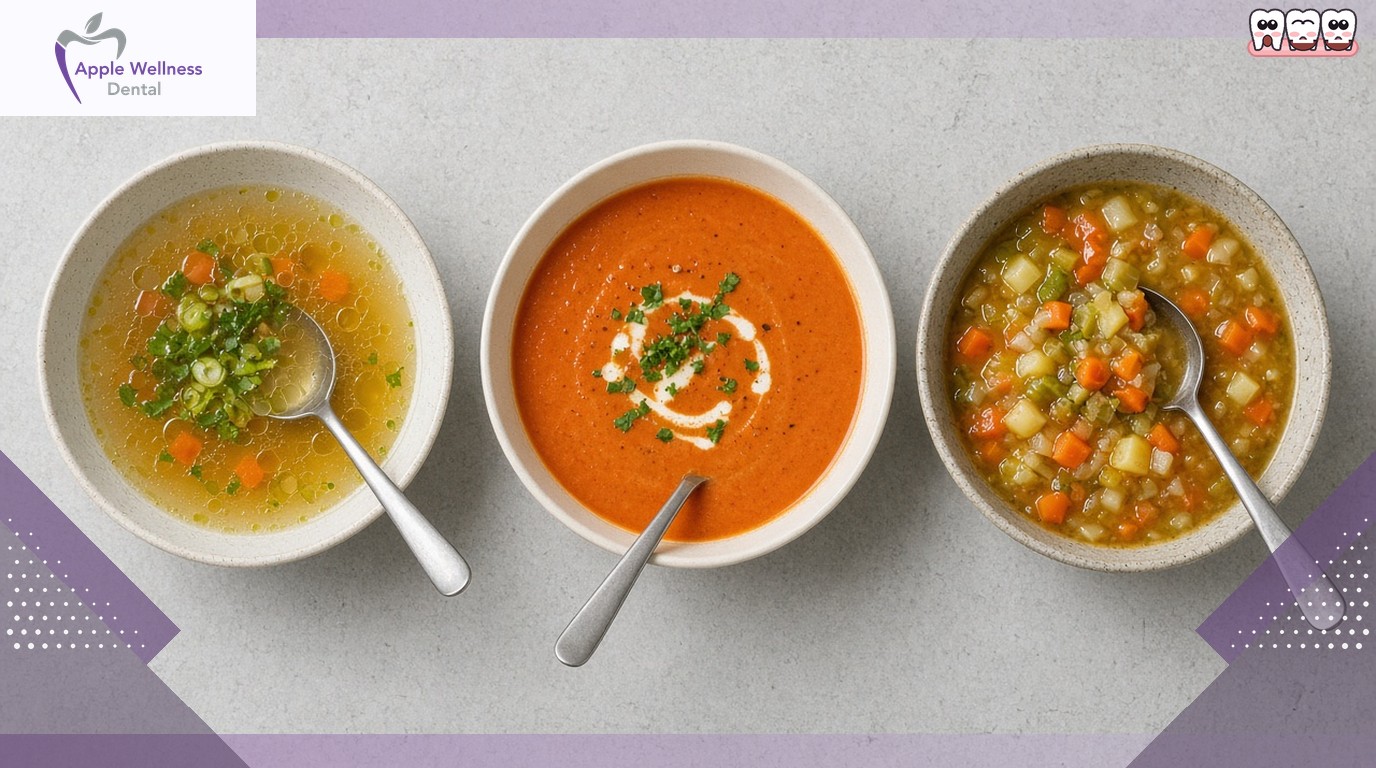
- MyHealth Alberta (wisdom tooth aftercare): eat soft foods, such as gelatin, pudding or a thin soup, and gradually add solid foods as you heal.
- MyHealth Alberta (tooth extraction care): avoid chewing in the area where the tooth was removed until your mouth heals; soft foods like gelatin or soup might be easier to eat and may help you heal.
- The Canadian Dental Association: avoid hot liquids like coffee and tea. If you eat soup, let it cool first.
- Nova Scotia Health: for 24 hours, do not eat hot foods or drink hot liquids; choose cold or lukewarm soft foods. For the first 2 to 3 days, eat softer foods like soup, yogurt, pudding and ice cream.
- SA Dental (South Australia): lists soup (cooled slightly) among its soft food suggestions.
So can I eat soup after tooth extraction? According to these sources, yes. The details below are about making that soup safe for a healing socket.
Why temperature matters more than the recipe
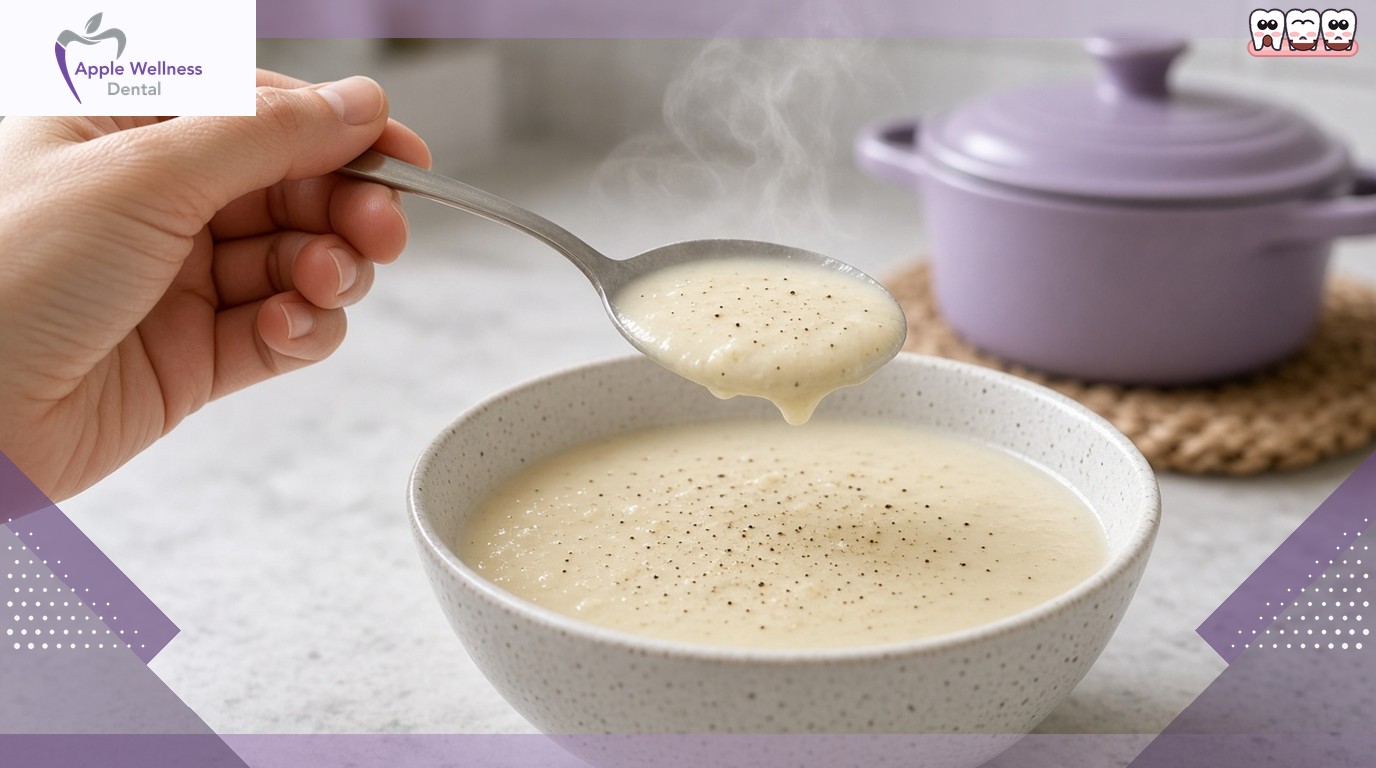
The CDA explains that hot liquids increase the flow of blood, and your wound can start to bleed again. That is why it says to let soup cool first, rather than banning it. Nova Scotia Health puts a time on it: no hot foods or hot liquids for 24 hours.
Numbness is the second reason. The University Hospitals of Leicester says not to eat or drink anything hot while you are numb, because you may bite or burn yourself. A Barts Health NHS leaflet says to avoid anything very hot or very cold while your mouth is numb.
Sources describe the target slightly differently. Nova Scotia Health says cold or lukewarm. NHS Tayside says a soft cold diet is best on day one. SA Dental says cooled slightly. In practice, that means a soup that feels comfortably warm at most, not steaming.
A food-safety note. Health Canada says to bring leftover soups to a full, rolling boil when reheating. If you reheat soup you made ahead, do that first, then let your bowl cool down before eating.
Choosing a soup: smooth, chunky, spicy or seedy
| Type of soup | How it fits the guidance | Tips |
|---|---|---|
| Thin broth or clear soup | MyHealth Alberta names thin soup as a first food. | A good choice for the first evening, once cooled. |
| Smooth, blended soups (squash, potato, lentil) | No pieces to chew, which fits advice to avoid chewing near the site (MyHealth Alberta). | Blend well so there are no hard bits or skins. |
| Soups with soft noodles or vegetables | SA Dental lists well-cooked noodles, pasta, rice and vegetables as soft foods. | Better from day two or three; chew on the other side. |
| Soups with seeds, nuts or crunchy toppings | The NHS says not to eat food that could get stuck in the wound, such as nuts or seeds. SA Dental lists crusty bread among foods to avoid. | Skip croutons, crackers, seeds and crusty bread for now. |
| Spicy soups | SA Dental lists spicy or acidic foods among foods to avoid. Kingston and Richmond NHS also says not to eat spicy food. | Choose mild seasoning until the area heals. |
If you want more ideas beyond soup, see eating mashed potatoes after tooth extraction and what to eat 3 days after tooth extraction.
Where the guidance differs
- Soup or no soup. Almost every source treats soup as a good soft food. The exception we found is an easy-read leaflet from Kingston and Richmond NHS for day-surgery patients, which says on day two: do not eat soup or liquid meals. It does not give a reason. If your instructions say the same, follow them.
- Cold or lukewarm. NHS Tayside says a soft cold diet is best on day one. Nova Scotia Health says cold or lukewarm. The CDA simply says to let soup cool.
- How long to avoid hot food. Nova Scotia Health says 24 hours. The CDA does not give a time limit for hot liquids.
How to eat soup without disturbing the clot
- ☐ Wait until the freezing has worn off.
- ☐ Let the soup cool to lukewarm or cooler.
- ☐ Use a spoon. MyHealth Alberta says not to use a straw for the first few days.
- ☐ Avoid swishing liquid around the area (MyHealth Alberta).
- ☐ Take small spoonfuls (a practical tip) and keep food on the side away from the extraction (Barts Health; Western Australia).
- ☐ Do not rinse your mouth after eating for the first 24 hours (CDA).
- ☐ After 24 hours, rinse gently with warm salt water after meals, as Western Australia’s Dental Health Services suggest.
Our guide on when you can drink from a straw covers the straw question in more detail.
A soup timeline for the first week
| When | Soup | Notes |
|---|---|---|
| Day of extraction (after the freezing wears off) | Thin or smooth soup, cool or lukewarm. | No hot food or drinks for 24 hours (Nova Scotia Health). |
| Days 1 to 3 | Smooth or blended soups; very soft noodles if comfortable. | Softer foods for the first 2 to 3 days (Nova Scotia Health). |
| Days 4 to 7 | Soups with soft-cooked vegetables, beans or rice. | Slowly return to your usual eating; do not chew directly on the site until it feels comfortable (Nova Scotia Health). |
| Week 2 | Most soups, as comfort allows. | SA Dental says most people return to their regular diet within 1 to 2 weeks. |
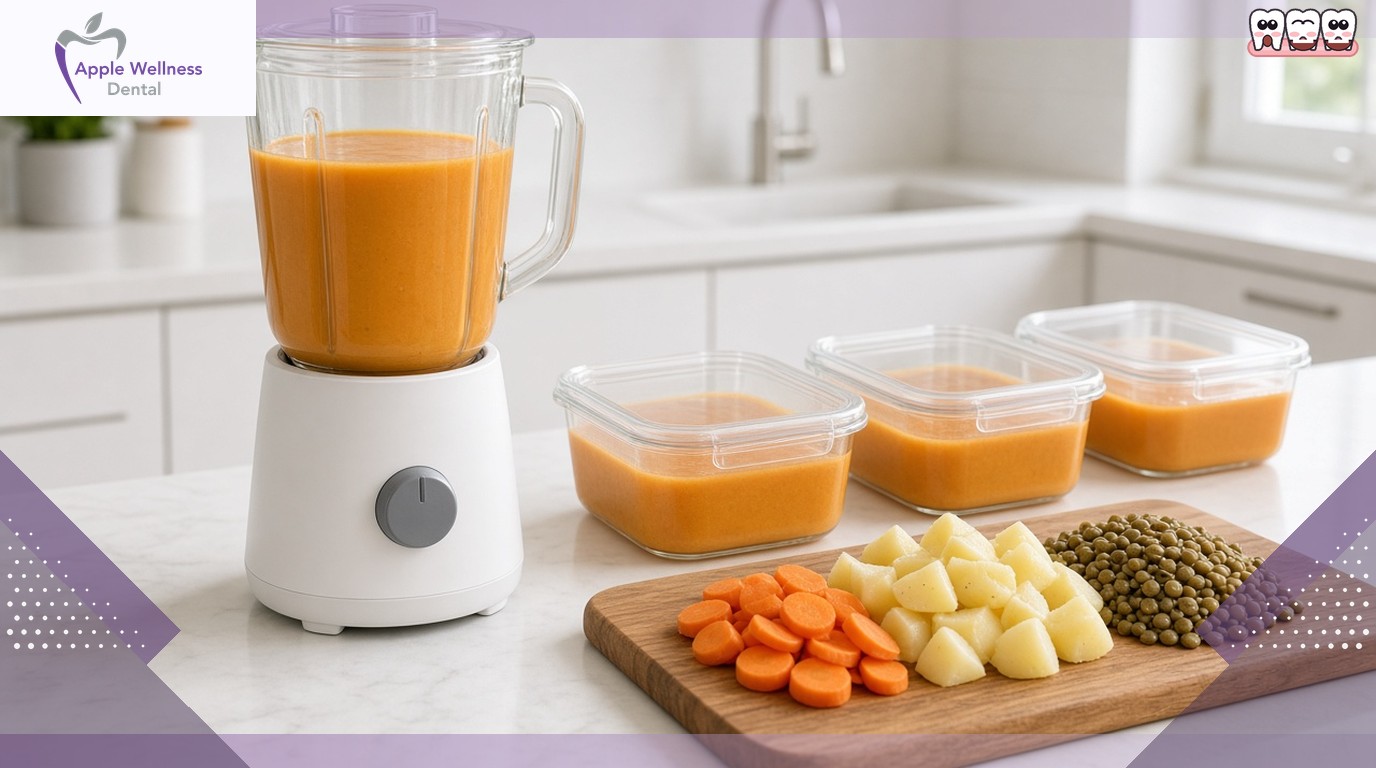
Make soup work harder. SA Dental notes that protein, vitamins A and C and iron are essential for tissue repair, and suggests choosing nutrient-rich options. Blended lentil or bean soups and vegetable soups are easy ways to add these, and SA Dental lists beans, well-cooked vegetables and tofu as soft foods.
Cooking ahead. Health Canada says to refrigerate leftovers promptly in shallow containers so they cool quickly, and to eat refrigerated leftovers within 2 to 3 days or freeze them.
Hypothetical example: planning soup for recovery
Hypothetical example (not a real patient): Morgan has a lower molar removed on a Monday. On Sunday, Morgan makes a pot of blended squash soup, cools it in shallow containers and refrigerates it. On Monday evening, once the freezing has worn off, Morgan reheats a portion to a boil, then waits until the bowl is lukewarm and eats it slowly with a spoon, without crackers. By Thursday, Morgan adds a soup with soft noodles and vegetables, chewing on the other side.
When soup is not enough: warning signs
- You are too sick to your stomach to drink any fluids (MyHealth Alberta).
- Bleeding starts again and does not stop with firm pressure on damp gauze.
- Pain or swelling keeps getting worse after the first 2 to 3 days, or you have a fever (Nova Scotia Health).
- Severe pain a few days later, sometimes reaching the ear, can be dry socket (MyHealth Alberta).
Extraction aftercare in Airdrie
Apple Wellness Dental has provided dental care in Airdrie since 1993 from 229 1st Street SW. Our general dentists, Dr. Sanjay Rajpal and Dr. Hammad Qasim, provide tooth extractions and emergency dental treatment. If you are unsure whether you can eat soup after tooth extraction in your own case, call us at (587) 332-6767.
For questions about eating after surgery, Health Link 811 has registered dietitians available Monday to Friday, 8:00 a.m. to 4:00 p.m., and registered nurses 24/7. We follow the Alberta Dental Fee Guide, bill most private insurers directly and accept the Canadian Dental Care Plan. More soft-food ideas are in our guide to what you can eat after wisdom tooth extraction and our first-48-hours eating plan.
Frequently asked questions
Can I eat soup the same day as a tooth extraction?
Usually yes, once the freezing has worn off. MyHealth Alberta lists thin soup as a soft food to start with. Let it cool to lukewarm and eat it with a spoon.
Can I have hot soup after a tooth extraction?
Not at first. The Canadian Dental Association says hot liquids increase blood flow and can restart bleeding, so let soup cool first. Nova Scotia Health says no hot foods or hot liquids for 24 hours.
Can I eat chicken noodle soup after tooth extraction?
Often, once it has cooled and the noodles are very soft. SA Dental lists well-cooked noodles as a soft food. Chew small pieces on the other side, and skip it if chewing is uncomfortable.
Can I drink soup through a straw?
No. MyHealth Alberta says not to use a straw for the first few days, because sucking can loosen the blood clot. Use a spoon.
Can I eat soup after wisdom tooth extraction?
Yes, the same rules apply: cool, smooth and eaten with a spoon. After wisdom tooth surgery, some NHS trusts say you may need a soft diet for a week or so, so soup can stay on the menu longer.
Why does one hospital leaflet say not to eat soup?
An easy-read leaflet from Kingston and Richmond NHS says not to eat soup or liquid meals on day two, without giving a reason. Most other official sources list soup as a good soft food. Follow your own dentist’s instructions.
Sources
- MyHealth Alberta, “Wisdom Tooth Extraction: What to Expect at Home” (current as of July 31, 2024): myhealth.alberta.ca
- MyHealth Alberta, “Tooth Extraction: Care Instructions” (current as of July 31, 2024): myhealth.alberta.ca
- MyHealth Alberta, “Dry Socket” (current as of July 31, 2024): myhealth.alberta.ca
- Canadian Dental Association, “Care after Minor Oral Surgery” (undated): cda-adc.ca
- Nova Scotia Health, “After a Dental Extraction” patient and family guide (September 2026): nshealth.ca
- SA Dental (Government of South Australia), “Soft food suggestions – post tooth extraction or dental surgery” (undated): dental.sa.gov.au
- University Hospitals of Leicester NHS Trust, “Having wisdom teeth taken out using local anaesthetic” (last reviewed August 2026): leicestershospitals.nhs.uk
- Barts Health NHS Trust, “Caring for your mouth after a dental extraction” (April 2012): bartshealth.nhs.uk
- NHS Tayside, “Advice following minor oral surgery or extraction of teeth (Local Anaesthetic)” (reviewed May 2024): nhstayside.scot.nhs.uk
- Kingston and Richmond NHS Foundation Trust, “Going home after having a tooth out in the Day Surgery Unit (Easy Read)” (last updated October 23, 2024): kingstonandrichmond.nhs.uk
- Government of Western Australia, North Metropolitan Health Service Dental Health Services, “Instructions following tooth extraction” (DHS-14, version 09/25): dental.wa.gov.au
- NHS, “Wisdom tooth removal” (last reviewed June 12, 2024): nhs.uk
- Health Canada, “Food safety tips for leftovers” (undated): canada.ca
- Primary Care Alberta, “Health Link 811” (undated): albertahealthservices.ca
- Government of Canada, “Canadian Dental Care Plan: What is covered” (undated): canada.ca
Apple Wellness Dental
Dental care in Airdrie, Alberta. This article is general education and does not replace an examination by a dental professional or the aftercare instructions your dentist gives you. It is not medical, legal, tax or financial advice.
Have a question about eating after an extraction? Book a call or Contact Us, or call 587-332-6767.