
How Soon After Tooth Extraction Can I Eat? An Hour-by-Hour Plan for the First 48 Hours
Quick Answer: How soon after tooth extraction can I eat? Plan your first soft, lukewarm meal for when the gauze has controlled the bleeding and the freezing has worn off, often a few hours later. Eat small spoonfuls on the other side, skip straws, rinsing and hot drinks on day one, and keep food soft for at least two to three days.
If you are wondering how soon after tooth extraction can I eat, you probably want a plan, not a lecture. This guide walks through the first 48 hours in time blocks: what to do with the gauze, how to wait out the freezing, what your first meal should look like, and how to add texture on day two.
It is built from official aftercare instructions from Alberta, the Canadian Dental Association (CDA), Nova Scotia Health and NHS hospital trusts. If you want to know how the timing changes for simple, surgical and wisdom tooth extractions, read our companion guide on how soon you can eat after tooth extraction by procedure type.
Last updated: October 20, 2026. Main sources: MyHealth Alberta tooth extraction pages, the CDA’s care after minor oral surgery page, Nova Scotia Health’s After a Dental Extraction guide (September 2026) and NHS hospital trust leaflets. Full links are at the end.
Key Takeaways
- Hour 0 to 1: gauze in, firm pressure, no food.
- Hours 1 to 4: wait for the freezing to wear off; rest with your head raised.
- First meal: soft, cool or lukewarm, on the other side, from a spoon or cup.
- Rest of day one: no rinsing, straws, hot drinks, alcohol or smoking.
- Hours 24 to 48: gentle salt-water rinses after meals and more soft foods.
How soon after tooth extraction can I eat? The first-48-hours plan at a glance
Use this table as a checklist. The times are approximate, because freezing and bleeding vary from person to person.
| Time after extraction | What to do | Food and drink | Based on |
|---|---|---|---|
| 0 to 1 hour | Bite firmly on the gauze. Rest. | Nothing yet. | CDA; MyHealth Alberta |
| 1 to 4 hours | Wait for the freezing to wear off. Ice on the cheek. Head propped up. | Only when no longer numb, if your dentist allows: cool water from a cup. | UHD and Barts NHS leaflets; Western Australia Dental Health Services; MyHealth Alberta |
| First meal | Gauze out. Chew on the other side. | Gelatin, pudding, thin soup, yogurt, cool or lukewarm. | MyHealth Alberta; Nova Scotia Health |
| 4 to 24 hours | No rinsing, straws, hot drinks, alcohol or smoking. Brush other teeth carefully. | More soft, cool or lukewarm food and fluids. | CDA; MyHealth Alberta; Nova Scotia Health |
| 24 to 48 hours | Start gentle warm salt-water rinses, especially after meals. | Eggs, pasta, bananas and other soft foods. | CDA; Western Australia; Nova Scotia Health |
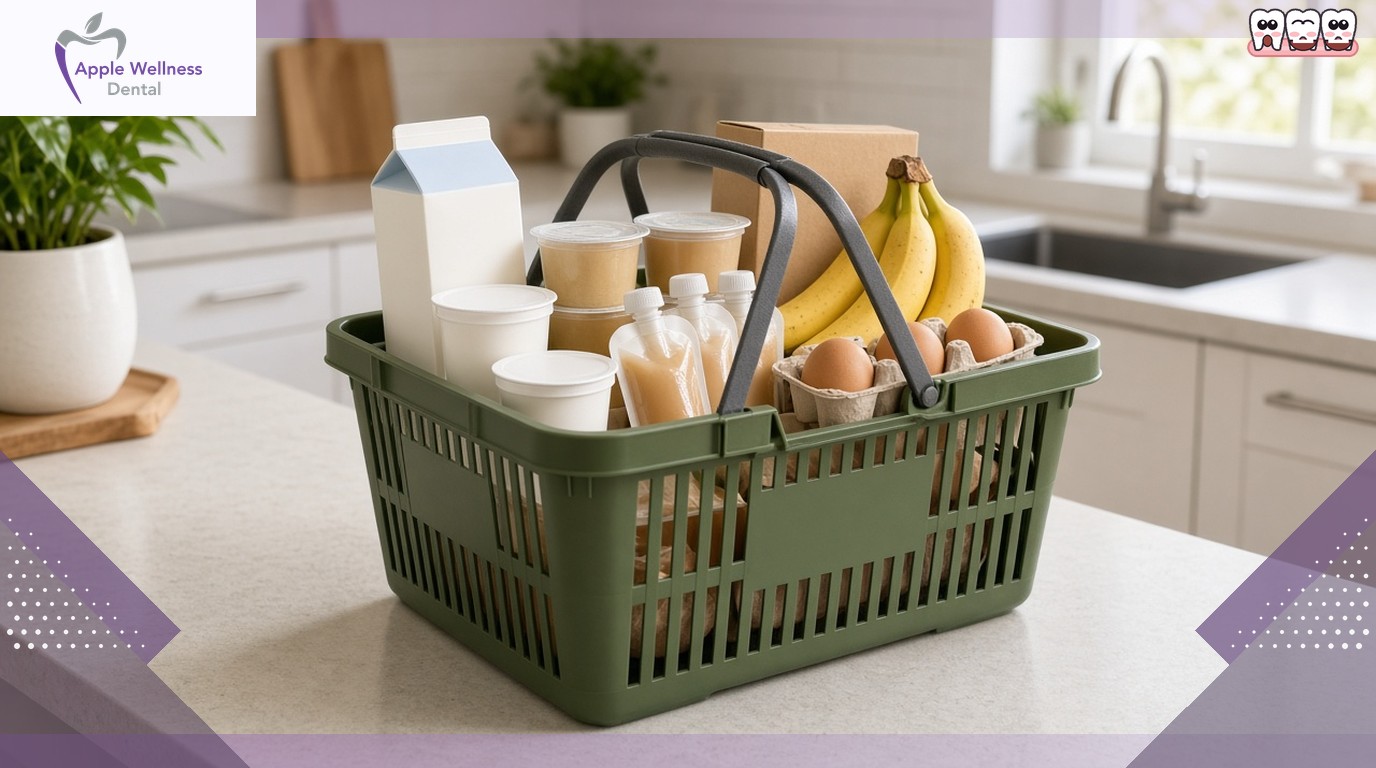
Before your appointment: stock your kitchen
Shopping before the extraction means you will not be tempted to eat something crunchy on the way home. Foods named in official sources include:
- ☐ Gelatin, pudding and thin soup (MyHealth Alberta).
- ☐ Yogurt and ice cream (Nova Scotia Health).
- ☐ Eggs, pasta and bananas, plus milk, milkshakes and juice (CDA).
- ☐ Pureed fruit, mashed potatoes, well-cooked vegetables, porridge, cottage cheese and tofu (SA Dental, South Australia).
- ☐ Gauze pads, a cold pack and the clinic’s phone number.
For one popular option, see eating mashed potatoes after tooth extraction, and for a full list, see what you can eat after wisdom tooth extraction.
Hour 0 to 1: gauze first, food later
The Canadian Dental Association says the gauze pad placed after surgery should stay in for an hour, no matter how soggy it becomes, with firm and constant pressure from closing your teeth on it. If you are still bleeding after an hour, put on a new pad for another hour. Do not chew on the gauze or suck on the wound.
Instructions vary on timing. Western Australia’s Dental Health Services say to bite down for 30 minutes. MyHealth Alberta says to change the pad every 30 to 60 minutes until the bleeding stops, that you may eat and drink between gauze changes, and that keeping gauze in too long or talking with it in place can make you bleed more. More detail is in our guide on how long to keep gauze in.
Hours 1 to 4: waiting out the freezing
The University Hospitals Dorset NHS leaflet says local anaesthetic normally takes 90 minutes to four hours to wear off. It suggests taking painkillers such as paracetamol (acetaminophen) or ibuprofen before the numbness wears off, only if they are safe for you. A Barts Health NHS leaflet puts numbness at two or three hours.
Western Australia’s leaflet says not to eat or drink while you are numb. MyHealth Alberta warns that while you are frozen you can bite your tongue, cheek or lip. Use this time to rest:
- Prop your head up with pillows rather than lying flat, which may prolong bleeding (MyHealth Alberta).
- Put ice or a cold pack on your cheek for 10 to 20 minutes at a time, with a thin cloth against your skin (MyHealth Alberta).
- Rest. The CDA says not to strain yourself for 2 full days after surgery.
Your first meal: a step-by-step checklist
- ☐ Normal feeling is back in your lip, cheek and tongue.
- ☐ Bleeding has settled and the gauze is out.
- ☐ The food is soft and cool or lukewarm. Nova Scotia Health says no hot foods or hot liquids for 24 hours.
- ☐ You chew on the side away from the extraction (Barts; Western Australia).
- ☐ You drink from a cup, not a straw. MyHealth Alberta says sucking on a straw can loosen the blood clot.
- ☐ You do not swish liquid around the area (MyHealth Alberta).
- ☐ You take small spoonfuls and eat slowly. This is a practical tip, not a quote from a source.
- ☐ If pain medicine upsets your stomach, take it after meals unless told otherwise (MyHealth Alberta).
Hours 4 to 24: the rest of day one
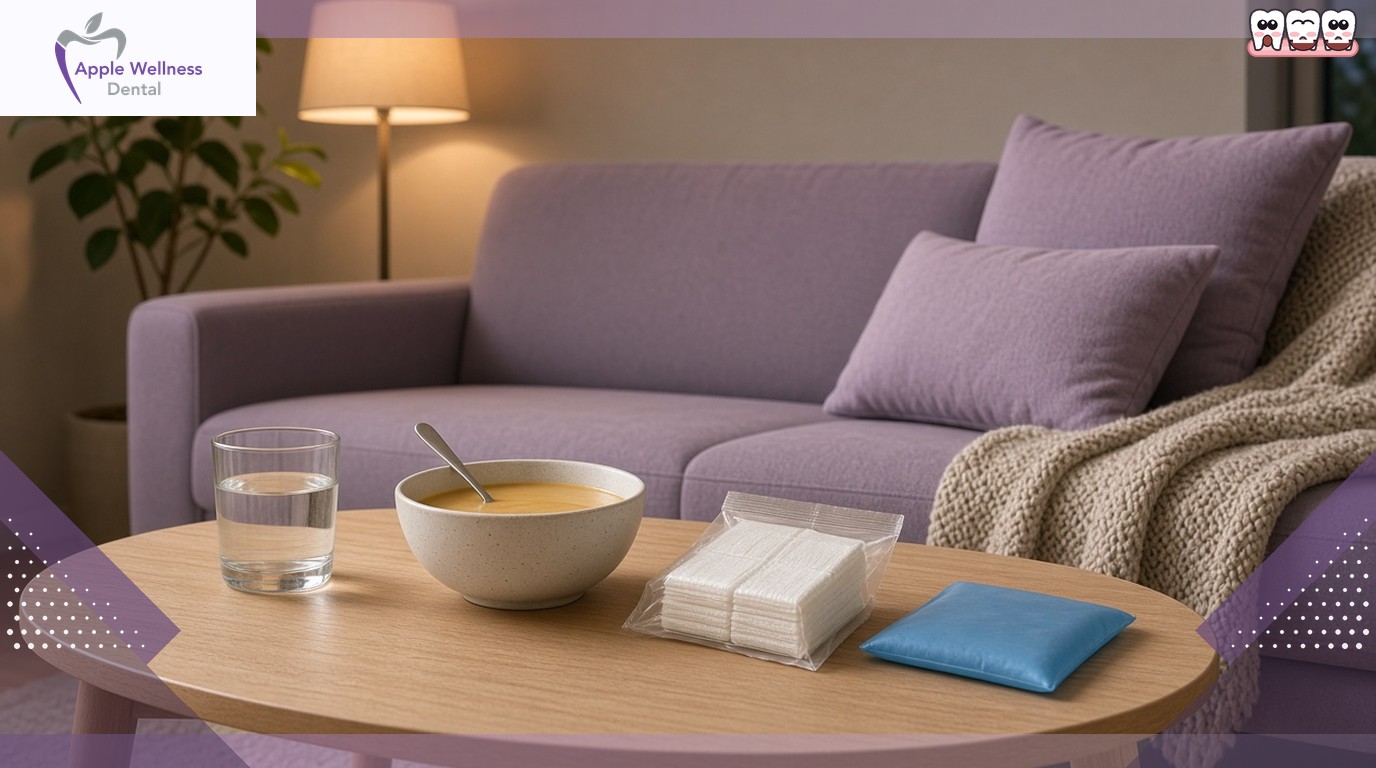
- No rinsing. The CDA says not to rinse your mouth within the first 24 hours, even if there is a bad taste.
- No hot drinks. The CDA says hot liquids like coffee and tea increase blood flow and can restart bleeding. Let soup cool first.
- No alcohol or smoking. MyHealth Alberta says not to smoke for at least 24 hours. The CDA advises avoiding alcohol and tobacco for 2 weeks.
- Brushing. The CDA says to brush and floss as usual but stay away from the wound. East Sussex Healthcare NHS says not to brush for the first 8 hours.
- Sleep. Keep your head raised. Nova Scotia Health says a few spots of blood on your pillow the next morning are normal.
If you need a second or third soft meal tonight, repeat the same checklist. Cooled, smooth soup is a common choice; see our guide on eating soup after tooth extraction.
Hours 24 to 48: adding more texture
A full day after surgery, the CDA says to rinse gently with warm water, and your dentist may suggest adding 1/2 teaspoon of salt to a cup of water, 4 or 5 times a day for 3 or 4 days. Western Australia’s leaflet suggests rinsing after meals and before bed for 7 days. Nova Scotia Health says to let the water flow out of your mouth instead of spitting forcefully.
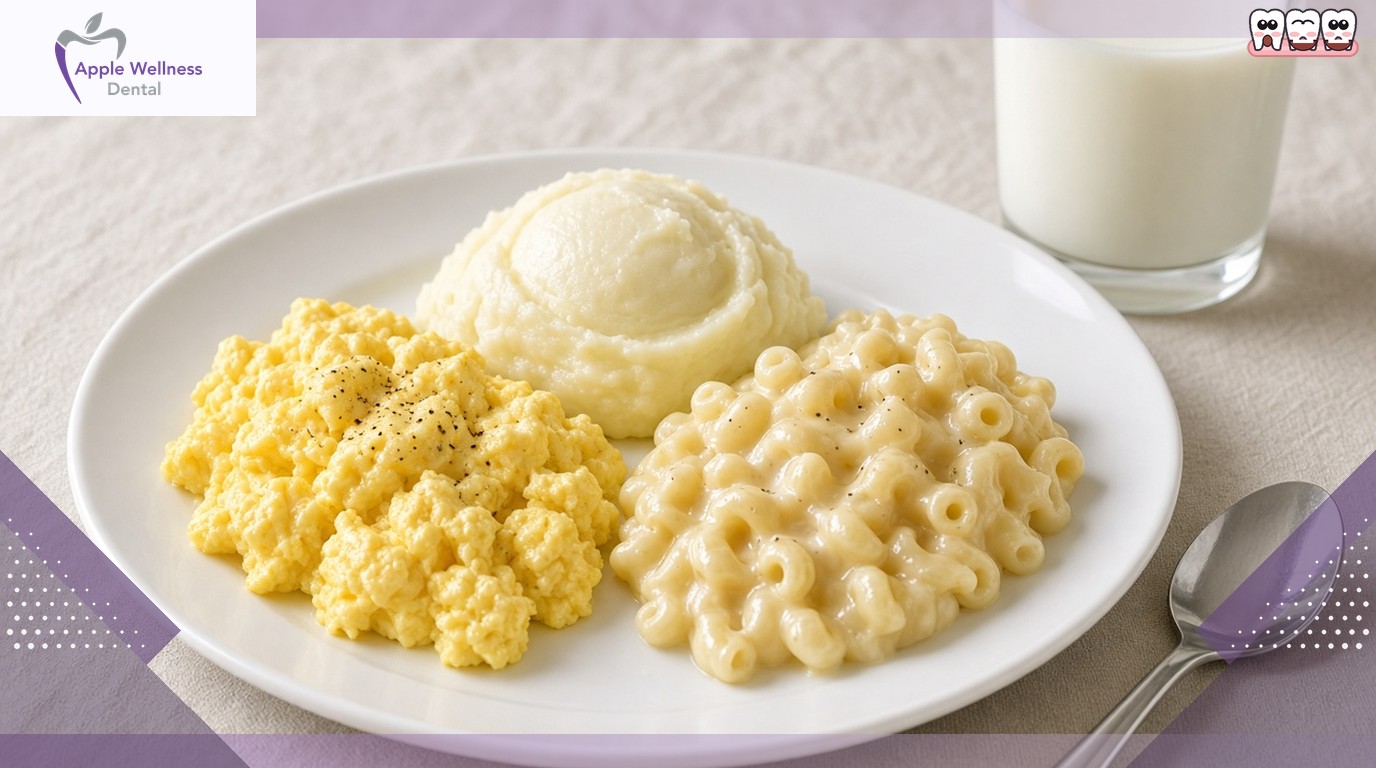
For food, Nova Scotia Health advises softer foods for the first 2 to 3 days. The CDA suggests foods that are easy to chew, such as eggs, pasta and bananas. SA Dental’s list of foods to avoid includes hard or crunchy foods, sticky or chewy foods, spicy or acidic foods, hot foods and drinks, alcohol and fizzy drinks.
Expect some change in how you feel. Nova Scotia Health says swelling often gets worse 2 to 3 days after the procedure and then starts to get better. From the second day, the CDA suggests a warm compress instead of a cold one.
If something goes wrong while eating
- Bleeding starts again. Nova Scotia Health says to wash your hands, roll 2 to 3 pieces of damp gauze into small pads, place them over the site and bite down firmly for 20 to 30 minutes without checking. See also how to stop bleeding after wisdom tooth extraction.
- Food gets stuck. After the first 24 hours, rinse gently with salt water (Nova Scotia Health). Do not poke the socket with your tongue or fingers.
- Nausea. Nova Scotia Health says nausea from sedation or pain medicine should get better within 24 to 48 hours. Drink fluids as you are able and rest.
- Call your dental office if bleeding does not stop with pressure, you cannot keep fluids down, or pain or swelling is getting worse instead of better.
Hypothetical example: a first-day eating plan
Hypothetical example (not a real patient): Alex has a lower tooth removed at 2 p.m. Alex bites on the gauze until 3 p.m., then rests on the couch with a cold pack. By about 5 p.m., the lip feels normal and the bleeding has settled, so Alex has lukewarm thin soup and pudding, chewing on the other side and sipping water from a cup. Alex skips rinsing that night. The next day, Alex starts salt-water rinses after meals and adds scrambled eggs and soft pasta.
Extraction aftercare in Airdrie
Apple Wellness Dental has provided dental care in Airdrie since 1993 from 229 1st Street SW. Our general dentists, Dr. Sanjay Rajpal and Dr. Hammad Qasim, provide tooth extractions and emergency dental treatment, with same-day emergency appointments available. If you are unsure how soon after tooth extraction you can eat in your own case, call us at (587) 332-6767 during office hours.
After hours. Health Link 811 is a free 24/7 line where registered nurses help you decide if you need urgent care. Its registered dietitians (Monday to Friday, 8:00 a.m. to 4:00 p.m.) answer questions about eating after surgery. For emergencies, call 911.
Coverage. We follow the Alberta Dental Fee Guide, bill most private insurers directly and accept the Canadian Dental Care Plan, which lists removal of teeth and roots among the services it can cover.
Frequently asked questions
How soon after tooth extraction can I eat my first meal?
Once the gauze has controlled the bleeding and the freezing has worn off. NHS leaflets say numbness usually lasts about 90 minutes to 4 hours. Make the first meal soft and cool or lukewarm.
Can I eat with gauze in my mouth?
No. Take the gauze out to eat. MyHealth Alberta says you may eat and drink between gauze changes, and to stop using gauze once you cannot see any bleeding.
What should my first meal be?
Something soft that needs little chewing, served cool or lukewarm. MyHealth Alberta suggests gelatin, pudding or thin soup, and Nova Scotia Health lists soup, yogurt, pudding and ice cream.
Can I rinse my mouth after eating on the first day?
Not for the first 24 hours. The Canadian Dental Association says not to rinse within the first 24 hours, then to rinse gently with warm water, with or without a little salt.
When can I eat normally again?
Nova Scotia Health suggests softer foods for the first 2 to 3 days and then a slow return to your usual eating as you heal. After surgical or wisdom tooth removal, some leaflets suggest a soft diet for a week or more.
What if eating makes the bleeding start again?
Place damp gauze over the site and bite down firmly for 20 to 30 minutes without checking. Call your dental office if bleeding does not stop with pressure.
Sources
- Canadian Dental Association, “Care after Minor Oral Surgery” (undated): cda-adc.ca
- MyHealth Alberta, “Tooth Extraction” (adapted by Alberta Health Services, adaptation date 12/02/2025): myhealth.alberta.ca
- MyHealth Alberta, “Tooth Extraction: Care Instructions” (current as of July 31, 2024): myhealth.alberta.ca
- MyHealth Alberta, “Wisdom Tooth Extraction: What to Expect at Home” (current as of July 31, 2024): myhealth.alberta.ca
- Nova Scotia Health, “After a Dental Extraction” patient and family guide (September 2026): nshealth.ca
- Government of Western Australia, North Metropolitan Health Service Dental Health Services, “Instructions following tooth extraction” (DHS-14, version 09/25): dental.wa.gov.au
- University Hospitals Dorset NHS Foundation Trust, “Aftercare instruction after wisdom tooth removal” (March 2026): uhd.nhs.uk
- Barts Health NHS Trust, “Caring for your mouth after a dental extraction” (April 2012): bartshealth.nhs.uk
- East Sussex Healthcare NHS Trust, “Instructions following removal of teeth” (June 2025): esht.nhs.uk
- SA Dental (Government of South Australia), “Soft food suggestions – post tooth extraction or dental surgery” (undated): dental.sa.gov.au
- Primary Care Alberta, “Health Link 811” (undated): albertahealthservices.ca
- Government of Canada, “Canadian Dental Care Plan: What is covered” (undated): canada.ca
Apple Wellness Dental
Dental care in Airdrie, Alberta. This article is general education and does not replace an examination by a dental professional or the aftercare instructions your dentist gives you. It is not medical, legal, tax or financial advice.
Have an extraction coming up or a question about eating afterwards? Book a call or Contact Us, or call 587-332-6767.