
How Soon Can You Eat After Tooth Extraction? Timing by Procedure Type
Quick Answer: How soon can you eat after tooth extraction? Usually once the freezing wears off and bleeding settles. NHS leaflets say numbness lasts about 90 minutes to four hours, and some advise waiting one to two hours. Start with cool or lukewarm soft food, chew on the other side, and expect a longer soft diet after surgery.
How soon can you eat after tooth extraction depends less on the clock and more on three things: whether the freezing has worn off, how the bleeding is settling, and what kind of extraction you had. A simple extraction and the surgical removal of an impacted wisdom tooth lead to very different recoveries.
This guide compares official guidance from Alberta, the Canadian Dental Association (CDA), Nova Scotia Health and several NHS hospital trusts by procedure type. For an hour-by-hour plan for your first meal, see our companion guide, how soon after tooth extraction can I eat: the first 48 hours.
Last updated: October 20, 2026. Main sources: MyHealth Alberta tooth extraction pages, the Canadian Dental Association’s care after minor oral surgery page, Nova Scotia Health’s After a Dental Extraction guide (September 2026) and NHS hospital trust leaflets. Full links are at the end.
Key Takeaways
- Freezing sets the clock: numbness usually lasts about 90 minutes to 4 hours (UHD NHS leaflet) or 2 to 3 hours (Barts Health).
- Some leaflets say wait: do not eat or drink while numb (Western Australia), or for 1 to 2 hours (West Hertfordshire NHS).
- Day one is cool and soft: no hot foods or hot liquids for 24 hours (Nova Scotia Health).
- Surgery means a longer soft diet: anything from a few days to a week or two, depending on the source and the procedure.
- Sedation or general anaesthetic: eat when you feel ready (NHS), but the freezing rules still apply.
How soon can you eat after tooth extraction? The short answer
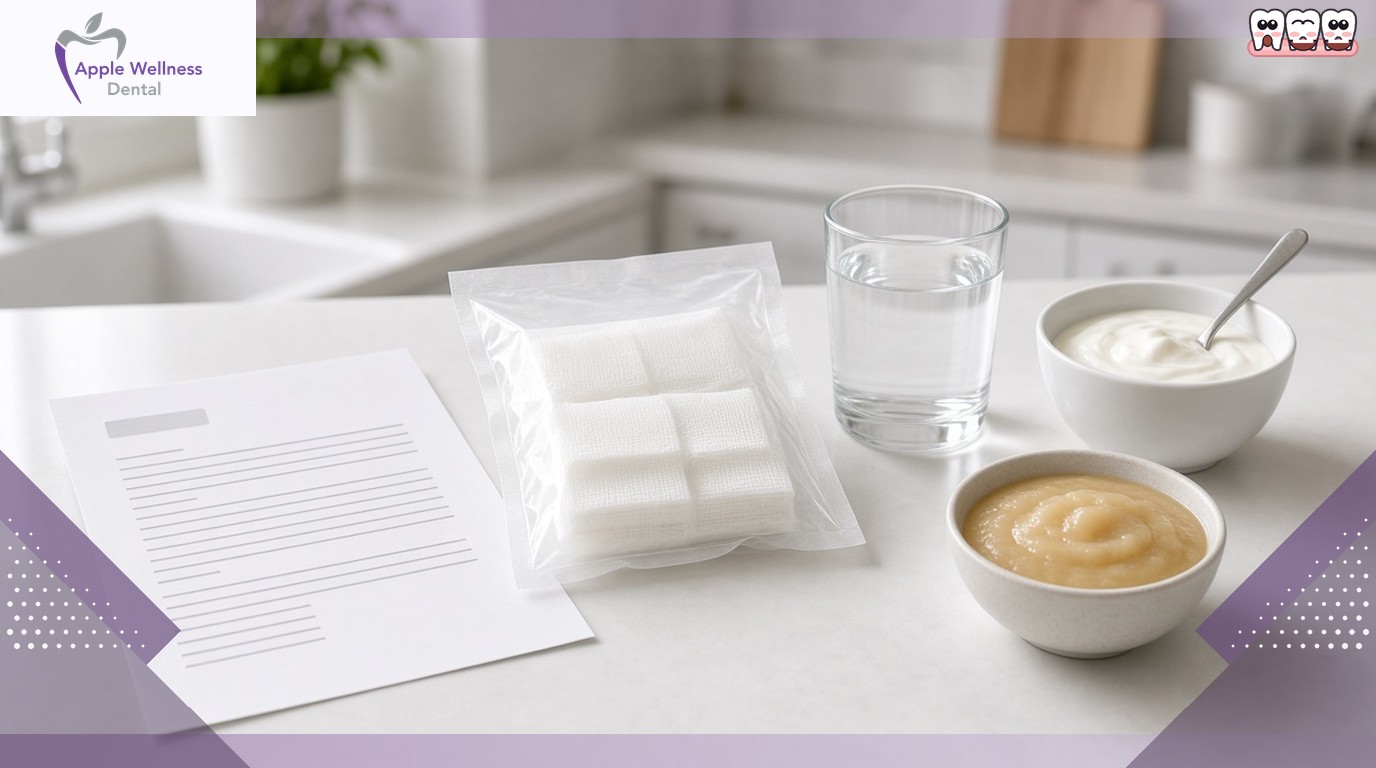
Most official instructions link your first meal to milestones rather than minutes:
- The freezing. MyHealth Alberta says that while your mouth is numb (frozen), you should be careful not to bite your tongue or the inside of your cheek or lip. Western Australia’s Dental Health Services go further: do not eat or drink while you are numb, and once the numbness is gone, eat and drink on the other side of your mouth, with nothing too hot or cold.
- The bleeding. The CDA says the gauze pad placed after surgery should stay in for an hour, no matter how soggy it gets. MyHealth Alberta’s tooth extraction overview adds that you may eat and drink between gauze changes.
- The temperature. Nova Scotia Health says not to eat hot foods or drink hot liquids for 24 hours, and to choose cold or lukewarm soft foods and drinks.
- The chewing side. MyHealth Alberta advises avoiding chewing in the area where the tooth was removed until your mouth heals. It notes that soft foods like gelatin or soup might be easier to eat.
So how soon can you eat after tooth extraction in practice? With local freezing only, these leaflets point to a first soft meal a few hours after the appointment, once feeling has returned and the gauze has controlled the bleeding. After surgery, the soft-food stage lasts longer.
Why the freezing sets the clock
The local anaesthetic (freezing) is the main reason to wait. The University Hospitals Dorset NHS leaflet says it normally takes 90 minutes to four hours to wear off. A Barts Health NHS leaflet says your mouth will feel numb for two or three hours. Nova Scotia Health notes you may also have trouble swallowing for the first few hours because of the local anaesthetic.
The risk is injury you do not feel. The University Hospitals of Leicester says not to eat or drink anything hot while you are numb, because you may bite or burn yourself. For more on how long numbness lasts, see our guide on how long dental freezing lasts.
Leaflets word the waiting rule differently:
| Source | What it says about eating while numb |
|---|---|
| Western Australia Dental Health Services | Do not eat or drink while you are numb. |
| West Hertfordshire NHS | Do not eat or drink for one to two hours. Avoid eating on the affected side for a couple of days. |
| East Sussex Healthcare NHS | Avoid eating and hot drinks while your lips and tongue are numb. |
| Barts Health NHS | Do not eat or drink anything very hot or very cold while your mouth is numb. Chew on the opposite side. |
| University Hospitals of Leicester | Be careful eating whilst numb, and nothing hot. |
The cautious approach is to wait until normal feeling returns. NHS Tayside says lip and tongue numbness should wear off in a few hours. If numbness persists after a lower wisdom tooth removal, the nerve may have been bruised, and you should contact your dental office.
Eating timeline by procedure type
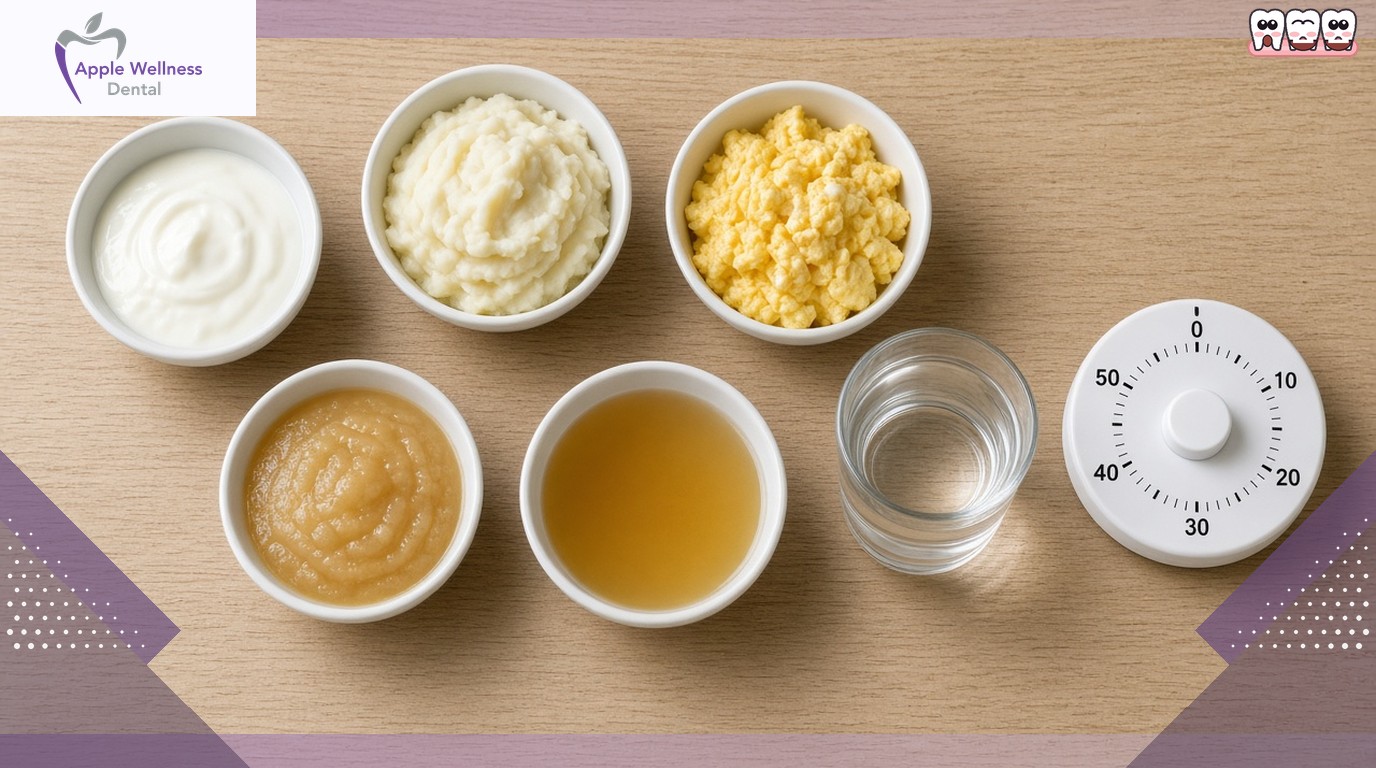
MyHealth Alberta explains that a tooth extraction can be a simple procedure or more complex, depending on your oral health, the position and condition of the tooth, and your general health. The NHS describes wisdom tooth removal as possibly involving a cut in the gum, widening the socket and cutting the tooth into 2 or 3 pieces, followed by dissolvable stitches. The more involved the procedure, the longer the soft-food stage tends to be:
| Procedure | First food | How long to eat softer food | Notes from the sources |
|---|---|---|---|
| Simple extraction, local freezing | Once the numbness is gone (Western Australia), or after 1 to 2 hours (West Hertfordshire NHS). | Softer foods for the first 2 to 3 days (Nova Scotia Health). A soft diet for a few days (West Hertfordshire NHS). | Avoid chewing in the extraction area until it heals (MyHealth Alberta). |
| Surgical extraction (gum opened, stitches) | Same freezing rule. | Fluids and soft foods if necessary, returning to a normal diet over the next week (Western Australia). A soft diet for a week or two (NHS Tayside). | Your jaw may be sore and hard to open for up to 7 to 10 days (CDA). |
| Wisdom tooth removal | Same freezing rule. | A softer diet for 24 to 48 hours (UHD NHS). A soft diet for a week or so (University Hospitals Sussex). Soft or liquid food until you can chew comfortably (NHS). | Chewing and swallowing may be uncomfortable for up to 2 weeks (NHS). |
| With sedation | Sedation can stay in your body for several hours (Nova Scotia Health). | As for the procedure. | Have a responsible adult with you and no alcohol for 24 hours (Nova Scotia Health). |
| General anaesthetic | You can usually start eating and drinking when you feel ready (NHS). | As for the procedure. | The area is usually also numbed with local anaesthetic, even when you are asleep (University Hospitals of Leicester). |
Ask your dentist which row fits you, so you can shop ahead.
Where the official guidance differs
- First bite: “not while numb” (Western Australia), “not for one to two hours” (West Hertfordshire) or “be careful eating whilst numb” (Leicester).
- Soft-diet length: 24 to 48 hours (UHD NHS), 2 to 3 days (Nova Scotia Health), a week or so (University Hospitals Sussex) or a week or two (NHS Tayside). SA Dental says most people can gradually return to their regular diet within 1 to 2 weeks.
- Temperature: no hot foods or liquids for 24 hours (Nova Scotia Health), nothing too hot or cold once numbness is gone (Western Australia), and avoid hot liquids such as coffee and tea, with soup allowed to cool first (CDA).
When sources disagree, your own dentist’s written instructions come first.
From first meal to normal meals
- First hours: keep the gauze in place, let the freezing wear off, and do not rinse your mouth for the first 24 hours (CDA). MyHealth Alberta says not to use a straw for the first few days.
- Rest of day one: cool or lukewarm soft foods. MyHealth Alberta suggests gelatin, pudding or a thin soup, and Nova Scotia Health lists soup, yogurt, pudding and ice cream.
- Days 2 to 3: foods that are easy to chew, such as eggs, pasta and bananas (CDA). Western Australia advises gently rinsing with warm salt water after meals and before bed for 7 days, starting the day after.
- Days 4 to 7: slowly go back to your usual eating habits as you heal, without chewing directly on the site until it feels comfortable (Nova Scotia Health).
- Week 2 and beyond: Nova Scotia Health says it may take several weeks for gum tissue to fully cover the site, so food may get stuck. Gentle salt-water rinses help keep it clean.
For food ideas at each stage, see what you can eat after wisdom tooth extraction and our guide on when you can eat solids after tooth extraction.
Signs you may be eating too soon or need help
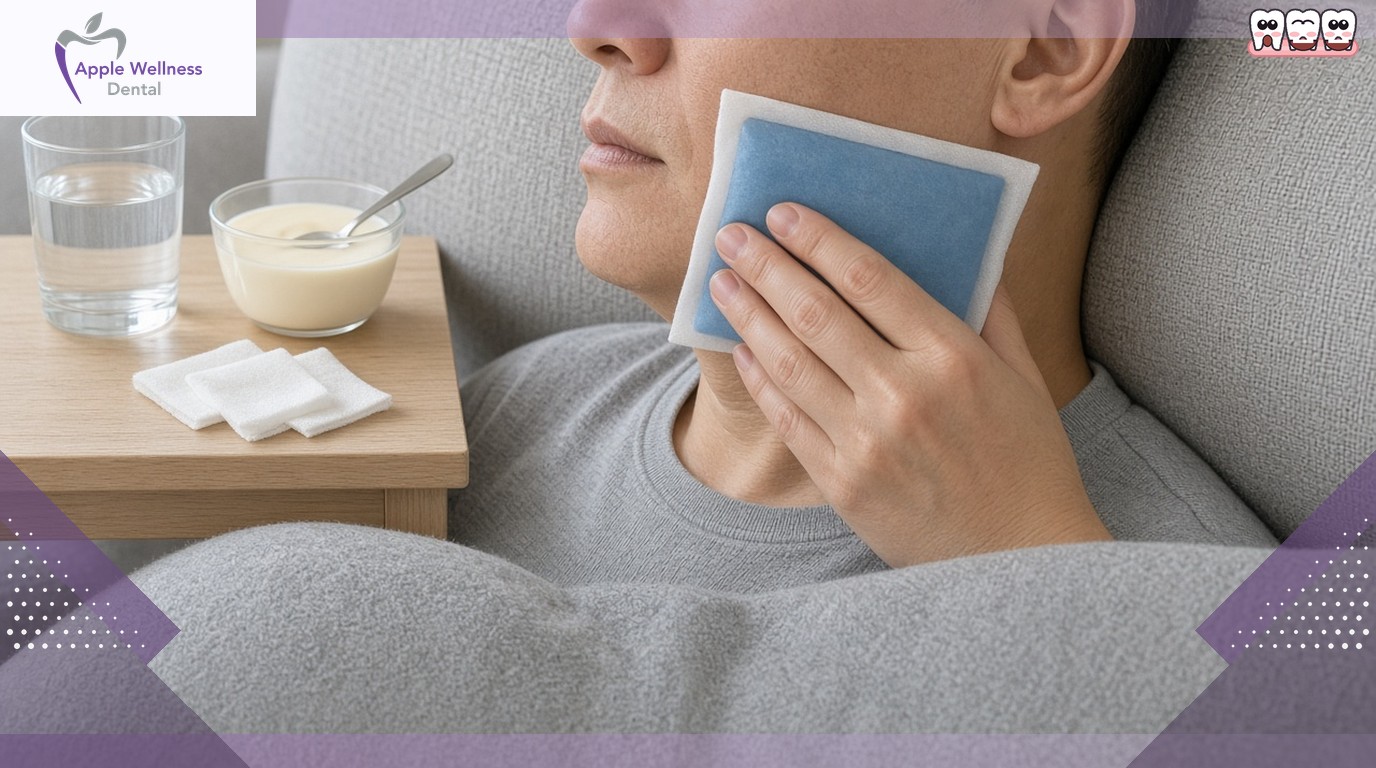
- Bleeding starts again after eating. Nova Scotia Health says to place damp gauze over the site and bite down firmly for 20 to 30 minutes without checking, repeating 2 to 3 times if needed.
- Pain or swelling keeps getting worse after the first 2 to 3 days, especially with fever, chills, pus or a bad taste (Nova Scotia Health).
- Severe pain that starts or worsens several days later and spreads to the jaw or ear can be dry socket (Nova Scotia Health). MyHealth Alberta has more on dry socket.
- Numbness that does not wear off (NHS Tayside).
- You cannot keep fluids down (MyHealth Alberta wisdom tooth aftercare).
Hypothetical example: two different extractions
Hypothetical example (not a real patient): Jordan has a simple extraction at 10 a.m. with local freezing only. Jordan keeps the gauze in for an hour, waits until feeling returns to the lip in the early afternoon, then has lukewarm thin soup and pudding, chewing on the other side. Sam has a wisdom tooth surgically removed with stitches. Sam follows the same freezing rule, but the written instructions say soft food for a week, so Sam plans eggs, pasta and bananas.
Tooth extraction care in Airdrie
Apple Wellness Dental has provided dental care in Airdrie since 1993 from 229 1st Street SW. Our general dentists, Dr. Sanjay Rajpal and Dr. Hammad Qasim, provide extractions, including wisdom teeth removal, and emergency dental treatment. If you are unsure how soon you can eat after tooth extraction in your own case, call us at (587) 332-6767 during office hours.
After hours in Alberta. Health Link 811 is a free 24/7 line where registered nurses help you decide if you need urgent care. Its registered dietitians (Monday to Friday, 8:00 a.m. to 4:00 p.m.) answer questions that include eating after surgery. For emergencies such as severe trouble breathing, call 911.
Costs and coverage. Apple Wellness Dental follows the Alberta Dental Fee Guide, bills most private insurers directly and accepts the Canadian Dental Care Plan (CDCP). The CDCP lists removal of teeth and roots among the oral surgery services it can cover when recommended by an oral health provider. The Government of Alberta notes that fee guide amounts are recommended, not mandatory. See our wisdom tooth extraction cost guide for more.
Frequently asked questions
How soon can you eat after tooth extraction if you only had freezing?
Usually once the numbness has worn off and the first gauze pad has done its job. NHS leaflets say freezing lasts about 90 minutes to 4 hours, and one trust advises not eating or drinking for 1 to 2 hours. Start with cool or lukewarm soft food.
Can I drink water right after a tooth extraction?
Advice varies. Western Australia’s leaflet says not to eat or drink while you are numb, while other leaflets only warn against very hot or very cold drinks while numb. If your dentist allows sips, use a cup, not a straw, for the first few days.
How long after wisdom tooth removal can I eat solid food?
There is no single date. Official advice ranges from a softer diet for 24 to 48 hours to a soft diet for a week or two. MyHealth Alberta says to add solid foods gradually as you heal.
Can I eat after sedation or a general anaesthetic?
The NHS says you can usually start eating and drinking again when you feel ready after a general anaesthetic. Your mouth is usually still frozen with local anaesthetic, so the same care with chewing and hot food applies.
Why should I wait for the numbness to wear off before eating?
While you are numb you can bite your tongue, cheek or lip, or burn yourself with hot food or drinks without noticing. Several official leaflets give this warning.
When should I call the dentist after an extraction?
Call if bleeding does not stop with firm pressure, pain or swelling keeps getting worse after 2 to 3 days, you have a fever, or numbness does not wear off. Severe pain that starts days later can be a sign of dry socket.
Sources
- MyHealth Alberta, “Tooth Extraction: Care Instructions” (current as of July 31, 2024): myhealth.alberta.ca
- MyHealth Alberta, “Tooth Extraction” (adapted by Alberta Health Services, adaptation date 12/02/2025): myhealth.alberta.ca
- MyHealth Alberta, “Wisdom Tooth Extraction: What to Expect at Home” (current as of July 31, 2024): myhealth.alberta.ca
- MyHealth Alberta, “Dry Socket” (current as of July 31, 2024): myhealth.alberta.ca
- Canadian Dental Association, “Care after Minor Oral Surgery” (undated): cda-adc.ca
- Nova Scotia Health, “After a Dental Extraction” patient and family guide (September 2026): nshealth.ca
- Government of Western Australia, North Metropolitan Health Service Dental Health Services, “Instructions following tooth extraction” (DHS-14, version 09/25): dental.wa.gov.au
- University Hospitals Dorset NHS Foundation Trust, “Aftercare instruction after wisdom tooth removal” (March 2026): uhd.nhs.uk
- Barts Health NHS Trust, “Caring for your mouth after a dental extraction” (April 2012): bartshealth.nhs.uk
- University Hospitals of Leicester NHS Trust, “Having wisdom teeth taken out using local anaesthetic” (last reviewed August 2026): leicestershospitals.nhs.uk
- West Hertfordshire Teaching Hospitals NHS Trust, “Extraction of tooth” (ratified August 2025): westhertshospitals.nhs.uk
- East Sussex Healthcare NHS Trust, “Instructions following removal of teeth” (June 2025): esht.nhs.uk
- NHS Tayside, “Advice following minor oral surgery or extraction of teeth (Local Anaesthetic)” (reviewed May 2024): nhstayside.scot.nhs.uk
- University Hospitals Sussex NHS Foundation Trust, “Wisdom tooth surgery” (last reviewed July 23, 2024): uhsussex.nhs.uk
- NHS, “Wisdom tooth removal” (last reviewed June 12, 2024): nhs.uk
- NHS, “General anaesthesia” (last reviewed November 29, 2024): nhs.uk
- SA Dental (Government of South Australia), “Soft food suggestions – post tooth extraction or dental surgery” (undated): dental.sa.gov.au
- Primary Care Alberta, “Health Link 811” (undated): albertahealthservices.ca
- Government of Canada, “Canadian Dental Care Plan: What is covered” (undated): canada.ca
- Government of Alberta, “Dental fees in Alberta” (undated): alberta.ca
Apple Wellness Dental
Dental care in Airdrie, Alberta. This article is general education and does not replace an examination by a dental professional or the aftercare instructions your dentist gives you. It is not medical, legal, tax or financial advice.
Planning an extraction or unsure when you can eat afterwards? Book a call or Contact Us, or call 587-332-6767.