
Can I Eat Chicken After Tooth Extraction? From Broth to Drumsticks
Quick Answer: Can I eat chicken after tooth extraction? Usually yes, but not straight away and not in every form. Official aftercare advice starts with soft or liquid food, so begin with cooled chicken broth, then move to finely shredded or minced chicken in a few days. Crispy, spicy, very hot or chewy chicken can wait until chewing feels comfortable.
Can I eat chicken after tooth extraction is a fair question, because chicken is a staple for many families and a good source of protein while you heal. The answer depends less on the chicken itself and more on its texture, temperature and seasoning. This guide breaks chicken down into stages, from broth to drumsticks, so you know what fits each part of your recovery.
Last updated: November 3, 2026. Main source: Mayo Clinic, “Dry socket: Symptoms and causes,” July 18, 2023. Full links are in the Sources section.
Key Takeaways
- Start soft. The NHS and MyHealth Alberta advise soft food after an extraction.
- Cool it down. The CDA says to let soup cool first because hot liquids can restart bleeding.
- Chew on the other side. Keep food away from the socket while it heals.
- Hold the crispy, spicy and bony cuts. Hard edges, small bones and spice can irritate the socket.
- Protein helps you feel full on a soft diet, and shredded chicken is an easy way to get it.
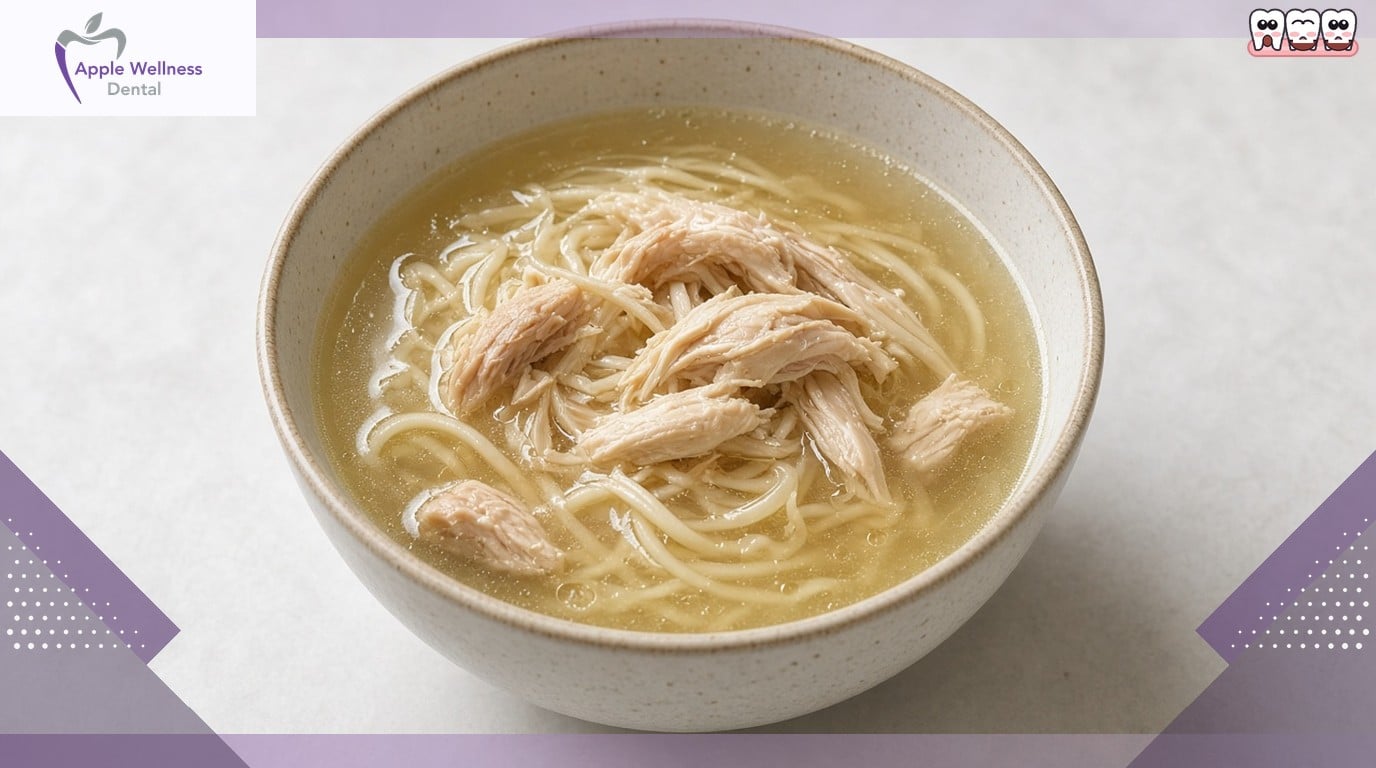
Chicken by texture: a stage-by-stage table
Use this as a general guide. If your extraction was surgical or involved several teeth, your dentist may ask you to stay on soft foods longer.
| Stage | Chicken that usually fits | Hold off on |
|---|---|---|
| Day 1 | Cooled chicken broth; smooth blended chicken soup | Anything that needs chewing; hot soup |
| Days 2 to 3 | Very soft, finely shredded or minced chicken in gravy or sauce; soft chicken and rice; chicken mixed into mashed potato | Breaded, grilled or crispy chicken; spicy sauces |
| Days 4 to 7 | Tender poached or slow-cooked chicken cut small; soft chicken casserole; chicken salad made with finely chopped meat | Wings with small bones; jerky-style or charred pieces |
| After week 1 | Most chicken dishes, if chewing is comfortable and your dentist agrees | Very hard or crunchy coatings near the site until fully comfortable |
Why texture matters more than the food
After a tooth comes out, a blood clot forms in the socket. Mayo Clinic explains that if the clot comes out or does not form properly, the bone and nerves underneath can be exposed, which is called dry socket. Hard or sharp food pieces, and heavy chewing near the site, are among the things that can disturb a healing socket.
Mayo Clinic advises eating soft foods such as yogurt or applesauce on the first day and being careful with hot and cold liquids or foods until the numbness wears off. MyHealth Alberta recommends soft foods like gelatin or soup after an extraction. Shredded chicken in a sauce fits that soft category; a crispy drumstick does not.
Temperature and seasoning
Chicken soup is a classic comfort food, but it is often served too hot. The CDA advises: “Avoid hot liquids like coffee and tea. If you eat soup, let it cool first. Hot liquids increase the flow of blood and your wound can start to bleed again.”
Spice is another consideration. Hot sauce, chili and heavy pepper can sting an open socket. There is no official rule that bans spice, but most people find mild seasoning more comfortable for the first several days.
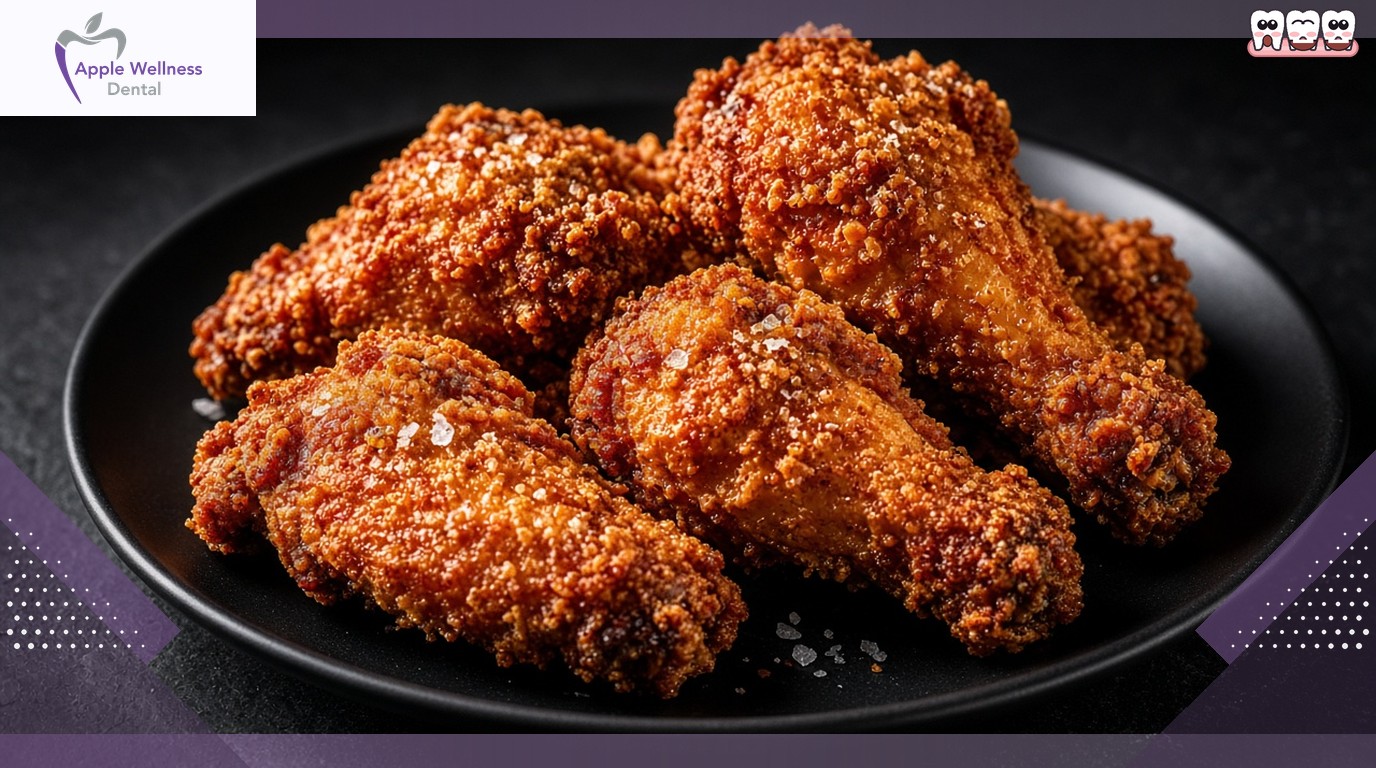
Hypothetical example: A patient has an upper premolar removed on a Monday. Monday evening, they have a cup of chicken broth left to cool to lukewarm. Tuesday and Wednesday, they eat slow-cooker chicken shredded into a mild gravy over mashed potatoes, chewing on the opposite side. By Friday, they have soft chicken and rice cut into small pieces. They wait until the following week for their usual crispy chicken sandwich.
Easy soft chicken ideas
- ☐ Chicken broth or blended chicken soup, cooled to lukewarm
- ☐ Slow-cooker or poached chicken shredded finely with two forks
- ☐ Shredded chicken stirred into mashed potato or mashed sweet potato
- ☐ Soft chicken and rice cooked until very tender
- ☐ Chicken salad made with finely chopped meat and mayonnaise, no crunchy celery or nuts
- ☐ Minced chicken in a mild tomato or cream sauce over soft pasta
- ☐ Chicken congee or porridge, cooled before eating
How to eat chicken safely in the first week
- Wait until the numbness wears off so you do not bite your cheek or tongue.
- Cut or shred chicken into small pieces and chew on the side away from the extraction.
- Remove all bones and skin early on; small bones and crispy skin can get lodged in the socket.
- Do not rinse forcefully afterward. The CDA advises no rinsing for 24 hours; after that, follow your dentist’s instructions for gentle rinsing.
- Do not use a straw for soups. Mayo Clinic says no straws for at least a week.
What about other proteins?
If chicken is not appealing, eggs, yogurt, cottage cheese, tofu, flaked fish and smooth nut butters are other soft protein options. For a broader list, see what you can eat after wisdom tooth extraction. For timing, see how soon after tooth extraction can I eat, and if soup is your go-to, read can I eat soup after tooth extraction. Wondering about other favourites? See can I eat pizza after tooth extraction.
Hypothetical example: a one-week chicken meal plan
This sample plan shows how chicken can fit into each stage of a simple extraction recovery. It is a hypothetical example only. Adjust it to your own extraction, appetite and any dietary needs, and follow your dentist if their timing differs.
| Day | Lunch | Dinner |
|---|---|---|
| Day 1 | Yogurt or applesauce | Cooled chicken broth |
| Day 2 | Blended chicken and vegetable soup, lukewarm | Finely shredded chicken in gravy with mashed potato |
| Day 3 | Scrambled eggs | Minced chicken in mild tomato sauce over soft pasta |
| Day 4 | Chicken salad, finely chopped, on soft bread with crusts removed | Slow-cooked chicken and very soft rice |
| Day 5 | Chicken congee, cooled | Soft chicken casserole cut small |
| Day 6 | Leftover casserole | Poached chicken breast cut into small pieces with steamed soft vegetables |
| Day 7 | Soft chicken wrap with shredded meat | Regular chicken dinner if chewing is comfortable and your dentist agrees |
Prep tips that make soft chicken easier
A little preparation before your appointment means you will not be tempted to grab something crunchy when you are tired and hungry.
- Cook ahead. Poach or slow-cook a batch of boneless chicken thighs or breasts the day before. Thighs tend to stay moister and shred more easily.
- Shred while warm. Pull the meat apart with two forks while it is still warm, then let it cool before storing.
- Add moisture. Dry chicken is harder to swallow. Mix it with gravy, broth, a mild sauce or mayonnaise.
- Portion it. Freeze small portions so you can thaw only what you need. Reheat thoroughly, then let it cool to a comfortable temperature before eating.
- Keep it plain. Season lightly with salt and herbs rather than chili or pepper for the first several days.
Chicken and stitches
If your dentist placed stitches, the same soft-chicken rules apply, with a little extra care. Stringy pieces of meat can catch on stitches, so shred chicken finely or mince it rather than pulling it into long strands. Avoid tugging food off a fork with your teeth near the site. Some stitches dissolve on their own and others are removed at a follow-up visit, so ask your dentist which type you have and when normal chewing can resume.
If a piece of chicken does get stuck near the socket, do not dig at it with a toothpick or your finger. After the first 24 hours, gentle rinsing as your dentist directs will often move it. If it stays put or the area becomes more painful, call your dentist.
When to call your dentist
Call your dentist if eating triggers new bleeding that pressure does not stop, if you have pain that gets worse a few days after the extraction, or if food seems to be packing into the socket. Mayo Clinic notes that dry socket pain usually begins one to three days after the extraction. After hours, Albertans can call Health Link at 811.
Extraction care in Airdrie
At Apple Wellness Dental, Dr. Sanjay Rajpal and Dr. Hammad Qasim give clear diet instructions after every extraction, including when you can go back to your favourite meals. Our clinic at 229 1st Street SW has cared for Airdrie families since 1993. We direct bill insurance, follow the Alberta Dental Fee Guide and accept the Canadian Dental Care Plan. Call us at (587) 332-6767 or see our emergency dental treatment page if something does not feel right.
Frequently asked questions
Can I eat chicken the day of a tooth extraction?
On the first day, cooled chicken broth or smooth blended chicken soup is the safest choice. Official aftercare guidance starts with soft or liquid foods, and Mayo Clinic suggests soft foods such as yogurt or applesauce on day one.
When can I eat fried chicken after tooth extraction?
Wait until chewing feels comfortable and the socket has had time to settle, often after the first week. Crispy coatings can be sharp and may irritate the site. Ask your dentist if your extraction was surgical.
Can I eat chicken nuggets after tooth extraction?
Soft, baked nuggets cut small may be fine after a few days, but crunchy breading is harder on the site. Shredded chicken is a gentler choice in the first several days.
Is chicken soup good after tooth extraction?
Yes, if you let it cool first. The CDA advises letting soup cool because hot liquids increase blood flow and can restart bleeding. Eat it with a spoon, not a straw.
Can I eat chicken wings after tooth extraction?
Hold off on wings for at least the first week. Small bones, crispy skin and gnawing near the site can disturb healing. Choose boneless, shredded chicken instead.
How long after tooth extraction can I eat chicken normally?
Many people return to most chicken dishes after about a week if chewing feels comfortable, but surgical extractions can take longer. Your dentist will tell you when it is safe to chew normally on that side.
Can I eat spicy chicken after tooth extraction?
Spice can sting an open socket. There is no official ban, but mild seasoning is usually more comfortable for the first several days.
Sources
- Mayo Clinic, “Dry socket: Symptoms and causes” (July 18, 2023)
- Canadian Dental Association, “Care after Minor Oral Surgery” (undated)
- MyHealth Alberta, “Tooth Extraction: Care Instructions” (current as of July 31, 2024)
- NHS, “Wisdom tooth removal” (last reviewed June 12, 2024)
- Health Link 811, Alberta (undated)
Apple Wellness Dental
Dental care in Airdrie, Alberta. This article is general education and does not replace an examination by a dental professional. It is not medical, legal, tax or financial advice.
Questions about eating after an extraction? Call our Airdrie team. Book a call or Contact Us, or call 587-332-6767.