
Is Porcelain Non-Toxic? What Veneers Are Made Of
Quick Answer: Dental porcelain is generally regarded as biologically inert, which means it is not expected to react with body tissue. It is a ceramic, mainly glass-based and made largely of silica. Porcelain veneers are a common, established material. Composite veneers are made of resin, not porcelain. Tell your dentist about any known material sensitivity.
Last updated: October 16, 2026. Main source: Wikipedia, “Dental porcelain” (accessed October 2026), which summarizes the material. Wikipedia is a general reference, not a clinical guideline, so check dental safety questions with your dentist. Full link is at the end.
Many people ask whether porcelain is safe to have in their mouth. The question is reasonable, because veneers and crowns sit against your gums and teeth every day, sometimes for decades. It is also a question that can feel technical, with words like biocompatible and inert that are not always explained. This guide explains what dental porcelain is, what the reference we checked says about its safety, how it differs from other materials, and what to ask your dentist before you choose.
What dental porcelain is
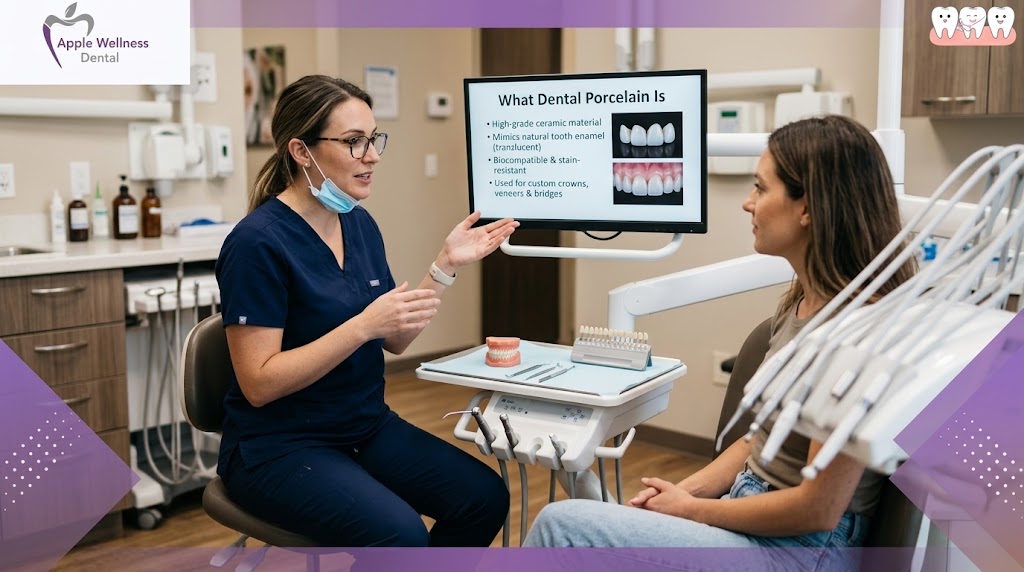
Dental porcelain is a ceramic material. Ceramics are inorganic, non-metallic materials that are shaped and fired at high temperature. The reference we checked describes dental ceramics in several categories. One category is glass-based systems, which are mainly silica. Another is polycrystalline solids, such as alumina and zirconia. Porcelain used for veneers and crowns usually belongs to the glass-based group, and its colour, translucency and surface finish can be controlled during manufacturing. This is one reason porcelain is popular for front teeth, where appearance matters.
Porcelain veneers are usually made in a dental laboratory from a model of your teeth, then bonded to the tooth with a dental cement. The cement is a separate material, and it is part of the overall safety discussion. Ask your dentist which cement they use and why.
What “biocompatible” and “inert” mean
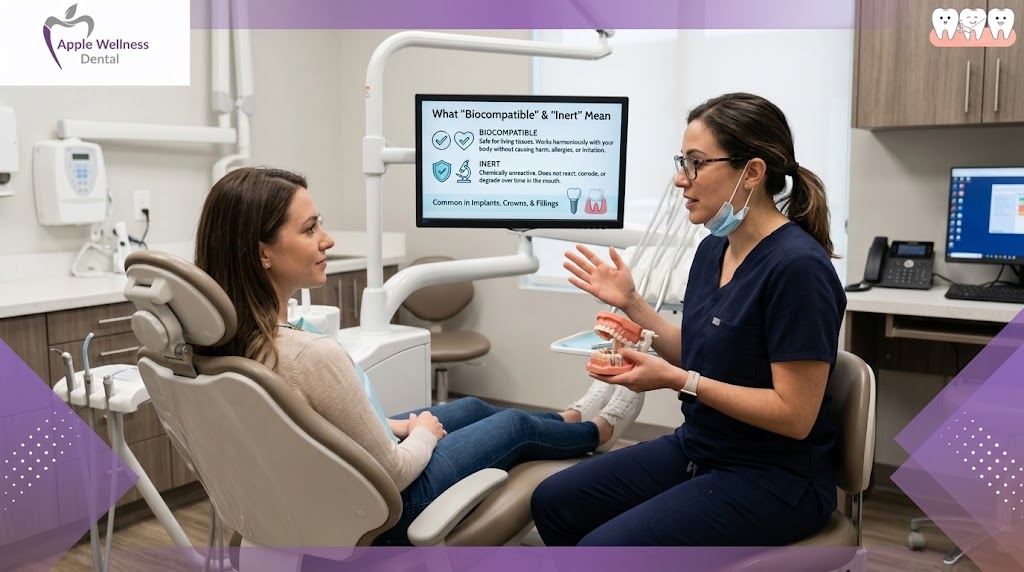
Biocompatible means a material does not cause harmful reactions in the body when it is in contact with tissue. Inert means a material does not readily react chemically with its surroundings. The Wikipedia summary describes dental porcelain as biocompatible, aesthetic, insoluble and hard, with a hardness of 7 on the Mohs scale. It also says dental ceramic is generally regarded as biologically inert. In plain language, porcelain is not expected to break down into the mouth or react with tissue in a harmful way. That is why it is widely used in dentistry.
It is important to be precise about what this does and does not mean. A material can be biocompatible and still be wrong for a particular tooth, because it may wear down the teeth it touches or fail under the wrong bite. Safety in dentistry is about the material and the fit, not the material alone.
Porcelain, composite and other materials
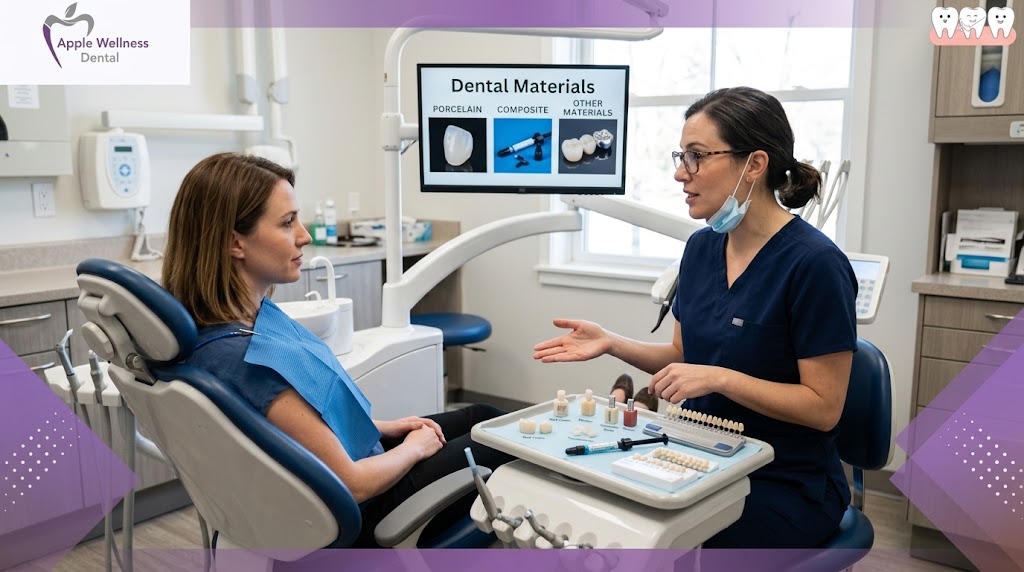
Not all veneers are porcelain. Porcelain veneers are ceramic and usually made in a dental lab. Composite veneers are made of resin, which is a different material, and they are built directly on the tooth in the dental chair. Both are used in dentistry, and both have a long history of clinical use, but they are not the same. Resin materials raise their own questions about the monomers they contain, which are a separate topic from ceramics. If the question is about a specific material, ask your dentist what your veneers are made of, what the cement is, and why that combination is recommended for your case.
Some patients also ask about metal-based crowns or fillings. These are different again, and this article does not cover them. The main point is that porcelain has a specific profile of advantages and limits, and it should be compared with the other realistic options for your tooth rather than judged in isolation.
Limits that matter more than toxicity
The safety question for porcelain is often less about chemistry and more about fit and function. The same reference notes that a porcelain restoration may increase wear on opposing teeth. This matters if you grind or clench, because the force can chip the porcelain or wear the natural teeth that bite against it. The reference also lists situations where ceramic is not recommended, including teeth grinding or clenching, very short clinical crowns, immature teeth, and an unfavourable bite. In some cases, a post placed in a root canal may fracture if it is ceramic. A dentist should check your bite, your habits and the condition of your teeth before choosing porcelain.
If you grind your teeth at night, mention it. A dentist may recommend a night guard, a bite adjustment, or a different material. Teeth grinding is common, and it is much easier to plan for at the consultation than to repair after a chip.
Allergies and sensitivities
The sources we checked do not discuss allergic reactions to porcelain. This does not mean reactions never happen, and it does not mean you should assume you are at risk. If you have a known sensitivity to metals, resins, adhesives or other dental materials, tell your dentist before treatment, along with any allergies you have. Your dentist can review your health history and choose materials with you, and they may ask you to tell them about any reaction you have had to a previous dental procedure.
If you develop unexpected symptoms after a dental procedure, such as persistent redness, swelling, itching or pain at the site, contact your dentist. They can check the area and decide whether the material needs attention.
Long-term care for porcelain
Porcelain resists staining, but it still needs care. Brush and floss as usual, because the gums and the natural tooth underneath still need protection. Avoid using your teeth to open packages or bite hard objects, since this can chip the porcelain. Attend regular checkups so your dentist can check the margins, the bite and the surface. Regular cleaning helps the gum line stay healthy around the veneers, and healthy gums are part of how a restoration remains comfortable and stable over time.
Keep track of any changes in a veneer over time, such as a rough edge, a small chip, or a change in the gum line. Mention these at your checkup rather than waiting for them to get worse. Small problems are usually easier to deal with early, and your dentist can decide whether a repair or replacement is needed.
Hypothetical example
Hypothetical example: Chris wonders whether porcelain is safe because a friend had a bad reaction to a dental material. Chris tells the dentist about the friend’s experience and asks what materials are used. The dentist explains that Chris’s veneers would be porcelain, that the material is generally regarded as inert, and that the cement and bite still need to be chosen with care. Because Chris clenches at night, the dentist recommends checking the bite and discussing a night guard before the final decision.
Common myths, and what the evidence suggests
One myth is that anything “non-natural” in the mouth is harmful. Ceramic is not natural tooth material, but it can be biocompatible and inert, which is what matters for safety. Another myth is that porcelain is always better than composite. Each material has advantages, and the right choice depends on your teeth, your bite, your budget and your goals. A third myth is that a veneer will last forever once placed. Veneers can chip, stain at the edges or come loose, and they need regular checks. Accurate information helps you make a calm decision, rather than reacting to fear.
Questions to ask your dentist
- What material will my veneers be made of, and why?
- Which bonding cement do you use, and what is its safety profile?
- Is this material suitable for my bite, and do I grind or clench my teeth?
- Do I have any known sensitivities to dental materials?
- What should I do if I notice redness, swelling or pain near the veneer?
- What is the warranty or repair policy if a veneer chips?
To talk about the materials for your smile, contact our office. To learn more about what veneers look like once placed, read what do veneers look like, and for the cost of a set, read how much do veneers cost full set.
Frequently asked questions
Is dental porcelain safe in the mouth?
Dental porcelain is generally regarded as biologically inert and is described as biocompatible. Ask your dentist about your specific materials.
What is dental porcelain made of?
The reference describes glass-based dental ceramics as mainly silica.
Is composite veneer material porcelain?
No. Porcelain veneers are ceramic, while composite veneers are made of resin.
Can porcelain cause an allergic reaction?
The sources we checked do not discuss allergy to porcelain. Tell your dentist about any known sensitivities before treatment.
Does porcelain wear down other teeth?
The reference notes a porcelain restoration may increase wear on opposing teeth, which is one reason your bite is checked first.
Who should not get porcelain veneers?
The reference lists teeth grinding or clenching, very short clinical crowns, immature teeth and an unfavorable bite as reasons ceramic may not be recommended.
Sources
- Wikipedia, “Dental porcelain” (accessed October 2026): en.wikipedia.org
Apple Wellness Dental
Dental care in Airdrie, Alberta. This article is general education and does not replace an examination by a dental professional. It is not medical, legal, tax or financial advice.
Have questions about the materials in your smile? Book a call or Contact Us, or call 587-332-6767.