
What Do Veneers Look Like?
Quick Answer: Good veneers should look like natural teeth, with a colour, shape and surface that match your smile. Porcelain veneers are custom-made in a lab and can be made in different levels of translucency. Research shows that matching shade is hard, especially with very thin veneers, so the result depends on materials, planning and technique.
Last updated: October 16, 2026. Main sources: a 2016 study on resin cement and ceramic veneers, a Dental Research Journal study on veneer masking, a 2021 Journal of Dental Sciences study on shade matching, Mayo Clinic’s gingivitis guide (updated November 16, 2023), and a Calgary dental practice’s veneers page (undated). Full links are at the end.
Many people ask what veneers look like before they decide on the treatment. The honest answer is that they can look very natural, but the outcome depends on the colour, translucency, shape and gum line that a dentist plans. Photos online show the best cases, so it helps to understand what actually shapes the result.
Veneers at a glance
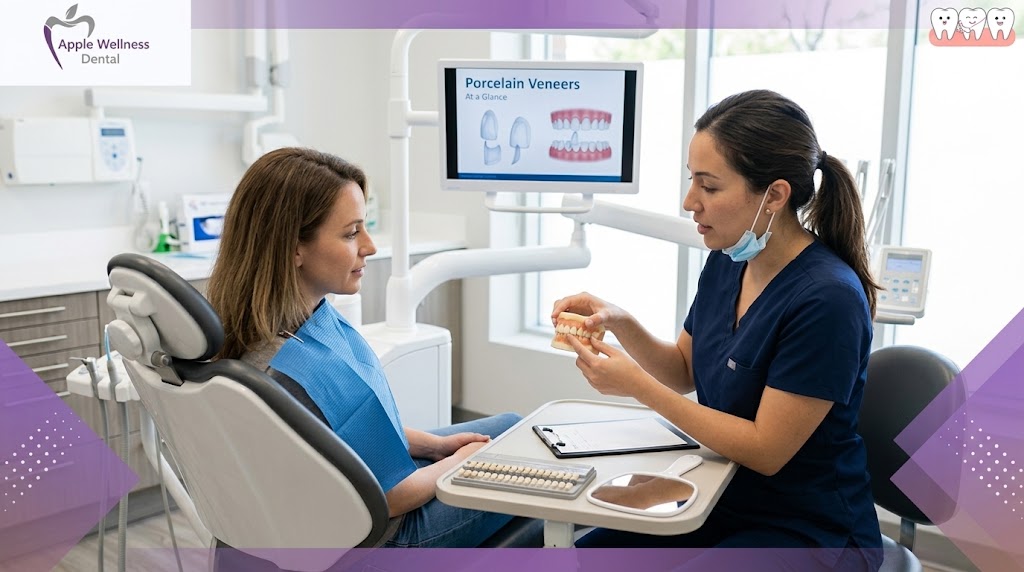
A veneer is a thin shell of porcelain, made in a dental lab, or composite resin, built directly on the tooth. It is bonded to the front surface of the tooth only. Dentists use a shade guide to choose a colour that matches your natural teeth, and then tailor the shape to fit your face and bite.
What affects how veneers look
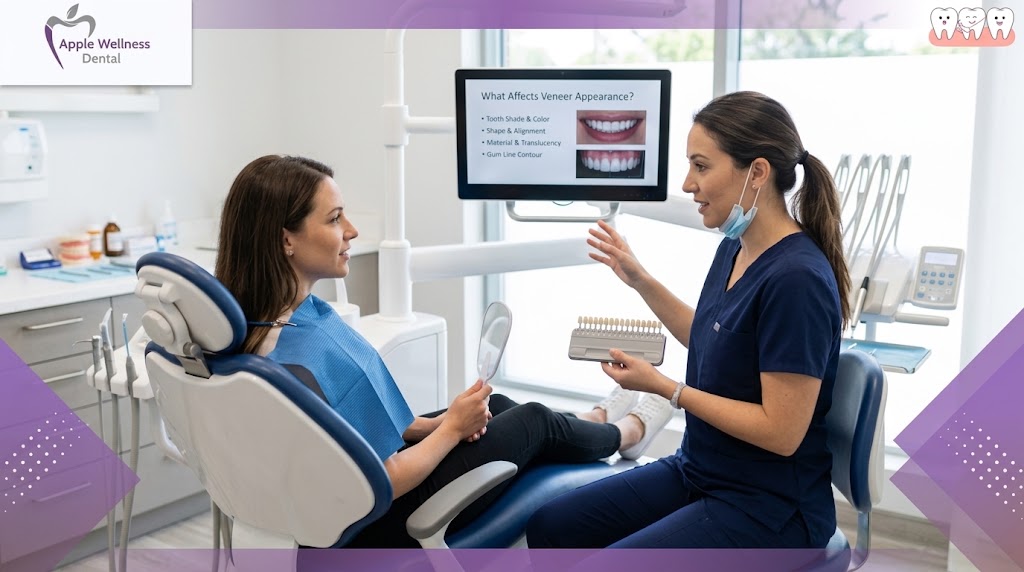
Colour (shade)
The shade you see is not only the veneer. A 2016 study found that the shade of resin cement, the layer that bonds the veneer, changes how a ceramic veneer’s colour and translucency appear. Dentists plan for this when they choose materials.
Translucency
Natural teeth let light pass through their edges, which gives them a lifelike depth. A Dental Research Journal study notes that translucency is what gives a restoration its vitality and natural look. Ceramic veneers can be made in higher or lower translucency, and that choice affects how close they look to real teeth.
Thickness
Thinner veneers can struggle to hide the tooth underneath. In the same Dental Research Journal study, none of the 0.5 mm veneers could match an A1 shade without a detectable colour difference after cementation. Changing the veneer’s translucency masked a dark underlying tooth more effectively than changing the cement shade.
Limits of shade matching
Shade matching is difficult. A 2021 Journal of Dental Sciences study found that routine visual shade matching could not reliably duplicate colour for veneers thinner than 0.7 mm, and it called for clearer matching standards. This is one reason to ask how your dentist will check the match before bonding.
Gums and fit
The gum line matters as much as the colour. Mayo Clinic lists repairs that do not fit properly, including veneers, among the factors that can increase the risk of gingivitis. A well-fitted veneer that meets the gum neatly is part of looking natural.
Porcelain or composite: how they differ
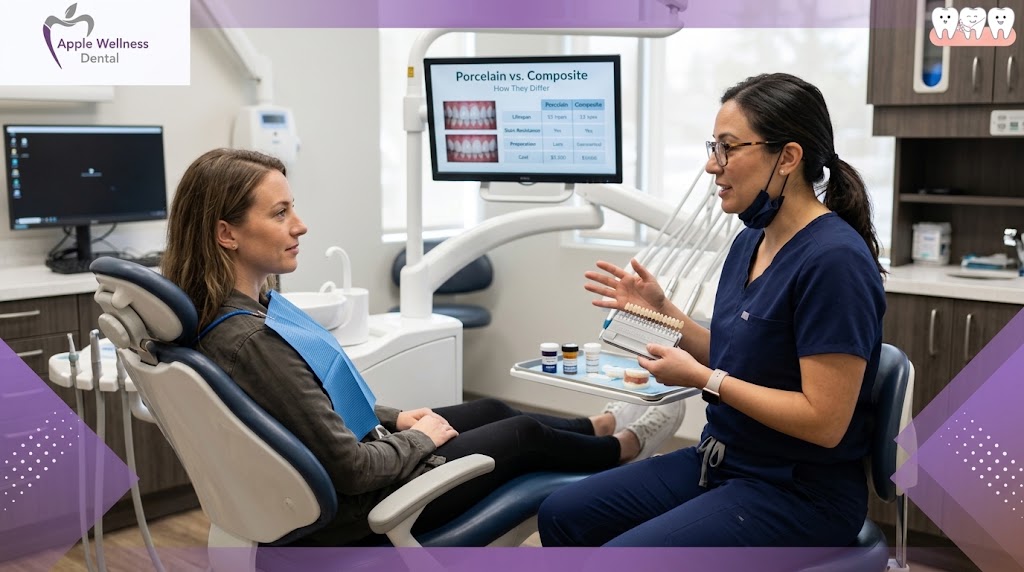
| Feature | Porcelain veneers | Composite veneers |
|---|---|---|
| Made where | Usually fabricated in a dental lab | Built by the dentist directly on the tooth |
| Typical visits | Usually two | Often one |
| Translucency | Ceramic types can be made at different translucency levels | Depends on the resin and the dentist’s technique |
| Best for | Long-lasting, carefully matched results | Smaller changes or a faster result |
What a natural result looks like in practice
- The colour matches your neighbouring teeth in daylight, not just in the clinic.
- The edges blend, so the veneers do not look like flat, separate pieces.
- The teeth are not bulky, and the bite feels comfortable.
- The gum line is neat, with no visible edge or irritation.
Hypothetical example
Hypothetical example: Jordan compared a dentist’s previous cases with his own teeth and asked which ceramic and cement were planned. The dentist explained the choices and asked whether Jordan wanted a trial step to check shade and shape before final bonding. Jordan booked the trial so he could see the colour in his own mouth before committing.
Questions to ask before you decide
- Can I see before-and-after photos of your own veneer cases, with patient consent?
- How will you check the shade, and under what kind of light?
- Do you offer a trial or mock-up before final bonding?
- Will the material be porcelain or composite, and why?
To talk through what your smile could look like, contact our office. For cost, read our guide on how much veneers cost.
Frequently asked questions
Do veneers look natural?
They can. Colour, translucency, shape and the gum line decide the result, and research shows shade matching is difficult, especially with thin veneers.
Can veneers look fake?
Poorly planned veneers can look bulky or mismatched. Well-planned ones should blend with your natural teeth.
Do porcelain and composite veneers look different?
They can. Ceramic veneers can be made at different translucency levels, and composite results depend on the resin and the dentist’s technique.
Will my natural tooth look different underneath?
Preparation removes a small amount of enamel from the front surface. One commercial source puts this at 0.3 to 0.7 mm.
Can I see examples of the dentist’s work?
Ask the clinic for before-and-after photos of its own cases, shared with patient consent.
Do veneers stay looking the same?
Veneers can stain or wear over time, so regular checkups and good oral hygiene help them keep their appearance.
Sources
- Study on resin cement shade and ceramic veneer colour and translucency (2016): pmc.ncbi.nlm.nih.gov
- Dental Research Journal, study on ceramic translucency and luting cement shade (undated on page): pmc.ncbi.nlm.nih.gov
- Bai et al., Journal of Dental Sciences (January 2021): doi.org/10.1016/j.jds.2020.06.023
- Mayo Clinic, “Gingivitis: Symptoms and causes” (November 16, 2023): mayoclinic.org
- Garrison Woods Dental, Calgary, veneers page (undated): garrisonwoodsdental.com
Apple Wellness Dental
Dental care in Airdrie, Alberta. This article is general education and does not replace an examination by a dental professional. It is not medical, legal, tax or financial advice.
Curious how veneers would look on your smile? Book a call or Contact Us, or call 587-332-6767.