
Can Veneers Be Whitened? What Bleach Can and Cannot Change
Quick Answer: Can veneers be whitened? Not with bleach. The American Dental Association says only natural teeth can be whitened and tooth-coloured restorations do not change colour. Whitening gel may lighten the natural teeth next to your veneers, which can make the veneers look darker. A dull veneer usually needs polishing, or replacement.
Can veneers be whitened is one of the most common questions we hear from people who already have veneers, or who are planning them and also want a brighter smile. The short answer is no, but the full answer is more useful: the order you do things in, the material your veneers are made of, and what is actually causing the colour change all matter. This guide explains what bleach does, what it cannot do, and what your real options are.
Last updated: November 3, 2026. Main source: the American Dental Association (ADA) “Whitening” oral health topic, last updated August 16, 2022. Full links are in the Sources section.
Key Takeaways
- Bleach does not change veneer colour. The ADA states that only natural teeth can be whitened, not tooth-coloured restorations.
- Whiten first, then match. If you want whiter teeth and veneers, natural teeth are usually whitened before the veneer shade is chosen.
- Surface stain is different. Stain sitting on top of a veneer or along its edge may respond to a professional cleaning and polish.
- Composite stains more easily than porcelain. ADA MouthHealthy notes composite veneers are not as stain- or wear-resistant.
- A clinical exam comes first. The ADA and CDA both recommend an exam to find the cause of discolouration before whitening.
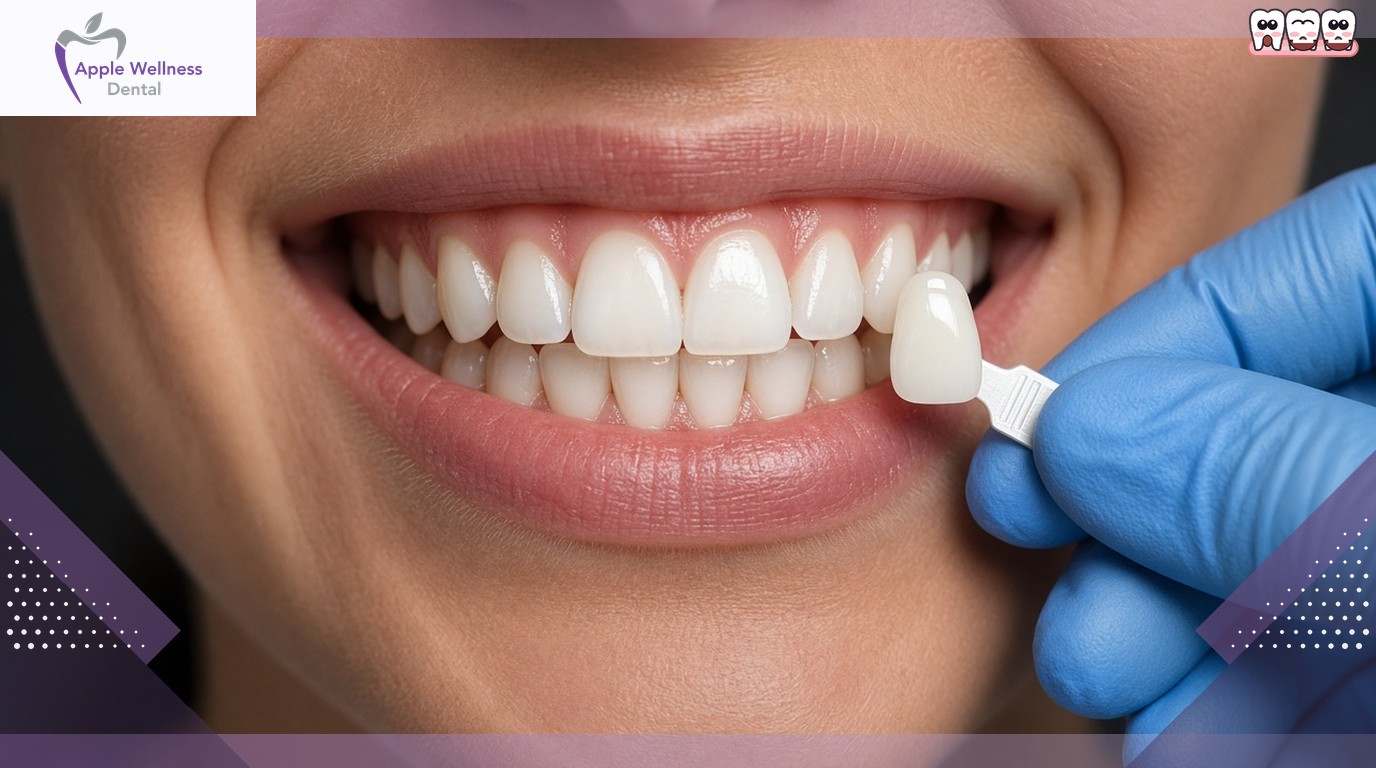
Why bleach does not lighten porcelain or composite
Tooth whitening works through a chemical reaction inside natural tooth structure. The ADA explains that carbamide peroxide and hydrogen peroxide release reactive oxygen that interacts with coloured compounds inside enamel and dentin. That process is what lightens the tooth from within.
Veneers are different. They are thin shells made from porcelain (ceramic) or tooth-coloured composite resin, bonded to the front of the tooth. There are no stained compounds inside enamel and dentin for the gel to break down, so the gel has nothing to act on. The ADA puts it plainly: “Only natural teeth can be whitened, not tooth-colored restorations.” ADA MouthHealthy also says whitening does not work on caps, crowns, veneers or fillings.
This also applies to the parts of your mouth that are restored rather than natural, such as crowns, bonding and tooth-coloured fillings. The ADA notes that because restorative materials generally do not change colour, a dentist should identify and document existing restorations before whitening so the result is acceptable.
What happens if you whiten teeth that have veneers
Using a whitening product with veneers in place is not usually dangerous for the veneer itself, but the result may disappoint you. The most common problems are:
- A colour mismatch. Your natural teeth may lighten while the veneers stay the same, so the veneers now look greyer or darker than the teeth beside them.
- Uneven results at the edges. Any natural tooth showing near the gum line or between veneers may lighten, creating a visible band.
- Sensitivity and gum irritation. The ADA lists temporary tooth sensitivity and gum inflammation as the most common side effects of whitening. You get those side effects without a change in the veneers.
- Possible effects on bonding. The ADA notes some research suggests bleaching may change the enamel surface and reduce bond strength between enamel and composite or ceramic materials. Ask your dentist about timing if new veneers are planned soon after whitening.
The order that usually works: whiten first, then choose the veneer shade
If you are planning veneers and also want whiter natural teeth, the usual approach is to whiten the natural teeth first. The veneer shade is then matched to your new, lighter natural colour. ADA MouthHealthy notes that each veneer process includes picking the colour shade to match your natural teeth, so the timing of whitening matters.
This is why your dentist may ask about your whitening goals at the very first consultation, before any shade is selected. Ask your dentist how long to wait after whitening before the shade is taken, because the colour can settle in the days after treatment.
Hypothetical example: A patient plans two porcelain veneers on chipped front teeth and also wants the rest of their smile whiter. They complete dentist-supervised tray whitening first. After the colour settles, the dentist selects a veneer shade to match the newly whitened teeth. If they had done it in reverse, the two veneers could have stood out as darker once the other teeth lightened.
Options when your veneers look dull or stained
Because bleach does not work, the right fix depends on what is causing the change. A dental exam can tell the difference between these common situations:
| What you notice | Likely cause | Options to discuss |
|---|---|---|
| Veneers look yellow next to natural teeth that were recently whitened | Natural teeth lightened, veneers did not | Wait for colour to settle; replacement only if the mismatch bothers you |
| Brownish film on the surface after coffee, tea or red wine | Surface (extrinsic) stain on the veneer | Professional cleaning and polishing; avoid harsh abrasives at home |
| Dark line along the edge of a veneer | Stain at the margin or a margin problem | Exam to check the edge; polishing or repair if needed |
| Composite veneer that has dulled or roughened | Wear and staining of composite resin | Re-polishing or resurfacing with new composite |
| Porcelain veneer that is chipped, cracked or loose | Damage or bond failure | Repair or replacement after an exam |
Note the role of cleaning. The ADA says a wide range of extrinsic stains can be reduced with mechanical methods, including professional prophylaxis. That is why a regular dental exam and cleaning is often the first step when veneers look dull. For a plain-language look at a cleaning visit, see our guide on what happens during a dental cleaning.
Porcelain versus composite
ADA MouthHealthy describes porcelain veneers as strong, long-lasting and natural-looking, and composite veneers as easier to fix if damaged but not as stain- or wear-resistant. In practice that means composite veneers tend to collect surface stain sooner, but they can often be re-polished or added to. Porcelain usually holds its colour well, but if it does need a colour change, the veneer typically has to be replaced. Our article on composite veneers explains the material in more detail.
A quick checklist before you buy a whitening kit
- ☐ List every tooth that has a veneer, crown, bonding or tooth-coloured filling in your smile zone.
- ☐ Ask whether any visible natural tooth (edges, gum line, back teeth) would lighten and stand out.
- ☐ Check whether your goal is to lighten natural teeth, or to fix the colour of the veneers themselves.
- ☐ If veneers are planned, confirm with your dentist whether to whiten first and how long to wait before the shade is taken.
- ☐ Mention any sensitivity, gum recession or allergies before whitening.
- ☐ Use non-abrasive oral care on veneers and keep regular cleanings so surface stain is removed safely.
Caring for veneers so they keep their colour
Since you cannot bleach veneers back to a lighter shade, prevention matters. These habits are consistent with the ADA and CDA guidance on stain and oral care:
- Brush twice a day with a soft brush and floss daily. Ask your dentist which toothpaste suits your veneer material, because highly abrasive pastes may roughen composite.
- Rinse with water after coffee, tea, cola or red wine. The ADA lists these drinks among common causes of extrinsic stain.
- Avoid tobacco, which the ADA also lists as a cause of surface stain.
- Keep regular professional cleanings so surface stain and plaque are removed before they build up.
- Avoid DIY “whitening” with charcoal, acidic fruit mixtures or baking soda pastes. The ADA notes these methods lack evidence and some are abrasive.
Our hygienists can show you how to clean around veneer edges at your next visit. If you are still deciding on treatment, you may also find our guides on how long porcelain veneers last and whether veneers can be removed useful.
Whitening and veneers at our Airdrie clinic
At Apple Wellness Dental in Airdrie, Dr. Sanjay Rajpal and Dr. Hammad Qasim start with an exam so we can see which teeth are natural and which are restored. That tells us whether teeth whitening will help, or whether polishing, repair or replacement is the better route.
A few practical points for Alberta patients:
- Fees. Our clinic follows the Alberta Dental Fee Guide. The Government of Alberta notes that fee guide amounts are recommended, not mandatory, and suggests asking your insurer for a pre-authorization.
- Coverage. Whitening and veneers are often treated as cosmetic by insurance plans, so check your own plan before treatment. We direct bill and offer payment plans.
- Booking. We do not have online booking. Call or use our contact page and our team will find a time. We are at 229 1st Street SW, Airdrie.
If you already have veneers and you are unhappy with the colour, bring that up at your next exam. The fix is usually simpler than people expect once the cause is clear.
Frequently asked questions
Can veneers be whitened with whitening strips?
No. Whitening strips use peroxide, which only lightens natural teeth. The ADA states that tooth-coloured restorations do not change colour. Strips may lighten the natural teeth around your veneers and make the veneers look darker.
Will whitening damage my veneers?
Whitening is not known to make porcelain veneers change colour. The ADA notes the most common side effects are temporary sensitivity and gum irritation, and some research suggests bleaching may affect bond strength. Ask your dentist before whitening around new or planned veneers.
How do I get stains off my veneers?
Surface stain on a veneer may come off with a professional cleaning and polish. The ADA says many extrinsic stains can be reduced by professional prophylaxis. Stain at the edge, or a dull composite surface, needs an exam to decide on polishing, repair or replacement.
Should I whiten my teeth before getting veneers?
Usually, yes, if you want whiter natural teeth. The veneer shade is matched to your natural teeth, so whitening first lets the veneers match the lighter colour. Your dentist will tell you how long to wait before the shade is chosen.
Do composite veneers stain more than porcelain?
Generally, yes. ADA MouthHealthy says composite veneers are not as stain- or wear-resistant as porcelain, although they are easier to fix if damaged. Composite can often be re-polished, while porcelain usually needs replacement to change its colour.
Can a dentist make my veneers whiter?
A dentist cannot bleach a veneer lighter. Options depend on the cause and may include polishing surface stain, resurfacing composite, or replacing a veneer with a lighter shade after whitening your natural teeth.
Sources
- American Dental Association, “Whitening” oral health topic (last updated August 16, 2022)
- ADA MouthHealthy, “Teeth Whitening” (undated)
- Canadian Dental Association, “Teeth Whitening” (undated)
- ADA MouthHealthy, “Veneers” (undated)
- Canadian Dental Association, “Bonding and Veneers” (undated)
- Cleveland Clinic, “Veneers” (last updated July 18, 2022)
- Government of Alberta, “Dental fees in Alberta” (undated)
Apple Wellness Dental
Dental care in Airdrie, Alberta. This article is general education and does not replace an examination by a dental professional. It is not medical, legal, tax or financial advice.
Not sure why your veneers look different from your natural teeth? Our Airdrie team can check the cause and explain your options. Book a call or Contact Us, or call 587-332-6767.