
The Complete 2026 Guide to Dental Veneer Removal and Replacement
Can veneers be removed once they have been permanently bonded to your teeth? The definitive answer is yes. However, whether the procedure is considered reversible depends entirely on the type of veneer material used and how much of your natural tooth enamel was altered during the initial preparation. While the physical removal of a dental veneer is a routine procedure for modern cosmetic dentists, returning to your original, uncovered natural teeth is rarely a viable option for patients who received traditional porcelain restorations.
Key Takeaways
- Veneer removal is completely possible, but the underlying tooth structure dictates the next steps.
- Traditional porcelain veneers require removing 0.3mm to 0.5mm of enamel, making them a permanent, lifelong commitment.
- Over 85% of removed porcelain veneers must be immediately replaced with new veneers or dental crowns to protect the exposed dentin.
- Composite resin veneers and no-prep veneers (like Lumineers) are often fully reversible with minimal to no enamel loss.
- Modern 2026 dental technology, such as Erbium YAG (Er:YAG) lasers, has reduced veneer removal time by up to 40% while preserving maximum healthy tooth structure.
- The most common reasons for removal include aesthetic dissatisfaction, micro-leakage causing decay, and structural damage after 10 to 15 years of use.
Understanding Dental Veneers and Reversibility
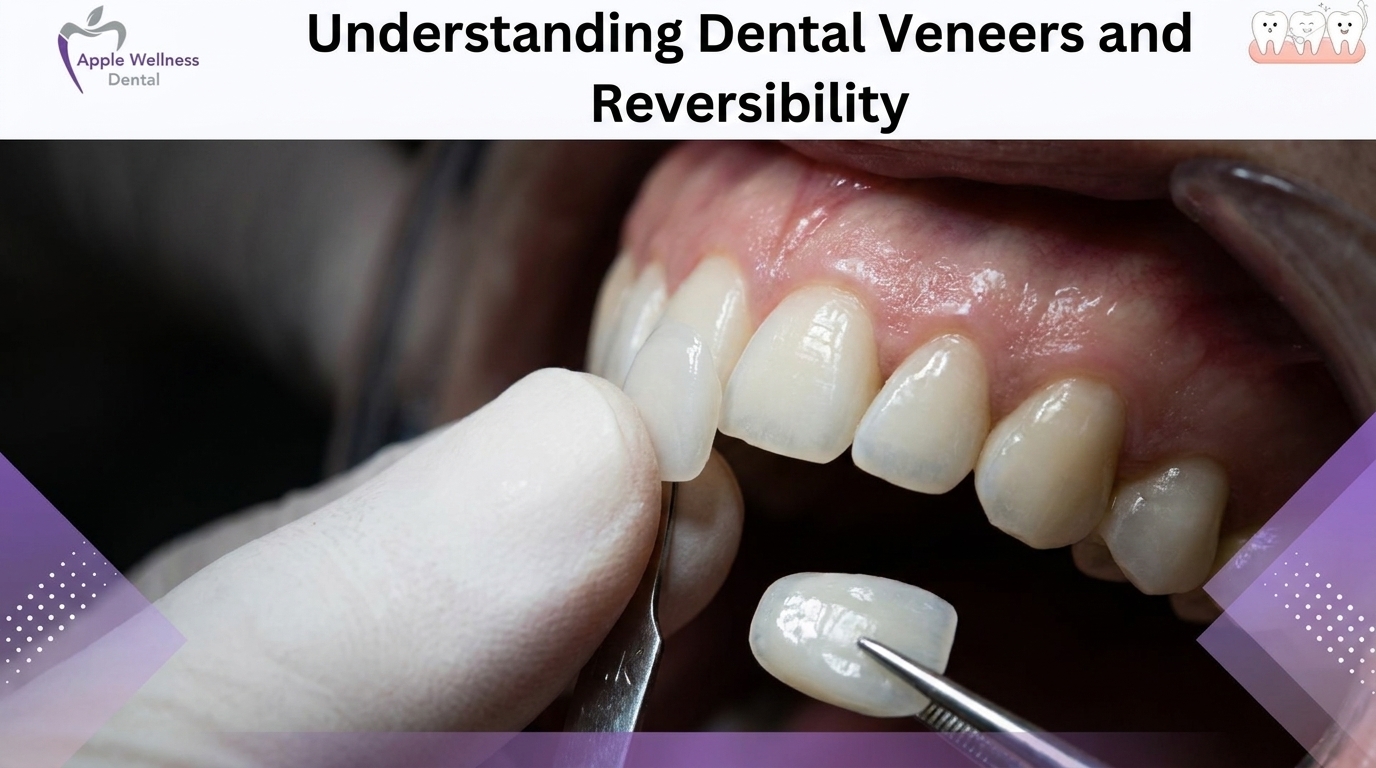
To fully grasp the complexities of veneer removal, patients must first understand the initial application process. Dental veneers are ultra-thin shells designed to cover the front surface of teeth, improving color, shape, and overall appearance. According to the American Dental Association, the primary factor determining if a veneer is reversible is the amount of enameloplasty—or enamel shaving—performed before bonding.
Traditional porcelain veneers require the dentist to shave down approximately 0.3mm to 0.5mm of the tooth’s natural enamel. This step is critical to ensure the veneer sits flush with the gum line and does not appear bulky. Because tooth enamel cannot regenerate once removed, this preparatory step makes traditional veneers irreversible.
“Porcelain veneer removal requires precision to preserve the underlying dentin,” explains Dr. Marcus Cohen, Lead Prosthodontist and cosmetic researcher. “Once the enamel is gone, the tooth loses its natural protective barrier. We can always take the porcelain off, but the tooth will always require some form of protective restoration moving forward.”
Porcelain vs. Composite vs. No-Prep Veneers
The type of material dictates the ease of removal. Composite resin veneers are sculpted directly onto the tooth, often requiring little to no enamel removal. These can typically be polished off, allowing the patient to return to their natural teeth. Similarly, “no-prep” veneers (such as Lumineers) are marketed as reversible because they are applied directly over the existing enamel without aggressive shaving.
However, clinical research indicates that up to 90% of traditional porcelain veneers require some degree of permanent enamel preparation, cementing their status as a lifelong dental commitment.
Why Would Someone Need Veneers Removed?
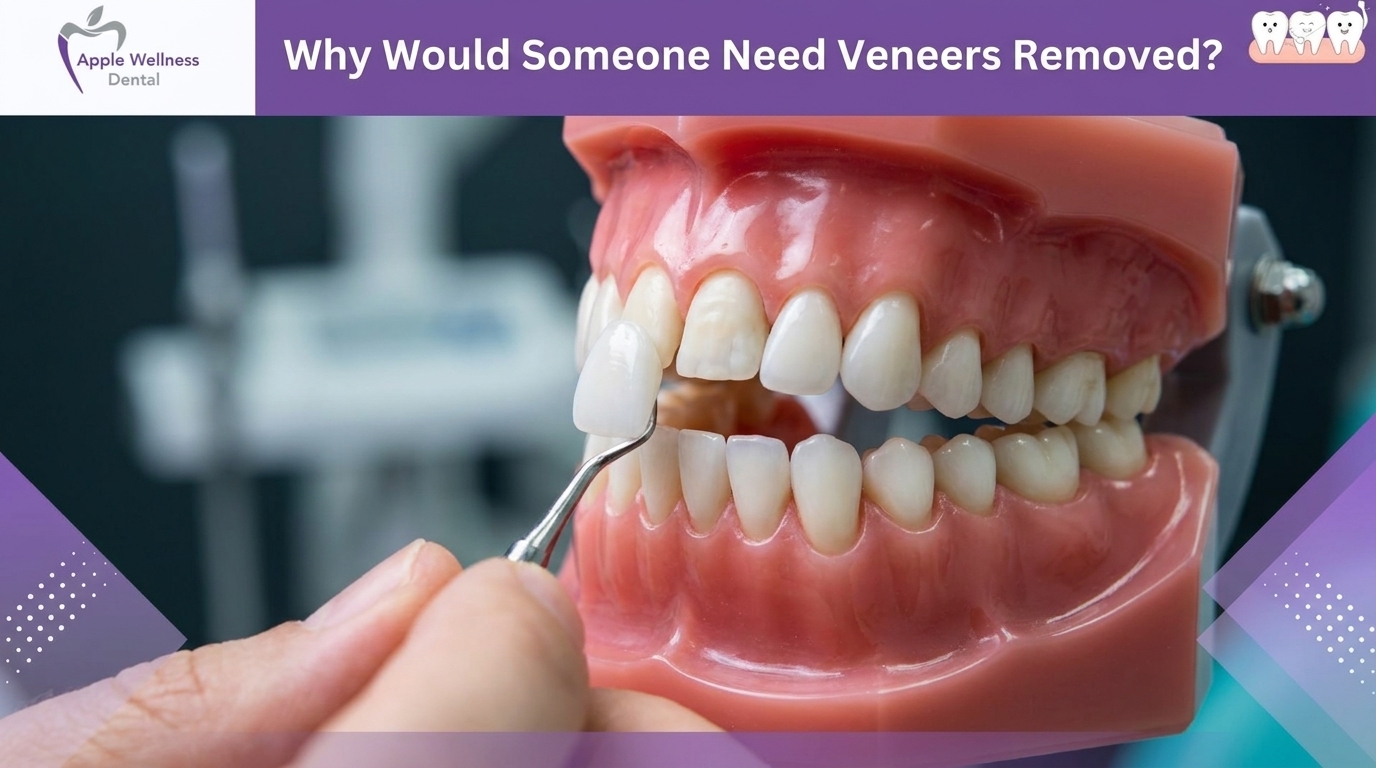
While veneers are highly durable, they are not invincible. The average lifespan of a well-maintained porcelain veneer is between 10 and 15 years, while composite veneers typically require replacement every 5 to 7 years. In 2026, veneer replacement accounts for roughly 25% of all restorative cosmetic dental visits.
Structural Damage and Chipping
Despite the strength of modern materials like lithium disilicate, veneers can chip or crack under immense pressure. Habits such as bruxism (teeth grinding), biting down on hard objects like ice or pens, or using teeth as tools can fracture the ceramic. When a veneer cracks, it cannot simply be patched like composite resin; the entire unit must be removed and replaced.
Underlying Dental Decay (Micro-Leakage)
Veneers only cover the front and biting edge of the tooth. The back of the tooth remains exposed to bacteria and plaque. Over time, the bonding cement at the margins of the veneer can degrade. Dr. Alan Thorne, an Endodontic Researcher, notes: “Decay margin micro-leakage accounts for 12% of all veneer failures after the 10-year mark.” If decay breaches the protective seal, the veneer must be removed to treat the cavity beneath.
Aesthetic Dissatisfaction
Cosmetic trends evolve, and so do patient preferences. A patient who requested opaque, perfectly white “Hollywood” veneers a decade ago may now desire a more translucent, natural appearance. Furthermore, as gum tissue naturally recedes with age, the margins of the veneers may become visible, prompting a removal and replacement to restore a seamless smile.
The Veneer Removal Process: A Step-by-Step Guide
Removing a veneer is a delicate procedure that requires a skilled hand and advanced technology to avoid damaging the remaining tooth structure. The process is typically painless, as local anesthesia is administered to eliminate dentin hypersensitivity.
- Comprehensive Examination: The dentist begins with 3D digital imaging and X-rays to assess the condition of the underlying tooth structure and the integrity of the bonding agent.
- Isolation and Anesthesia: The treatment area is isolated using a dental dam to prevent debris from being swallowed. Local anesthetic is applied to ensure maximum comfort.
- Debonding the Veneer: Historically, dentists relied solely on high-speed diamond burs to manually grind off the porcelain. In 2026, advanced laser debonding technology is the gold standard. According to data from the American Academy of Cosmetic Dentistry, the use of Erbium YAG (Er:YAG) lasers reduces removal time by up to 40%. The laser energy degrades the bonding cement through the porcelain, often allowing the veneer to pop off in a single, intact piece.
- Cement Cleanup: Once the veneer is detached, residual resin cement is carefully polished away using slow-speed instruments and abrasive discs, ensuring the original tooth preparation is left immaculate.
- Impressions for Replacement: If the patient is receiving new restorations, digital intraoral scanners capture a high-resolution 3D model of the prepared teeth to send to the milling lab.
Can You Go Back to Natural Teeth?
This is the most common question patients ask during cosmetic consultations. The answer hinges heavily on your initial procedure. If your natural teeth were drilled down to accommodate traditional porcelain veneers, you cannot go back to your natural teeth.
Without the protective layer of enamel, exposed dentin is highly susceptible to severe temperature sensitivity, bacterial infection, and rapid decay. Furthermore, prepared teeth look significantly smaller and possess a rough, peg-like appearance that most patients find aesthetically unacceptable.
For these reasons, over 85% of removed porcelain veneers are immediately replaced with new restorations. Less than 5% of patients opt to go without coverage after removal, and those few cases almost exclusively involve reversible, no-prep composite treatments.
Comparing Veneer Types and Reversibility
| Veneer Material | Enamel Removal Required | Average Lifespan | Is it Reversible? |
|---|---|---|---|
| Traditional Porcelain | High (0.3mm – 0.5mm) | 10 to 15 Years | No (Requires permanent replacement) |
| Composite Resin | Minimal to None | 5 to 7 Years | Yes (Usually fully reversible) |
| No-Prep (Lumineers) | None | 10 to 12 Years | Yes (With careful laser removal) |
Replacement Options After Removal
Once a veneer is removed, restoring the tooth’s form, function, and aesthetics becomes the immediate priority. Depending on the amount of healthy tooth structure remaining, dentists will recommend one of three primary replacement options.
1. New Porcelain Veneers
The most straightforward replacement is bonding a brand-new set of porcelain veneers. Because modern ceramics are stronger and more translucent than older models, a replacement set can dramatically revitalize a patient’s smile. The dentist will take new digital impressions and craft customized shells that fit precisely over the original tooth preparation.
2. Dental Crowns
If the original tooth has suffered substantial decay or structural fracture over the years, a new veneer may not offer enough support. In these cases, a full-coverage dental crown is necessary. While a veneer only covers the front surface, a crown encases the entire tooth, providing 360-degree protection against chewing forces.
3. Composite Bonding
For patients who are replacing composite veneers or have suffered minor localized damage, direct composite bonding is a cost-effective alternative. The dentist applies a tooth-colored putty directly to the enamel, sculpts it into shape, and hardens it with an ultraviolet light. While less durable than porcelain, it offers excellent immediate results.
“When patients ask if we can take off their composite restorations, I remind them that the replacement process is often much simpler than dealing with porcelain,” says Dr. Sarah Jenkins, a Cosmetic Dental Specialist. “We can seamlessly transition them back to natural teeth or upgrade them to porcelain depending on their long-term goals.”
Cost and Time Considerations in 2026
Understanding the financial and temporal commitment of veneer replacement is vital. The cost of removing and replacing veneers is generally equivalent to, or slightly higher than, the original installation cost.
As of 2026, the baseline cost for a single porcelain veneer replacement ranges from $1,200 to $2,500, depending on geographic location and the clinician’s expertise. The removal process itself may incur a separate debonding fee, especially if specialized laser equipment is utilized. For comprehensive data on medical and dental pricing averages, authoritative healthcare platforms like WebMD offer extensive patient resources.
The timeline for replacement typically spans two appointments over a two-week period. During the first visit, the old veneers are removed, the teeth are cleaned, and impressions are taken. The patient leaves with temporary acrylic veneers. Two weeks later, the permanent ceramic restorations are permanently bonded.
Conclusion
The decision to remove dental restorations is not one to be taken lightly. While the physical removal process is safe, efficient, and virtually painless thanks to modern 2026 dental technology, the irreversible nature of traditional enamel preparation means that most patients will require a lifetime commitment to restorative care. Whether you are dealing with a chipped shell, underlying decay, or simply desire a cosmetic upgrade, partnering with an experienced prosthodontist ensures your underlying teeth remain healthy and protected.
If you are experiencing issues with your current dental work or are considering an aesthetic upgrade, professional evaluation is the crucial first step. Contact us today to schedule a comprehensive consultation and discover the safest, most effective options for your smile restoration.
Frequently Asked Questions
Can veneers be removed without damaging the tooth?
Yes, trained cosmetic dentists can remove veneers without causing further damage to the underlying tooth. Utilizing magnification loupes and modern Er:YAG lasers, dentists safely break the cement bond while leaving the natural tooth structure perfectly intact.
Do removed veneers hurt?
The removal process itself is painless, as local anesthesia is used to numb the teeth and gums. However, if the underlying dentin is exposed to air without a temporary replacement, patients may experience severe temperature sensitivity.
How many times can you replace a veneer?
There is no strict numerical limit, but each replacement typically requires a microscopic amount of additional tooth preparation to ensure a clean bonding surface. Eventually, if too much tooth structure is lost over multiple decades, a dental crown will be required instead.
Can I switch from porcelain to composite veneers?
While physically possible, it is rarely recommended. Once enamel is permanently removed for porcelain, placing weaker composite resin over the prepared tooth may result in decreased durability and a higher risk of recurrent decay.
Does dental insurance cover veneer removal?
If the removal is purely for cosmetic reasons, insurance will not cover it. However, if the removal is deemed medically necessary due to severe decay, structural failure, or infection, many insurance plans will cover a percentage of the procedure and the subsequent restorative crown.
References
- American Dental Association. General guidelines on cosmetic dental preparations and enameloplasty. https://www.ada.org
- American Academy of Cosmetic Dentistry. Statistical analysis of restorative lifespans and laser debonding technology. https://www.aacd.com
- National Center for Biotechnology Information. Clinical studies on micro-leakage and dentin hypersensitivity in restorative dentistry. https://www.ncbi.nlm.nih.gov
- WebMD Health Network. Patient resources on dental procedure pricing and recovery timelines. https://www.webmd.com