
Has Anyone Drunk Alcohol After Tooth Extraction?
Quick Answer: Has anyone drunk alcohol after tooth extraction? Yes, it happens, often by habit or at a social event. If you already have, do not panic. Stop drinking, do not rinse hard or spit, and watch for bleeding or pain. The CDA advises avoiding alcohol for 2 weeks after minor oral surgery and never mixing it with pain medicine.
Has anyone drunk alcohol after tooth extraction is the kind of question people search late at night, often with a drink already in hand. You are not the first, and in most cases a small amount does not lead to a problem. But alcohol is on every official aftercare list for good reasons. This guide focuses on what to do if you already drank, scenario by scenario, rather than repeating the general rules.
Last updated: November 3, 2026. Main source: Canadian Dental Association, “Care after Minor Oral Surgery”. Full links are in the Sources section.
Key Takeaways
- Official advice is clear: the CDA says to avoid alcohol and tobacco for the first 2 weeks after surgery.
- Alcohol and pain medicine do not mix. The CDA says not to drink alcohol when taking pain relief medication.
- After sedation, Nova Scotia Health advises no alcohol for 24 hours.
- If you already drank, stop, protect the clot and watch for warning signs.
- Call your dentist for bleeding that will not stop, worsening pain a few days later, or if you mixed alcohol with medicine and feel unwell.
Why alcohol is on the avoid list
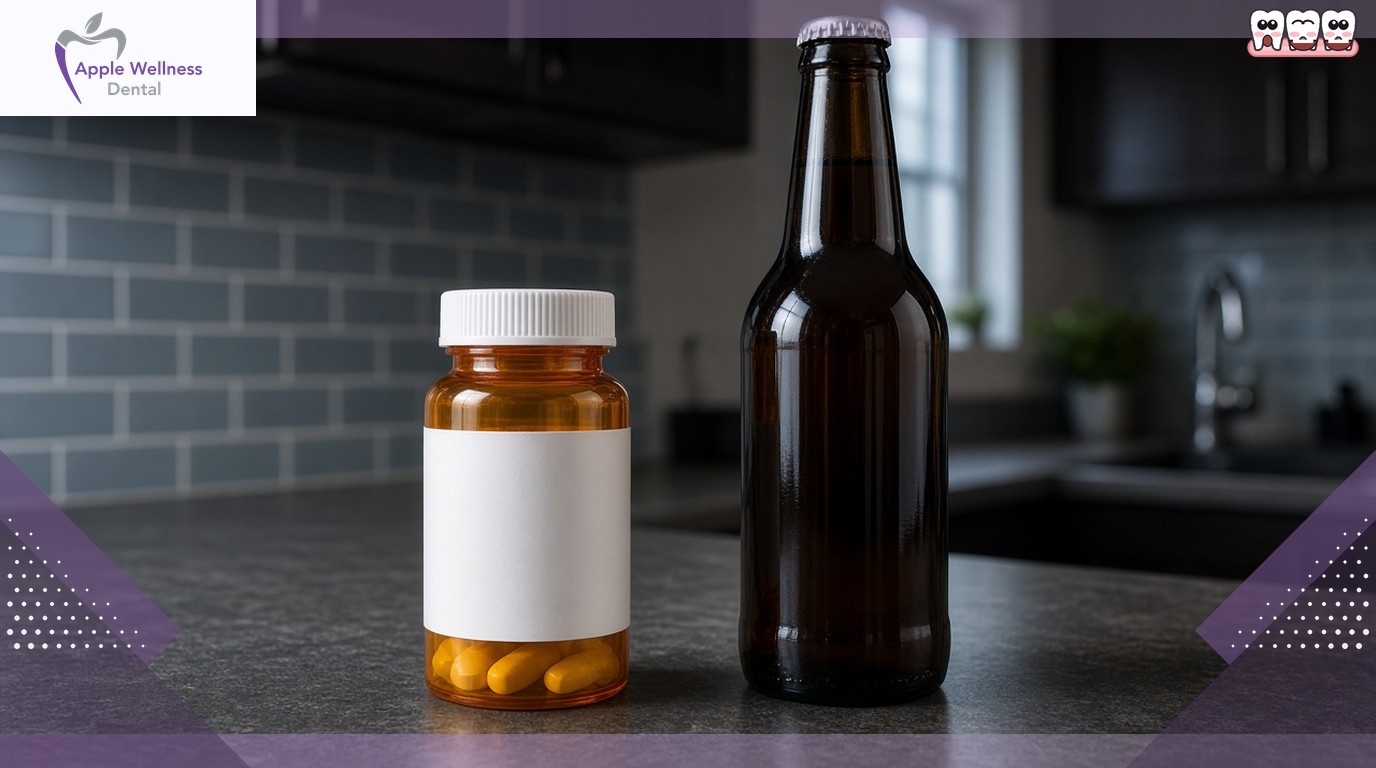
The CDA explains that alcohol and tobacco “make it harder for the blood to clot and easier for an infection to start.” The NHS advises not drinking alcohol after wisdom tooth removal to reduce the risk of bleeding. Mayo Clinic lists alcoholic drinks among the beverages to avoid for as long as your dentist recommends while the socket heals and the clot protects the bone.
There is also the medicine issue. Many people go home with prescription or over-the-counter pain relief. The CDA says plainly: “Do not drink alcohol when taking pain relief medication.” Health Canada notes alcohol can interact with many medications. If you were sedated, Nova Scotia Health advises no alcohol for 24 hours.
I already drank: scenario guide
Use this table to decide on your next step. It is general guidance only, and your dentist’s instructions come first.
| What happened | Likely concern | What to do now |
|---|---|---|
| A sip or two, no pain medicine, more than 24 hours after a simple extraction | Low; small chance of disturbing the clot | Stop. Switch to water from a cup. Do not swish or spit. Carry on with aftercare. |
| A full drink on day 1 | Clot is newest and most fragile; bleeding risk is higher | Stop. Sit upright, bite on damp gauze for 20 to 30 minutes if oozing. Avoid more alcohol. |
| Drank through a straw | Suction may dislodge the clot (Mayo Clinic) | Stop using the straw. Watch for new pain in the next 1 to 3 days. |
| Drank while taking prescription pain medicine | Possible medicine interaction | Do not take more medicine with alcohol. If drowsy, confused or unwell, seek care; call 811 or 911 in an emergency. Ask a pharmacist. |
| Drank within 24 hours of sedation | Combined effects on alertness | Stop. Do not drive. Have someone stay with you. Seek care if you feel unwell. |
| Several drinks at a party in week 1 | Bleeding, dry socket, poor aftercare while impaired | Stop. Drink water. Sleep with head raised. Check the site the next day and call your dentist if worried. |
Hypothetical example: Someone has a lower molar removed on Friday morning and forgets at a Saturday barbecue, drinking half a beer before remembering. They stop, swap to water in a cup, and avoid spitting. That night they sleep with their head on two pillows. On Sunday and Monday they check for new pain or bleeding. Nothing changes, and they hold off on alcohol until their dentist says it is fine.
Warning signs to watch for after drinking
Most people who have a small amount have no issues. Still, keep an eye out for these in the days that follow:
- Bleeding that restarts and does not settle with 2 to 3 rounds of firm gauze pressure.
- New or worsening pain 1 to 3 days after the extraction. Mayo Clinic says this is when dry socket pain usually begins.
- An empty-looking socket, bad breath or a bad taste.
- Swelling, fever or pus, which can point to infection.
- Drowsiness, confusion or breathing trouble if alcohol was mixed with medicine. Call 911 in an emergency.
If bleeding is the concern, our guide on what happens if bleeding does not stop after tooth extraction explains the next steps.
Damage control checklist
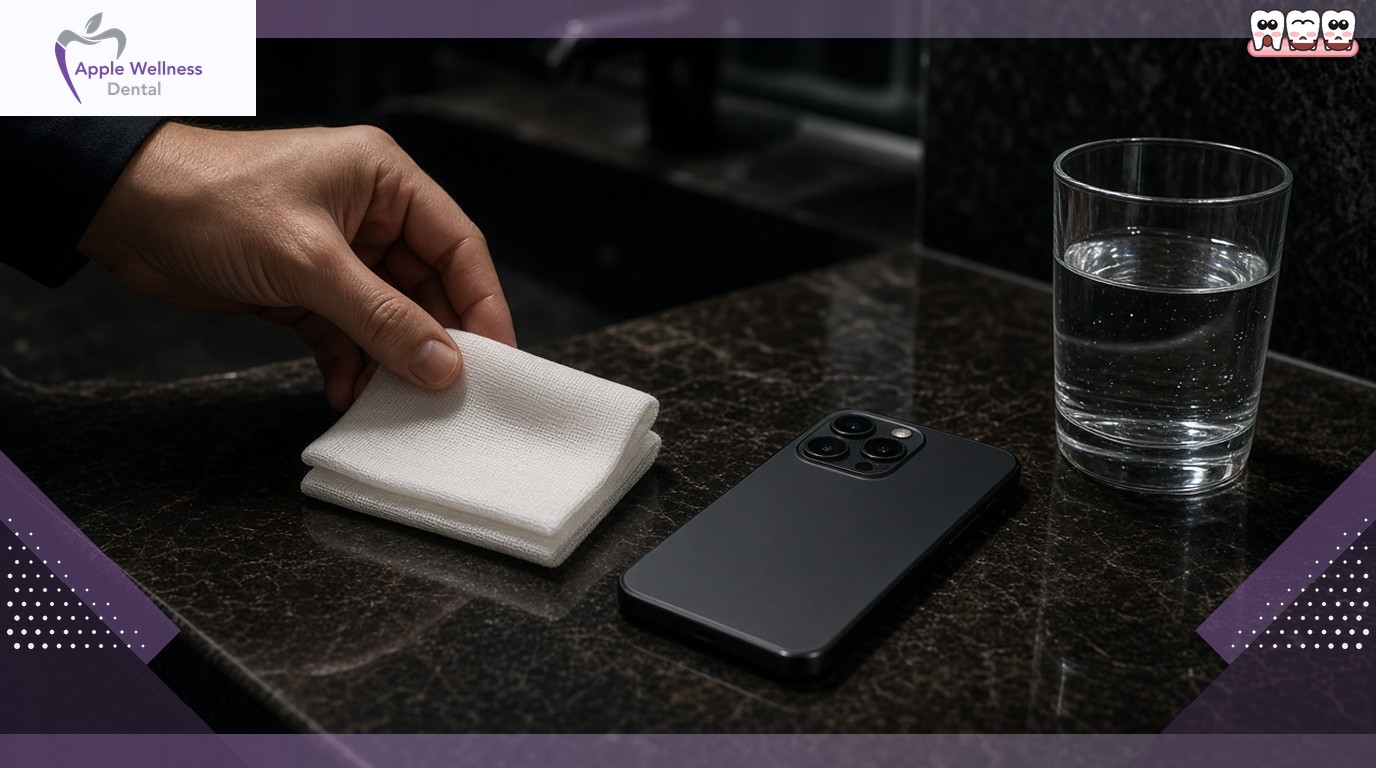
- ☐ Stop drinking alcohol for the rest of the healing period your dentist set
- ☐ Switch to water, sipped from a cup, not a straw or bottle
- ☐ Do not rinse forcefully, swish or spit
- ☐ Do not take more pain medicine until you have checked with a pharmacist
- ☐ Bite on damp gauze for 20 to 30 minutes if there is oozing
- ☐ Sleep with your head raised on pillows
- ☐ Do not smoke; the CDA groups tobacco with alcohol as harder on healing
- ☐ Write down when and how much you drank in case your dentist asks
Hidden sources of alcohol
Not every slip is a glass of wine. Some everyday products contain alcohol too, and they are easy to forget about in the first days after an extraction:
- Mouthwash. Many common mouthwashes contain alcohol. The CDA advises not rinsing for the first 24 hours anyway. After that, follow your dentist’s rinsing instructions and ask whether an alcohol-free rinse or warm salt water is better for you.
- Cooking. Sauces made with wine or beer may still contain some alcohol, depending on how they are cooked.
- Some liquid medicines. A few cough and cold syrups contain alcohol. Check the label or ask a pharmacist.
- Dessert drinks and mixed drinks. Cream liqueurs and premixed coolers can look like a harmless treat.
A small amount from one of these sources is rarely a cause for concern, but it is worth knowing so you can make an informed choice while you heal.
Being honest with your dentist
If you call your dentist about pain or bleeding, tell them if you drank and roughly how much. They are not there to judge. That detail helps them work out whether you need to come in, whether a medicine could be interacting, and what to change for the rest of your recovery. Bring a list of every medicine you took, including over-the-counter pain relievers, and the times you took them.
Gentle alternatives while you heal
If you are used to a drink with dinner or to unwind, a substitute can make the healing period easier. Cool water with a slice of cucumber served in a nice glass, a lukewarm herbal tea, a small glass of cool milk, or a non-alcoholic beer once your dentist says carbonated drinks are fine can all fill the gap. Keep everything at a comfortable temperature and avoid straws.
When can you drink again?
Timing depends on your extraction and your medicines. The CDA recommends avoiding alcohol for the first 2 weeks after minor oral surgery. After sedation, Nova Scotia Health says no alcohol for 24 hours, and the CDA rule about pain medicine still applies whenever you are taking it. For a simple extraction, your dentist may give a shorter window. When in doubt, ask.
For the general rules, timelines and beer specifically, see can I drink alcohol after tooth extraction and can I drink beer after tooth extraction. For safer drink ideas, see what can I drink besides water after tooth extraction.
Planning ahead for events
Many accidental drinks happen at weddings, holidays or work events. If you know an event is coming, consider these simple steps:
- Ask your dentist whether the extraction can be timed around the event.
- Tell a friend you are not drinking so they can help you avoid a habit sip.
- Order a non-alcoholic option in a regular glass, without a straw.
- Eat soft food beforehand so you are not tempted by hard snacks.
Help in Airdrie
At Apple Wellness Dental, Dr. Sanjay Rajpal and Dr. Hammad Qasim would much rather hear from you early than have you worry. If you drank after an extraction and something does not feel right, call us at (587) 332-6767 during clinic hours, or see our emergency dental treatment page. After hours, Albertans can call Health Link at 811. Our clinic at 229 1st Street SW has served Airdrie since 1993.
Frequently asked questions
I drank alcohol after my tooth extraction. Will I get dry socket?
Not necessarily. Many people have no problems after a small amount. Watch for new or worsening pain 1 to 3 days after the extraction, which Mayo Clinic says is when dry socket pain usually starts, and call your dentist if it happens.
How long after tooth extraction can I drink alcohol?
The CDA advises avoiding alcohol for the first 2 weeks after minor oral surgery. Your dentist may give different advice for a simple extraction.
Can I drink alcohol with pain medicine after an extraction?
No. The CDA says not to drink alcohol when taking pain relief medication. Ask a pharmacist if you already have.
Can I drink alcohol after sedation for a tooth extraction?
Nova Scotia Health advises no alcohol for 24 hours after sedation. Do not drive and have someone stay with you.
Does alcohol make an extraction site bleed?
The CDA says alcohol makes it harder for the blood to clot, and the NHS advises avoiding alcohol after wisdom tooth removal to reduce the risk of bleeding.
Can I use mouthwash with alcohol after a tooth extraction?
The CDA advises not rinsing for the first 24 hours. After that, follow your dentist’s rinsing instructions and ask whether an alcohol-free rinse or warm salt water is a better choice while you heal.
What should I do right after drinking alcohol following an extraction?
Stop drinking, switch to water from a cup, do not rinse or spit forcefully, and watch for bleeding or pain. Call your dentist if you are worried.
Sources
- Canadian Dental Association, “Care after Minor Oral Surgery” (undated)
- Mayo Clinic, “Dry socket: Symptoms and causes” (July 18, 2023)
- NHS, “Wisdom tooth removal” (last reviewed June 12, 2024)
- Nova Scotia Health, “After a Dental Extraction” (September 2026)
- Health Canada, “Health risks of alcohol” (undated)
- Health Link 811, Alberta (undated)
Apple Wellness Dental
Dental care in Airdrie, Alberta. This article is general education and does not replace an examination by a dental professional. It is not medical, legal, tax or financial advice.
Worried after drinking post-extraction? Call our Airdrie team. Book a call or Contact Us, or call 587-332-6767.