
Can You Get Veneers With No Teeth? What Can Replace Teeth Instead
Quick Answer: Can you get veneers with no teeth? No. A veneer is a thin shell bonded to the front of a natural tooth, so it needs healthy enamel underneath. If all your teeth are missing, the usual options are complete dentures, implant-supported dentures or a fixed bridge on implants. A dentist decides which fits after an exam.
People often ask can you get veneers with no teeth after seeing celebrity smiles or ads for snap-on veneers. It is a fair question: veneers are known for making teeth look bright and even. But a veneer is a covering, not a replacement tooth. Without a natural tooth to cover, there is nothing for it to bond to.
This guide explains why, what the Canadian Dental Association (CDA) and other official sources say about replacing all of your teeth, and how coverage works in Alberta. It is general information; the right option for you depends on an exam of your gums, jawbone and overall health.
Last updated: October 20, 2026. Main sources: the CDA’s pages on bonding and veneers, dentures and dental implants (undated), Cleveland Clinic’s veneers (July 18, 2022) and implant-supported dentures (October 18, 2022) pages, and the Government of Canada’s CDCP coverage page. Full links are at the end.
Key Takeaways
- Veneers need natural teeth. They are bonded to the front of a tooth’s enamel (CDA).
- Snap-on veneers also need teeth. They cover your natural teeth, and research on them is limited (Cleveland Clinic).
- With no teeth, the main options are complete dentures, overdentures on implants, implant-supported dentures or fixed bridges on implants (CDA, Cleveland Clinic).
- Implants need healthy gums and enough jawbone; a bone graft may be possible if bone has shrunk (CDA).
- Coverage differs: the CDCP lists complete dentures as covered; veneers and implants are not on its list of examples.
Can you get veneers with no teeth? Why veneers need a natural tooth
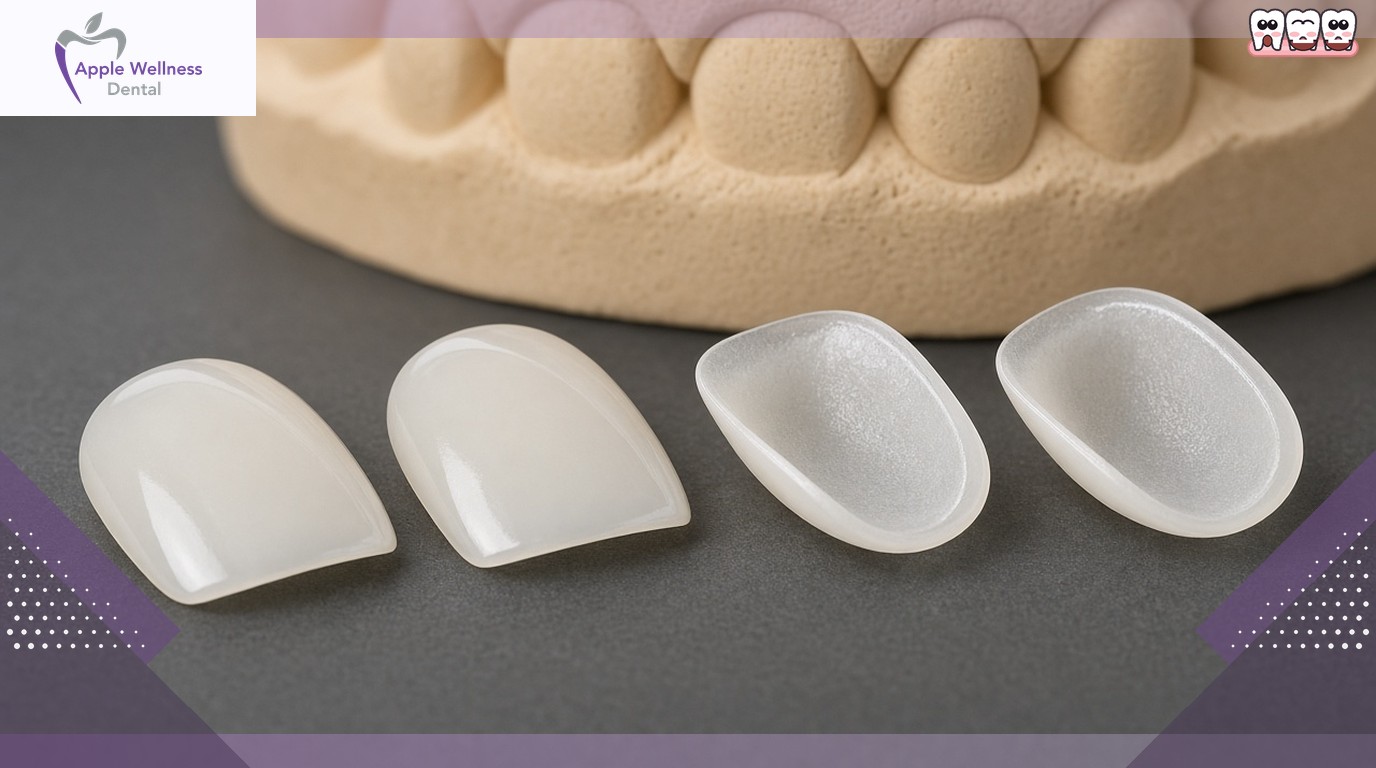
The Canadian Dental Association describes veneers as very thin shells made of porcelain or composite resin that are attached to the front part of teeth. For porcelain veneers, the dentist removes a thin layer of enamel, takes a mould, fits temporary veneers and then bonds the custom veneers to your teeth with dental cement at a follow-up visit.
That process only works on a real tooth. The CDA lists situations where a dentist may suggest another treatment instead of veneers:
- The tooth has decay or gum disease.
- There is not enough enamel for a veneer to bond.
- A large portion of the tooth is missing, in which case a crown may be needed instead.
- You grind or clench your teeth, which can damage veneers.
Cleveland Clinic adds that veneers are only an option if you are free of extensive cavities and gum disease. The American Dental Association’s MouthHealthy site says the same: your dentist must first treat issues like decay or gum disease, because placing veneers over unhealthy teeth may worsen existing problems. So the short answer to can you get veneers with no teeth is no: the tooth is the foundation, and the veneer only changes how its front surface looks.
What about snap-on or pop-on veneers?
Removable veneers are sold under names like snap-on or pop-on veneers. Cleveland Clinic explains that removable veneers cover your natural teeth to hide imperfections and can be taken out like a retainer. It also notes three cautions: they can make it difficult to eat, they could affect your speech, and there is not much research on them because they have only been around for a few years. Because they clip over existing teeth, they are not a solution for someone with no teeth. For more on these products, see our article on pop-on veneers and their cost.
The ADA also warns the public about unlicensed “veneer technicians” offering services without a dentist, saying unsupervised treatment can cause damaging complications. In Alberta, dentists are regulated by the College of Dental Surgeons of Alberta, so it is reasonable to ask who will be doing your treatment and how they are licensed.
Options when you have no teeth or very few
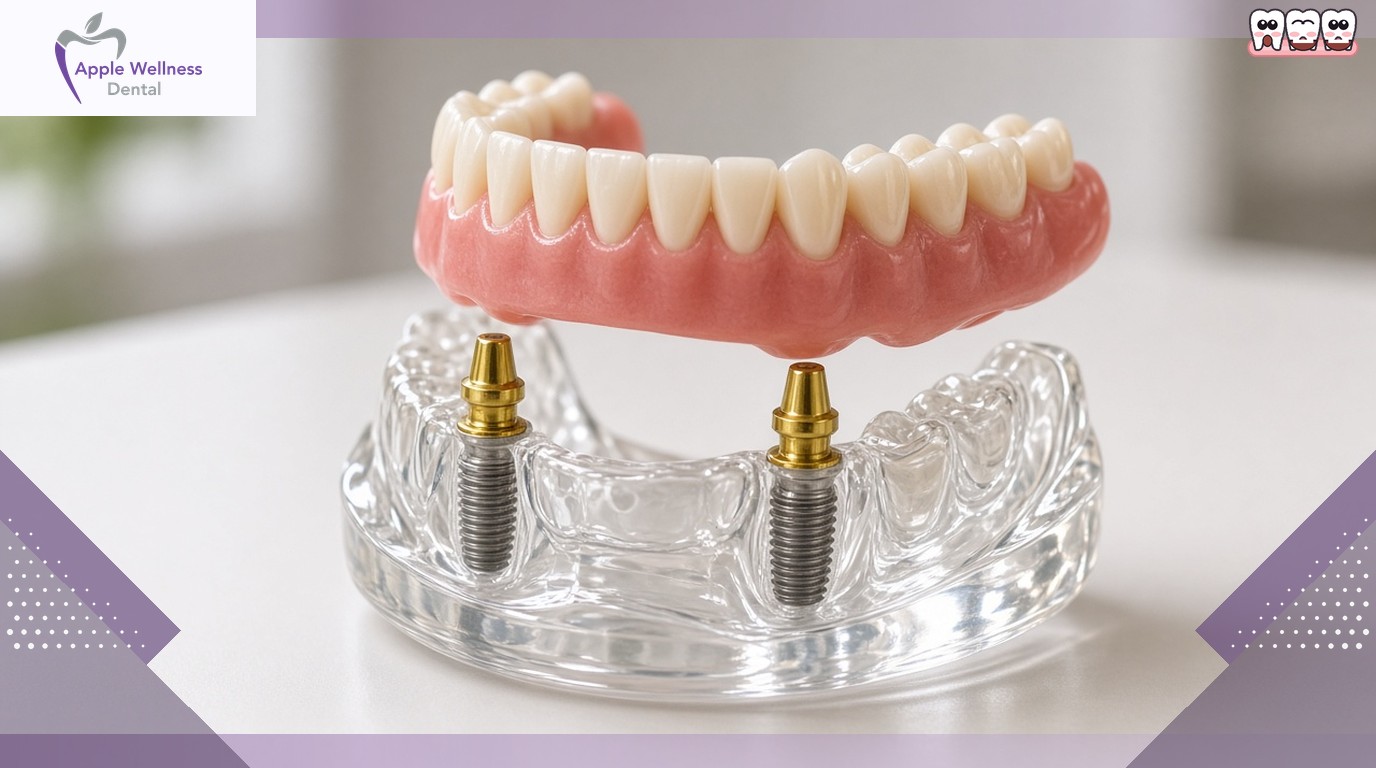
If the real goal is a full, natural-looking smile and the ability to chew, official sources describe several ways to replace all of your teeth. This table summarizes them:
| Option | What it is | Removable? | What the sources say you need |
|---|---|---|---|
| Conventional complete denture | Full set of artificial teeth and gums made after extractions have healed (CDA). | Yes. Held in place by suction (CDA). | Impressions and models of your mouth (CDA). Remove overnight and clean daily (CDA). |
| Immediate complete denture | Made before teeth are removed and inserted right after extraction, so you are not without teeth while healing (CDA). | Yes. | Healing can take up to 6 months; gums and bone can shrink, so relining may be needed (CDA). |
| Overdenture | Removable denture that fits over remaining natural teeth or over dental implants (CDA). | Yes. | If no natural teeth are left, small implants are placed into the jawbone (CDA). |
| Removable implant-supported denture | Denture that “snaps on” to implants in the jaw (Cleveland Clinic). | Yes, daily for cleaning. | Enough jawbone for implants; bone grafts can sometimes help (Cleveland Clinic). |
| Fixed implant-supported denture (hybrid, e.g. All-on-4®) | Full arch attached permanently to implants; All-on-4® uses four implants (Cleveland Clinic). | No. Your dentist removes it for maintenance. | Implants take about 3 to 6 months to integrate with the bone (Cleveland Clinic). |
| Fixed bridge on implants | When replacing several or all teeth, a fixed bridge is anchored to implants (CDA). | No. | Good general health, healthy gums and enough bone (CDA). |
The CDA dentures page says complete dentures are what most people call false teeth and are used when all natural teeth are missing. Its dental implants page describes an implant as an artificial root made of titanium that is placed in the jawbone and acts as an anchor for replacement teeth. The CDA says implants might be right for you if you are in good general health, have healthy gums and have enough bone in the jaw; if the jawbone has shrunk, a bone graft may be possible.
Cleveland Clinic says implant-supported dentures offer more stability for chewing and speaking than traditional dentures, which rest on the gums. It lists possible risks such as infection and nerve damage. The CDA notes rare implant complications including bleeding, infection, numbness or injury to nearby muscles or the sinus, and that an implant may fail if it does not bond to the bone. For a deeper comparison, read our guide to dentures vs. dental implants.
If you still have some teeth: where veneers might fit
Some people asking can you get veneers with no teeth actually have a few healthy teeth left. In that case, the options widen. The CDA describes a partial denture as one or more artificial teeth held in place by clasps on nearby natural teeth, and a fixed bridge as false teeth held between healthy teeth on both sides. Healthy remaining front teeth may be candidates for cosmetic treatment such as veneers, but only after any decay or gum disease is treated, and only if there is enough enamel.
Planning matters here, because veneers are not reversible. The CDA says enamel is removed underneath, so the change is permanent. A dentist will usually plan tooth replacement and cosmetic work together so that colours, shapes and the bite match.
Getting a natural-looking smile without natural teeth
Veneers are popular because they change colour and shape. Dentures and implant teeth are also custom-made, so appearance is part of the plan. The CDA says dentures are made from impressions and models of your mouth, and Cleveland Clinic says implant-supported dentures look like natural teeth. Our article on what dentures are and how they work covers the basics in more detail.
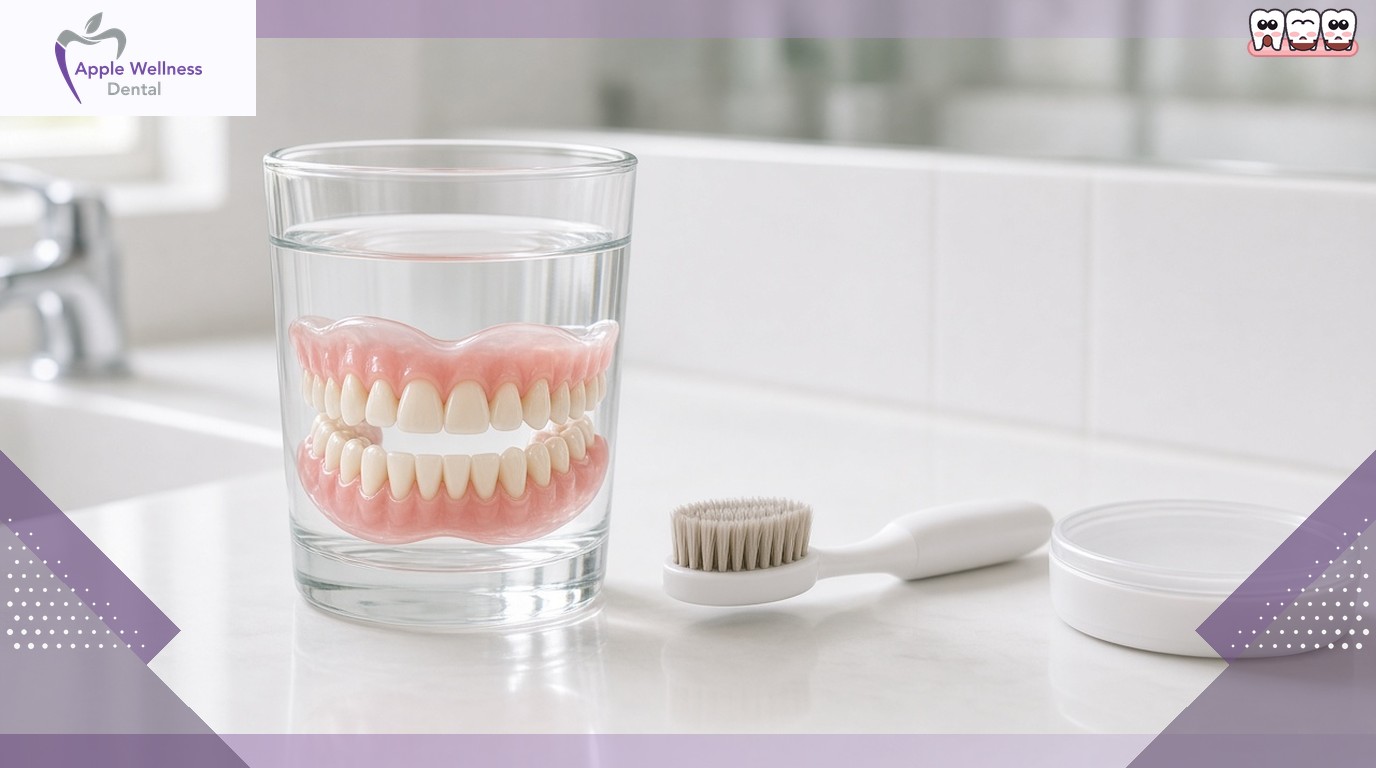
Comfort and fit change over time. The CDA advises seeing your dentist at least once a year because your mouth is always changing, and dentures will need adjusting or relining from time to time. It also warns that poorly fitted dentures may cause sores that make oral cancer harder to spot. Cleveland Clinic says the overdenture that sits on implants should be replaced about every 15 to 20 years with proper care.
Costs and coverage in Alberta
Cost depends on how many teeth are missing, the condition of your gums and bone, and the option you choose, so only an exam can produce a real quote. A few official sources help you understand the landscape:
- Canadian Dental Care Plan. The CDCP coverage page lists complete dentures (including standard and temporary dentures) and denture repairs, relines and rebases as covered services. Complete immediate dentures and overdentures, and partial dentures, require preauthorization. Veneers and dental implants are not among the services it lists.
- Veneers. The CDA says bonding or veneers are often considered cosmetic and may not be covered by your dental benefits plan.
- Implants. The CDA says implants can cost more than other kinds of replacement teeth and might not be covered by your plan, but in most cases they are a one-time cost.
- Insurer schedule example. The Alberta Blue Cross Dental Schedule 2026 lists $871.43 for a standard complete upper (maxillary) denture, code 51101, with laboratory costs extra. Alberta Blue Cross says this schedule forms the basis of its plans’ payments and is not a list of covered services, so it is not a price quote.
- Fee guide. The Government of Alberta explains that the Alberta dental fee guide is recommended, not mandatory, and suggests asking your dentist to send a pre-authorization to your insurer.
The NHS in England offers a useful comparison: it says implants and veneers are generally only available privately, while dentures are usually available on the NHS. For Alberta-specific planning, see our tooth replacement cost guide.
Hypothetical example: choosing between options
Hypothetical example (not a real patient): Pat, 62, has worn an upper denture for years and has only a few lower front teeth left. Pat saw an ad for snap-on veneers and asks about them at a consultation. After an exam and X-rays, the dentist explains that snap-on veneers need healthy teeth to sit on, and that Pat’s remaining lower teeth have gum disease that must be treated first. They discuss a new upper denture, a lower partial denture or overdenture, and whether there is enough bone for implants later. Pat leaves with a written estimate and asks the office to send a pre-authorization to the insurer.
Questions to ask at your consultation
- ☐ Are any of my remaining teeth healthy enough to keep, and is there enough enamel for veneers?
- ☐ Do I have enough jawbone for implants, or would I need a bone graft?
- ☐ Would a removable denture, an overdenture or a fixed implant option suit me best, and why?
- ☐ How long will treatment take, and what will I wear while I heal?
- ☐ What will the total cost be, and can you send a pre-authorization to my insurer or the CDCP?
- ☐ How often will the denture or implant teeth need adjusting, relining or replacing?
Tooth replacement and cosmetic dentistry in Airdrie
Apple Wellness Dental has served Airdrie since 1993 from 229 1st Street SW. Our general dentists, Dr. Sanjay Rajpal and Dr. Hammad Qasim, list veneers, dental implants (including all-on-4 full-arch options) and partial and full dentures among our services. If you are wondering can you get veneers with no teeth, the first step is an exam to see what you have to work with: your gums, any remaining teeth and your jawbone.
We follow the Alberta Dental Fee Guide, bill most private insurance providers directly and accept the Canadian Dental Care Plan (CDCP). We do not publish set prices for veneers, dentures or implants because every case is different; we give you a quote after your examination. Call (587) 332-6767 to arrange a visit.
Frequently asked questions
Can you get veneers with no teeth at all?
No. Veneers are thin shells attached to the front of natural teeth, and the Canadian Dental Association says a veneer may not be suitable when there is not enough enamel to bond to. With no teeth, a dentist will usually talk about complete dentures or implant-supported options instead.
Are snap-on or pop-on veneers an option if I have no teeth?
Cleveland Clinic describes removable (snap-on or pop-on) veneers as covers that go over your natural teeth, so they also need teeth to sit on. It also notes there is not much research on them yet and that they can make eating and speaking harder.
What is the closest thing to veneers for someone with no teeth?
Complete dentures replace all natural teeth and gums and are custom-made from impressions. Implant-supported dentures attach to implants in the jaw and, according to Cleveland Clinic, offer more stability for chewing and speaking. A fixed implant bridge is another option your dentist may discuss.
Can I get veneers on my remaining teeth and a partial denture for the gaps?
Possibly, but it depends on the health of the remaining teeth. The CDA says decay or gum disease must be treated first and that a crown may be better if a large part of a tooth is missing. A dentist can only tell you after an exam.
Does the Canadian Dental Care Plan cover dentures or veneers?
The CDCP lists complete dentures among covered services, with immediate dentures, overdentures and partial dentures needing preauthorization. Veneers and dental implants are not among the examples it lists. Check your own coverage before treatment.
How long does it take to get used to complete dentures?
The CDA says complete dentures can cause soreness at first and take some time to get used to. If you get immediate dentures, your gums and bone can shrink during healing, which can take up to 6 months, so they may need relining.
Sources
- Canadian Dental Association, “Bonding & Veneers” (undated): cda-adc.ca
- Canadian Dental Association, “Dentures” (undated): cda-adc.ca
- Canadian Dental Association, “Dental Implants” (undated): cda-adc.ca
- Cleveland Clinic, “Veneers” (last updated July 18, 2022): my.clevelandclinic.org
- Cleveland Clinic, “Implant-Supported Dentures” (last updated October 18, 2022): my.clevelandclinic.org
- American Dental Association, MouthHealthy, “Veneers” (undated): mouthhealthy.org
- NHS, “Dental treatments” (last reviewed July 8, 2026): nhs.uk
- Government of Canada, “Canadian Dental Care Plan: What is covered” (undated): canada.ca
- Alberta Blue Cross, “Alberta Blue Cross Dental Schedule 2026, General Practitioner” (2026): ab.bluecross.ca
- Government of Alberta, “Dental fees in Alberta” (undated): alberta.ca
Apple Wellness Dental
Dental care in Airdrie, Alberta. This article is general education and does not replace an examination by a dental professional. It is not medical, legal, tax or financial advice.
Missing most or all of your teeth and want to know your options? Book a call or Contact Us, or call 587-332-6767.