
Why Can’t I Drink Coffee After Tooth Extraction? The Four Reasons Explained
Quick Answer: Why can’t I drink coffee after tooth extraction? Mainly because of heat. The CDA says hot liquids like coffee increase blood flow and the wound can start to bleed again. Sipping while numb risks scalding, straws for iced coffee can dislodge the clot, and Mayo Clinic lists caffeinated drinks among those to avoid for as long as recommended.
Why can’t I drink coffee after tooth extraction is a frustrating question if your day does not start without a cup. The good news is that the restriction is temporary, and most of the reasons have more to do with how coffee is served than with coffee itself. This guide explains each reason in turn, so you understand the why and can make sensible choices with your dentist.
Last updated: November 3, 2026. Main source: Mayo Clinic, “Dry socket: Symptoms and causes,” July 18, 2023. Full links are in the Sources section.
Key Takeaways
- Reason 1: heat. The CDA says hot liquids increase blood flow and can restart bleeding.
- Reason 2: numbness. The NHS advises avoiding very hot drinks to reduce the risk of bleeding or scalding.
- Reason 3: suction. Mayo Clinic says no straws for at least a week, which rules out sipping iced coffee through one.
- Reason 4: caffeine. Mayo Clinic lists caffeinated drinks among those to avoid for as long as your dentist recommends.
- It is temporary. Most people return to coffee once the socket has settled and their dentist agrees.
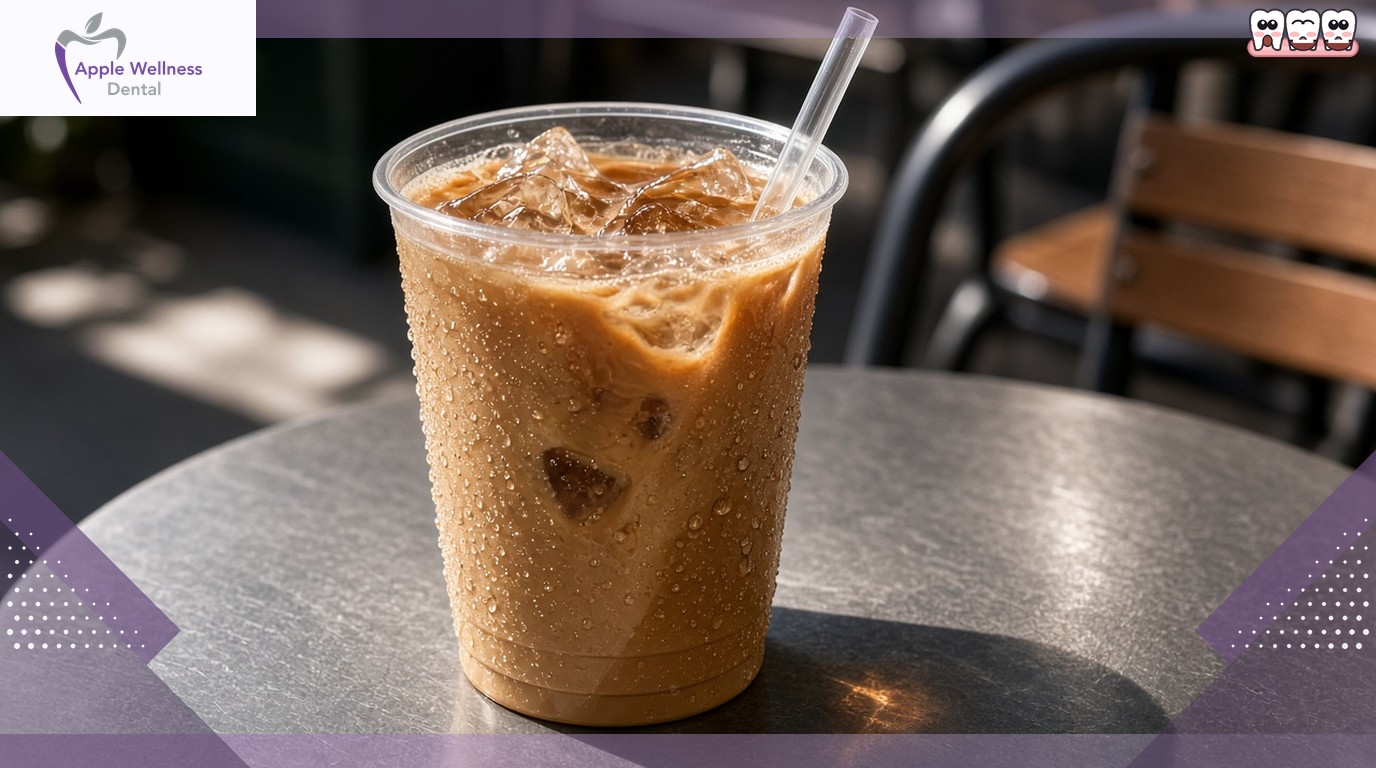
Reason 1: heat and bleeding
This is the reason official sources mention most often. The CDA’s aftercare advice says: “Avoid hot liquids like coffee and tea. If you eat soup, let it cool first. Hot liquids increase the flow of blood and your wound can start to bleed again.”
In the first day or two, the blood clot in the socket is still soft. Warmth draws more blood to the area, and that extra flow can push past or loosen the clot, leading to fresh oozing. The NHS gives similar advice after wisdom tooth removal, saying not to drink very hot drinks to reduce the risk of bleeding.
Reason 2: numbness and scalding
Local anesthetic leaves your lip, cheek and tongue numb for a few hours. You cannot judge temperature properly, so a cup that feels fine on your fingers can burn the inside of your mouth. The NHS mentions scalding as one of the reasons to avoid very hot drinks. Mayo Clinic also advises being careful with hot and cold liquids until the numbness wears off.
Reason 3: suction from straws and lids
Many people think iced coffee solves the problem. Temperature-wise it may, but iced coffee is usually sipped through a straw. Mayo Clinic explains that the sucking action may cause the blood clot to come out of the socket, and advises not drinking with a straw for at least a week. Losing the clot can lead to dry socket, which Mayo Clinic describes as a painful condition where the bone and nerves are exposed.
Travel mugs and lidded cups can create a similar sipping pull. Pour your drink into an open cup instead.
Reason 4: caffeine
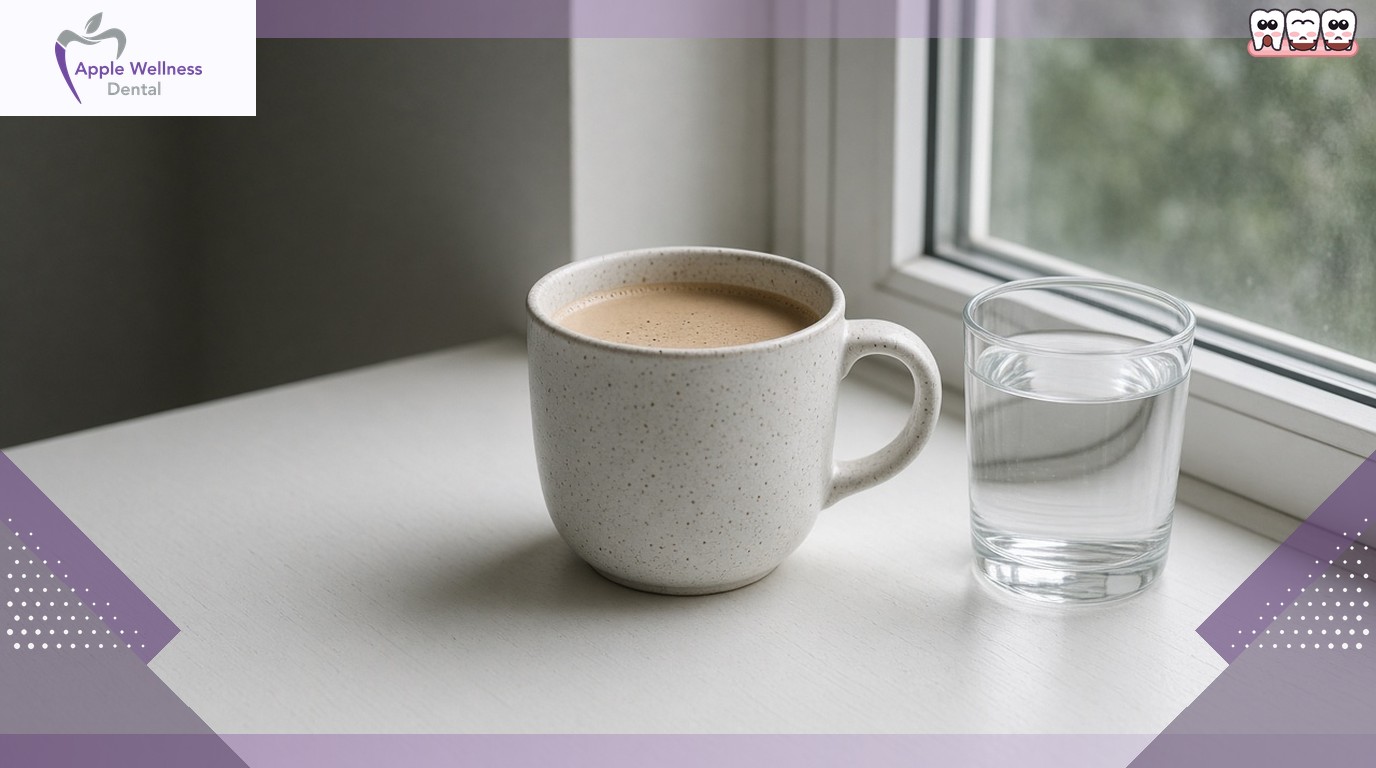
Mayo Clinic advises avoiding “alcoholic, caffeinated, carbonated or hot beverages for as long as recommended” while preventing dry socket. The page does not give a separate mechanism for caffeine, so the safest takeaway is simply that caffeinated drinks are on the official avoid list for the early healing period. Your dentist can tell you how long that applies to your extraction.
Because the reasons overlap, the restriction is strictest in the first day or two, when the clot is newest, you may still be numb, and bleeding is most likely to restart. As the socket settles, the heat and suction concerns ease, which is why most people can return to their usual cup within a short time once their dentist agrees.
Summary table: the reasons at a glance
| Reason | What official sources say | Practical fix |
|---|---|---|
| Heat | Hot liquids increase blood flow and can restart bleeding (CDA) | Let drinks cool to lukewarm; wait until your dentist says hot drinks are fine |
| Numbness | Avoid very hot drinks to reduce risk of scalding (NHS) | Wait until full feeling returns before any drink |
| Suction | No straw for at least a week (Mayo Clinic) | Sip from an open cup; skip straws and travel lids |
| Caffeine | Avoid caffeinated drinks for as long as recommended (Mayo Clinic) | Switch to a caffeine-free option temporarily |
Hypothetical example: A regular two-cups-a-day coffee drinker has a lower molar out on Tuesday. Tuesday they stick to water and cool milk. Wednesday morning, they drink a glass of cool water and a decaf tea left to cool to lukewarm, poured into a mug without a lid. Later in the week, they ask their dentist when they can return to regular coffee, and in the meantime let any warm drink cool first and avoid straws.
Managing caffeine withdrawal
If you drink coffee every day, stopping suddenly can leave some people with a headache or tiredness. That can be confused with extraction pain. A few ideas to discuss with your dentist or pharmacist:
- Ask before your appointment how long to avoid caffeine, so you can plan.
- Consider gradually cutting back for a few days before the extraction if you know the date.
- Ask whether a lukewarm caffeinated drink is acceptable in your case after the first day or two.
- Use pain relief only as your dentist or pharmacist directs.
Coffee-free morning checklist
- ☐ Prepare a caffeine-free drink the night before so it is cool by morning
- ☐ Use an open cup or glass, no straws, no travel lid
- ☐ Check you can feel your lips and tongue before drinking anything
- ☐ Sip on the side away from the extraction
- ☐ Do not swish or spit afterward
- ☐ Watch for pain that worsens 1 to 3 days later, a dry socket sign per Mayo Clinic
Does the same apply to tea and energy drinks?
Yes, for the same reasons. The CDA names tea alongside coffee in its advice to avoid hot liquids. Black and green tea, many sodas and energy drinks also contain caffeine, which Mayo Clinic lists among the drinks to avoid during early healing. Energy drinks and colas are usually carbonated too, another category on the Mayo Clinic avoid list. Caffeine-free herbal tea, cooled to lukewarm and sipped from a cup, is a gentler swap for many people.
Common coffee myths after an extraction
| Myth | What the sources actually say |
|---|---|
| Iced coffee is always safe | Temperature is better, but straws are out for at least a week (Mayo Clinic), and caffeine is still on the avoid list |
| A quick sip of hot coffee will not matter | Hot liquids increase blood flow and can restart bleeding (CDA); while numb you can also scald yourself (NHS) |
| Coffee directly causes dry socket | Official sources do not name coffee itself as a direct cause; heat, suction and disturbing the clot are the concerns |
| Adding lots of milk makes it fine | Milk cools the drink, which helps with heat, but does not remove caffeine or the straw issue |
What about milk, sugar and add-ins?
Add-ins do not change the main reasons, but they can make a difference to comfort. Milk or cream cools a drink down, which helps with the heat concern. Syrups and whipped toppings add sugar, so rinse gently with water afterward once your dentist says rinsing is allowed. Avoid drinks with crunchy toppings, cookie crumbs or chocolate shavings that could lodge in the socket.
When can I drink coffee again?
There is no single official day. The CDA says to avoid hot liquids and Mayo Clinic says to avoid caffeinated drinks for as long as recommended, so your dentist’s timeline is the one to follow. For practical timing and tips on returning to coffee, see our separate guide, can I drink coffee after tooth extraction. For other drink options, see when can I drink after tooth extraction and what can I drink besides water after tooth extraction.
Coffee and stains on healing teeth
There is one more, smaller consideration. The American Dental Association lists coffee among the common causes of tooth stain. After an extraction you may brush more gently around the area for a few days, so stain can build up more easily. This is not a reason coffee is restricted, but it is worth knowing, and your next cleaning can polish surface stain away.
Extraction care in Airdrie
At Apple Wellness Dental, Dr. Sanjay Rajpal and Dr. Hammad Qasim give written aftercare that includes when you can return to hot drinks. Our clinic at 229 1st Street SW has served Airdrie since 1993. We follow the Alberta Dental Fee Guide, direct bill insurance and accept the Canadian Dental Care Plan. If something does not feel right after your extraction, call (587) 332-6767 or see our emergency dental treatment page.
Frequently asked questions
Why is hot coffee bad after a tooth extraction?
The CDA says hot liquids increase blood flow and your wound can start to bleed again. Heat can also scald your mouth while it is still numb.
Can I drink iced coffee after a tooth extraction?
Avoid drinking it through a straw. Mayo Clinic says not to use a straw for at least a week. Mayo Clinic also lists caffeinated drinks among those to avoid for as long as recommended, so ask your dentist.
Is decaf coffee okay after a tooth extraction?
Decaf removes the caffeine concern, but heat still matters. Let it cool to lukewarm, drink from an open cup, and follow your dentist’s timing for hot drinks.
Does coffee cause dry socket?
Coffee itself is not named as a direct cause. The risks come from heat, straws and suction that can disturb the clot. Mayo Clinic lists caffeinated and hot drinks among those to avoid.
Can I drink coffee before a tooth extraction?
For a local anesthetic extraction, eating and drinking normally beforehand is usually fine unless your clinic says otherwise. Follow your specific instructions.
Can I drink tea after a tooth extraction?
The CDA advises avoiding hot liquids like coffee and tea. Caffeine-free herbal tea cooled to lukewarm and sipped from a cup is a gentler option. Follow your dentist’s timing for hot drinks.
How long after tooth extraction can I drink hot coffee?
There is no single official day. Follow your dentist’s timeline, then start with lukewarm coffee from an open cup.
Sources
- Canadian Dental Association, “Care after Minor Oral Surgery” (undated)
- Mayo Clinic, “Dry socket: Symptoms and causes” (July 18, 2023)
- NHS, “Wisdom tooth removal” (last reviewed June 12, 2024)
- American Dental Association, “Whitening” oral health topic (last updated August 16, 2022)
Apple Wellness Dental
Dental care in Airdrie, Alberta. This article is general education and does not replace an examination by a dental professional. It is not medical, legal, tax or financial advice.
Questions about your aftercare? Call our Airdrie team. Book a call or Contact Us, or call 587-332-6767.