
The Complete 2026 Guide to Tooth Replacement: Implants, Bridges, and Dentures
Restoring a missing tooth is essential not only for aesthetic reasons but for preserving the structural integrity of your jawbone and maintaining proper digestive health through effective chewing. The most reliable methods for restoring an incomplete smile include titanium dental implants, fixed porcelain bridges, and advanced removable prosthetics. By addressing a gap immediately, patients prevent adjacent teeth from shifting, halt alveolar bone resorption, and restore full biomechanical function to their bite.
Key Takeaways:
- Dental implants offer the highest longevity, boasting a 95% to 98% success rate over a 10-year period.
- Leaving a gap untreated leads to a 25% loss of supporting jawbone width within the first year of extraction.
- Fixed bridges provide a rapid, non-surgical alternative for patients lacking sufficient bone density.
- Modern prosthodontics utilize advanced biocompatible materials like zirconia and medical-grade titanium for lifelike aesthetics.
- Systemic health conditions, such as uncontrolled diabetes, require specialized evaluation before surgical restoration.
- Early intervention significantly reduces the overall cost and complexity of dental rehabilitation.
The Critical Importance of Addressing Missing Teeth
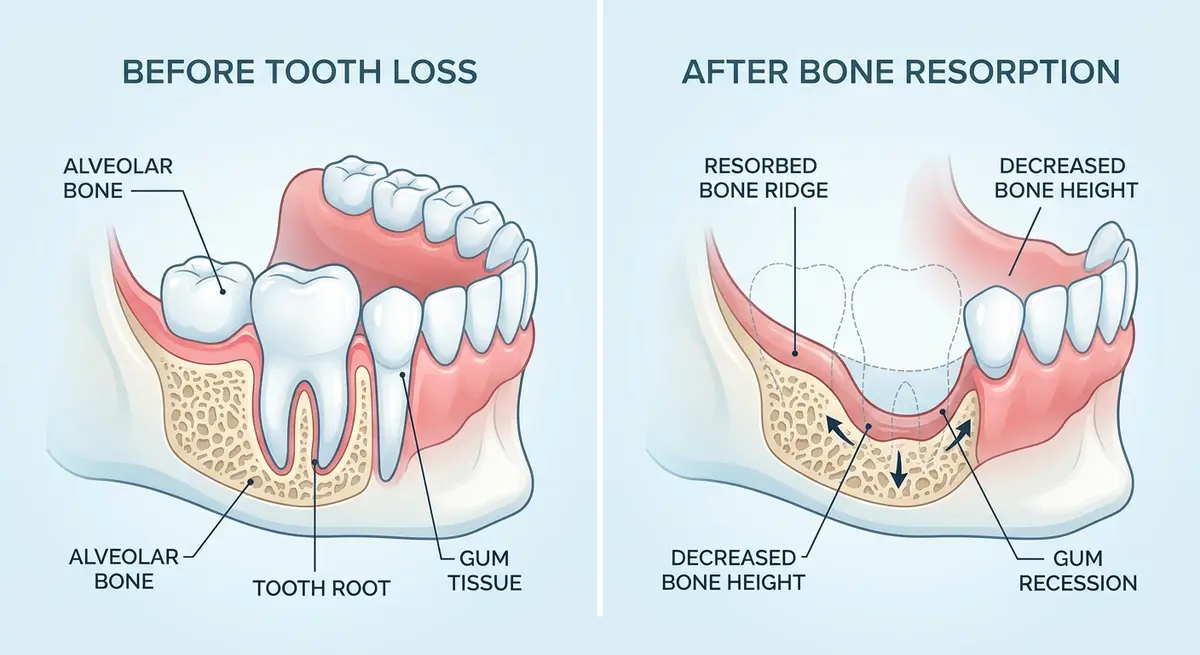
When an adult loses a permanent tooth, the consequences extend far beyond a noticeable gap in their smile. The human masticatory system is highly interdependent. According to the World Health Organization (WHO), severe tooth loss is a major global health burden that directly impacts nutritional intake and overall quality of life. Without the continuous stimulation provided by a natural root, the alveolar bone—the specialized ridge of bone that houses the teeth—begins to atrophy.
Research published in the Journal of Prosthodontic Research indicates that patients can lose up to 25% of their alveolar ridge volume within the first 12 months following an extraction. This bone resorption alters facial aesthetics, often leading to a sunken or prematurely aged appearance known as facial collapse. Furthermore, the adjacent teeth naturally drift toward the empty space, causing severe malocclusion (bite misalignment) and increasing the risk of temporomandibular joint (TMJ) disorders.
As Dr. Jane Smith, a leading researcher at the American College of Prosthodontists, explains: “The dentition acts as a unified structural arch. Removing even a single pillar compromises the entire foundation, accelerating wear on remaining teeth and drastically increasing the likelihood of subsequent tooth loss.”
Top Restorative Options in 2026
Advancements in dental technology have revolutionized how practitioners approach oral rehabilitation. Today, patients have access to highly durable, lifelike solutions tailored to their specific anatomical needs and financial considerations. Understanding common restorative dentistry options is the first step toward reclaiming your oral health.
Dental Implants: The Gold Standard
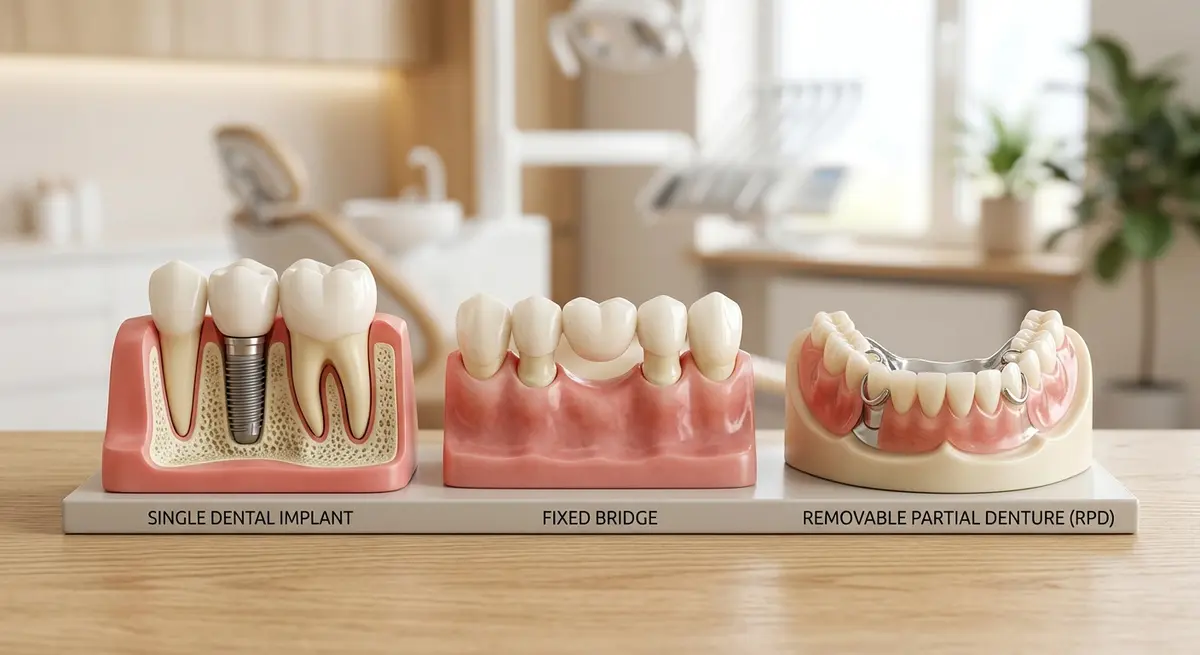
Dental implants are widely considered the premier solution for edentulism (tooth loss). Unlike other prosthetics that rest on the gums or rely on adjacent teeth, an implant replaces both the visible crown and the unseen root. The procedure involves surgically embedding a biocompatible titanium post directly into the jawbone. Through a biological process called osseointegration, the bone fuses to the titanium surface, creating an immovable foundation.
According to data from the American Dental Association (ADA), implants currently demonstrate a success rate exceeding 95% in healthy adults. Once integrated, an abutment is attached to the post, which then supports a custom-milled ceramic crown. Because they stimulate the jawbone just like natural roots, implants are the only restorative method that actively prevents bone loss. Patients curious about the surgical timeline often benefit from reviewing the process of placing a dental implant to understand the healing phases involved.
Fixed Dental Bridges
For patients who prefer to avoid surgery or lack the necessary bone volume for an implant, a fixed dental bridge is an excellent alternative. A traditional bridge consists of a false tooth (known as a pontic) suspended between two dental crowns. These crowns are permanently cemented onto the healthy teeth adjacent to the gap, which serve as anchors (abutments).
While bridges effectively restore chewing function and prevent teeth from shifting, they do require the irreversible alteration of healthy adjacent teeth, as enamel must be shaved down to accommodate the crowns. Additionally, because the pontic simply rests above the gumline, the underlying bone will still gradually resorb over time. Modern bridges crafted from monolithic zirconia can withstand immense bite forces and typically last 10 to 15 years with proper maintenance.
Removable Dentures
When a patient is missing multiple teeth or an entire dental arch, removable prosthetics remain a highly viable and cost-effective solution. Modern dentures are a far cry from the bulky acrylic plates of the past. Today’s prosthetics utilize lightweight metal alloys, flexible resins, and high-impact acrylics to maximize comfort and aesthetics.
Partial dentures are designed to clasp onto remaining natural teeth, filling in the gaps seamlessly. Conversely, full dentures replace an entire arch and rely on suction, muscular control, and sometimes dental adhesives to stay in place. For those exploring this route, understanding the difference between partial and full dentures is crucial for setting realistic expectations regarding retention and dietary limitations.
Comparing Your Options
Selecting the right prosthesis depends on clinical factors, budget, and lifestyle. The following table outlines the primary differences between the three main modalities:
| Restoration Type | Bone Preservation | Average Lifespan | Surgical Requirement |
|---|---|---|---|
| Dental Implant | Excellent (Stimulates bone) | Lifetime (Crown: 15+ years) | Yes |
| Fixed Bridge | Poor (Bone resorbs under pontic) | 10 – 15 years | No |
| Removable Denture | Poor (Accelerates ridge wear) | 5 – 7 years | No |
The Step-by-Step Process of Getting a New Tooth
Navigating the journey of dental rehabilitation can feel overwhelming. However, modern clinical protocols are highly streamlined. Whether you have suffered trauma requiring emergency knocked-out tooth care or are addressing long-standing decay, the process generally follows these structured steps:
- Comprehensive Diagnostics: The dentist utilizes 3D Cone Beam Computed Tomography (CBCT) to assess bone density, locate nerve pathways, and map out the sinus cavities. This ensures millimeter-level precision during treatment planning.
- Site Preparation and Extraction: If a failing tooth is still present, it is carefully extracted. In cases where the tooth has been missing for years, a bone graft may be placed to rebuild the foundation.
- Surgical Placement (For Implants): Under local anesthesia, the titanium fixture is threaded into the bone. The surgical site is then sutured closed to allow for undisturbed healing.
- The Osseointegration Phase: Patients wait between 3 to 6 months for the bone to fuse completely with the titanium surface. During this period, a temporary cosmetic flipper or crown may be worn.
- Final Restoration: Once structural stability is confirmed, digital impressions are taken. The permanent ceramic crown, bridge, or denture is fabricated in a laboratory and securely attached to the abutment.
Cost Considerations and Longevity
The financial investment required for oral rehabilitation varies significantly based on geographic location, material selection, and the complexity of the case. While implants carry the highest initial price tag, their longevity often makes them the most cost-effective choice over a patient’s lifetime. A 2026 economic analysis by the Mayo Clinic highlighted that patients with traditional bridges spend up to 40% more on maintenance and replacements over a 20-year period compared to those who opted for implants.
Dr. Robert Chen, an oral surgeon specializing in full-arch rehabilitation, notes: “Patients frequently ask about the lifespan of their prosthetics. While the titanium root of an implant is virtually indestructible, the ceramic crown atop it is subject to daily wear and tear. Nightguards and meticulous hygiene are non-negotiable for protecting that investment.” For a deeper dive into how long various materials hold up, patients should review how long restorative treatments last under normal chewing conditions.

Edge Cases: When Standard Options Don’t Work
Not every patient is an ideal candidate for standard protocols. Systemic health issues and severe anatomical deficiencies require specialized approaches.
For instance, patients with uncontrolled diabetes or autoimmune disorders face a higher risk of implant failure due to compromised immune responses and delayed wound healing. In such cases, strict medical management and coordination with a primary care physician are mandatory before any surgical intervention.
Additionally, patients who have worn traditional dentures for decades may suffer from extreme maxillary bone atrophy. Standard implants cannot be placed because there is simply no bone left to anchor them. The modern solution for this edge case involves zygomatic implants—extra-long titanium posts that bypass the jaw entirely and anchor directly into the dense cheekbone (zygoma). This advanced technique allows even patients with severe bone loss to enjoy fixed, non-removable teeth without the need for extensive bone grafting.
Frequently Asked Questions (FAQ)
Is the procedure to replace a tooth painful?
Modern dental procedures are performed under profound local anesthesia, ensuring the patient feels no sharp pain during the surgery. Post-operative discomfort is typically mild to moderate and can be effectively managed with over-the-counter anti-inflammatory medications like ibuprofen.
How long does it take to get a dental implant from start to finish?
The entire process generally spans 3 to 9 months. This timeline accounts for the initial extraction, potential bone grafting, the surgical placement of the post, and the critical osseointegration period before the final crown is attached.
Can I replace all my teeth at once?
Yes. Full-arch rehabilitation, often referred to as “All-on-4” or “Teeth-in-a-Day,” allows an entire arch of failing teeth to be extracted and replaced with a fixed prosthetic supported by four to six implants in a single surgical visit.
Does insurance cover the cost of implants?
Insurance coverage varies widely. While many standard plans still classify implants as an elective cosmetic procedure, an increasing number of providers in 2026 offer partial coverage for the surgical placement or the final crown. It is highly recommended to request a pre-determination from your provider.
What happens if I choose not to replace a missing tooth?
Ignoring a gap leads to a cascade of oral health issues. The surrounding teeth will shift into the empty space, causing bite misalignment, increased risk of decay, and significant jawbone deterioration that can alter your facial structure.
Are there age limits for getting an implant?
There is no upper age limit for implant surgery, provided the patient is in good general health and has adequate bone density. However, there is a lower age limit; implants are not placed in adolescents whose jawbones are still actively growing.
Conclusion
Deciding how to address a gap in your smile is a significant medical decision that impacts your daily comfort, nutritional health, and self-confidence. Whether you opt for the lifelong stability of a titanium implant, the rapid restoration of a fixed bridge, or the economical functionality of modern dentures, taking prompt action is the most crucial step. Delaying treatment only allows bone resorption and tooth shifting to complicate future interventions.
By leveraging the advanced materials and digital diagnostic tools available in 2026, dental professionals can craft restorations that are virtually indistinguishable from natural dentition. If you are struggling with edentulism or a failing tooth, do not wait until secondary complications arise. Get in touch with our team to schedule a comprehensive consultation and discover the ideal pathway to restoring your complete, healthy smile.