
Can You Eat Ice Cream After Tooth Extraction? A Day-by-Day Guide and the Toppings to Skip
Quick Answer: Can you eat ice cream after tooth extraction? Yes. Nova Scotia Health lists ice cream among the soft foods to eat for the first 2 to 3 days, and advises cold or lukewarm foods for the first 24 hours. Choose plain, smooth ice cream from a spoon. Skip cones, nuts, seeds, crunchy toppings and straws.
Can you eat ice cream after tooth extraction is one of the happiest questions we hear, and the answer is mostly yes. The details matter, though: the form of the ice cream, what is mixed in and how you eat it. This guide gives a day-by-day plan and a list of toppings to skip. For a quick yes-or-no overview, see our can I eat ice cream after tooth extraction post.
Last updated: November 3, 2026. Main source: Nova Scotia Health, SA Dental, MyHealth Alberta and CDA aftercare guidance. Full links are in the Sources section.
Key Takeaways
- Plain, smooth ice cream is fine as a soft food in the first days (Nova Scotia Health).
- For the first 24 hours, choose cold or lukewarm, not hot (Nova Scotia Health).
- Eat it with a spoon; avoid straws (MyHealth Alberta, SA Dental, Nova Scotia Health).
- Skip seeds, nuts and crunchy pieces that can get stuck in the socket (SA Dental).
- Follow your own dentist’s instructions first.
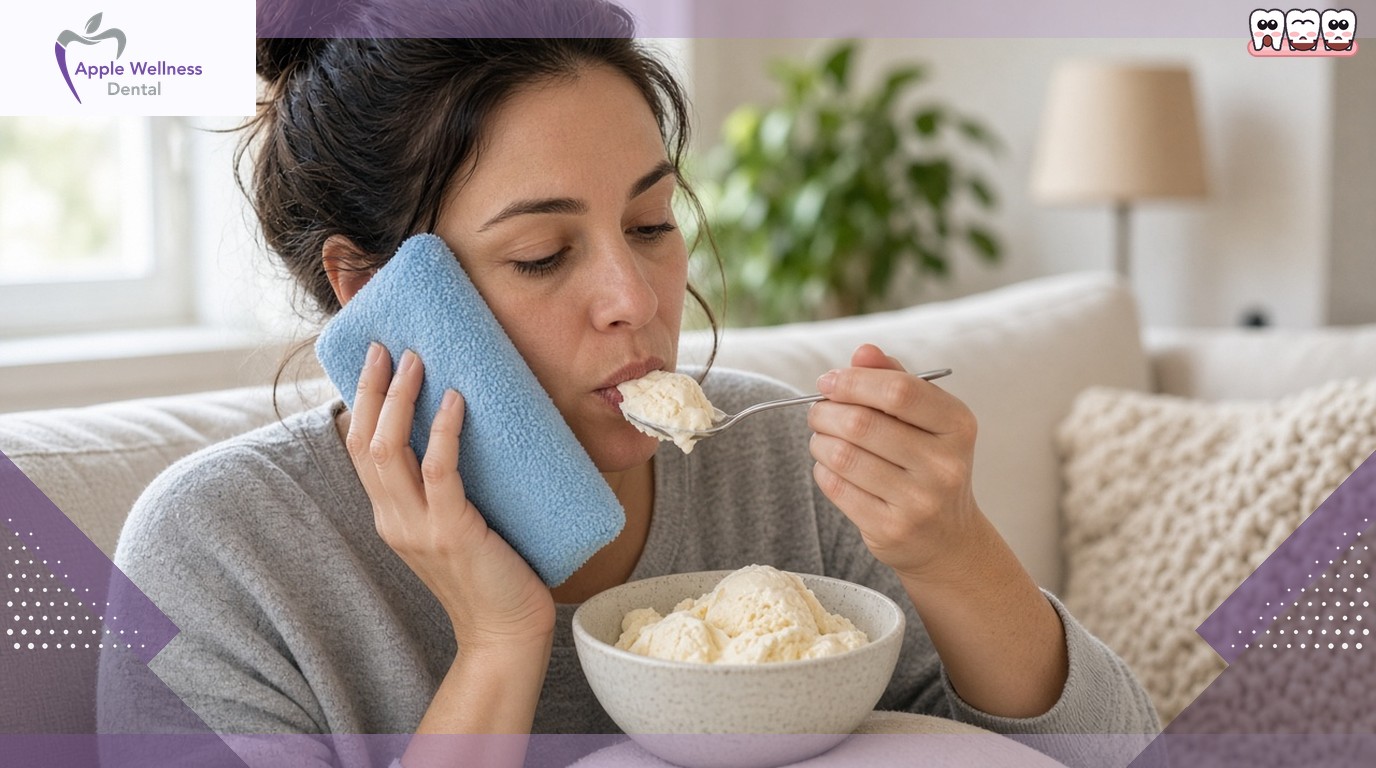
Why ice cream is usually allowed
After an extraction, a blood clot forms in the socket. Protecting that clot is the main goal of the first days. Mayo Clinic explains that dry socket can happen when the clot fails to form, is dislodged or dissolves before the wound has healed. Soft foods that need little chewing are less likely to disturb the area. Nova Scotia Health says that for the first 2 to 3 days you should eat softer foods like soup, yogurt, pudding and ice cream, because soft foods are less likely to irritate the extraction site or stitches.
It also advises that for 24 hours you should not eat hot foods or drink hot liquids, and should choose cold or lukewarm soft foods and drinks. Ice cream fits that rule well. Many people also find the cold soothing.
Day-by-day ice cream guide
| Time after extraction | Ice cream? | How |
|---|---|---|
| First few hours | Wait until numbness wears off and bleeding is controlled | Gauze first; MyHealth Alberta says you may eat and drink between gauze changes |
| Day 1 (first 24 hours) | Yes, plain and smooth | Small spoonfuls, chew on the other side, no straws, no hot foods |
| Days 2 to 3 | Yes, plain and smooth | Still a soft-food phase (Nova Scotia Health) |
| Days 4 to 7 | Usually yes; add soft mix-ins only if comfortable | Still avoid seeds and crunchy pieces near the site |
| After the first week | Most people return to usual foods gradually | Do not chew on the site until it feels comfortable (Nova Scotia Health) |
Healing times vary. A simple extraction often feels better faster than a surgical or wisdom tooth extraction. If you had wisdom teeth out, see ice cream after wisdom tooth extraction.
Toppings and forms to skip
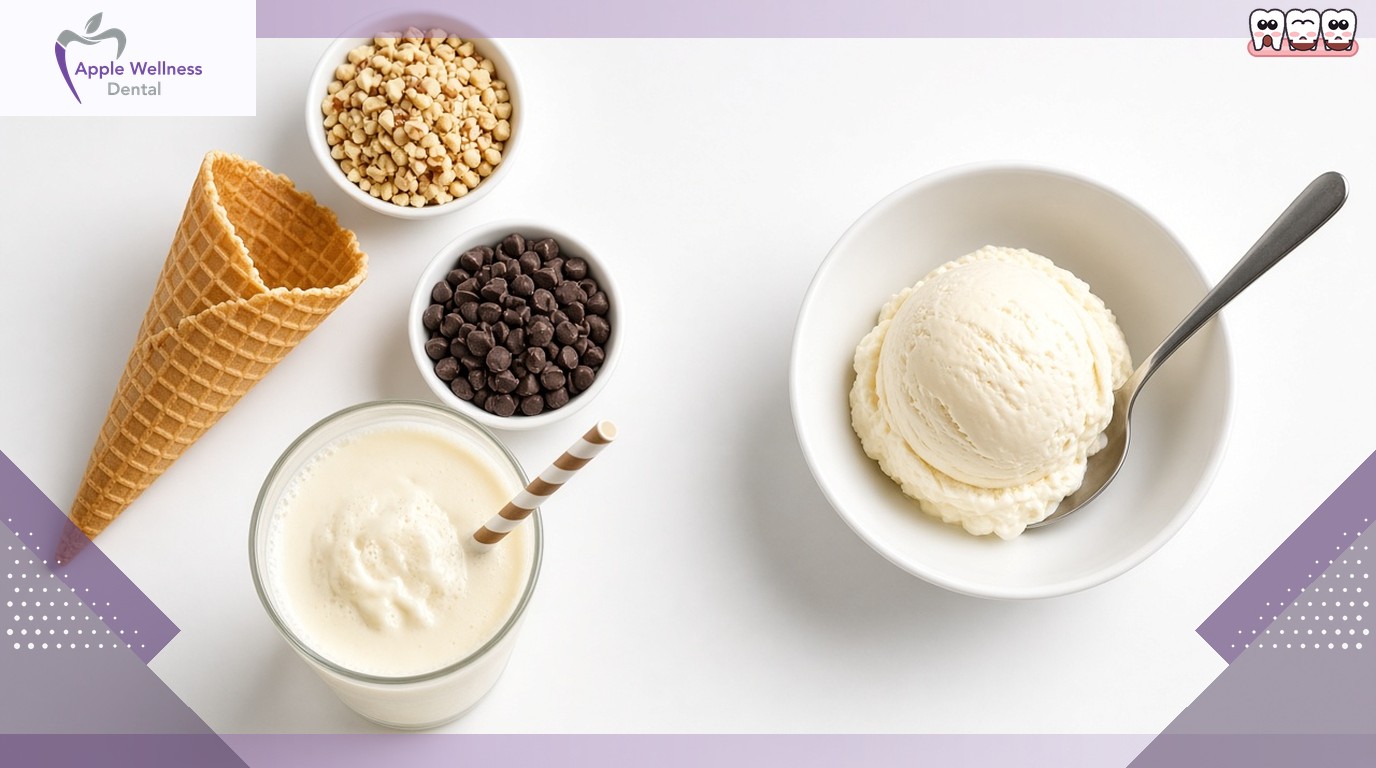
| Skip for now | Why | Better choice |
|---|---|---|
| Cones and waffle bowls | Crunchy pieces can poke or lodge in the socket | A bowl and spoon |
| Nuts, sprinkles, cookie crumbs | SA Dental: seeds and small bits can get stuck and dislodge the clot | Plain flavours |
| Chocolate chips, hard candy pieces | Hard and need chewing | Smooth vanilla, chocolate or fruit |
| Milkshakes through a straw | Sucking can disturb the clot (SA Dental) | Eat a thick shake with a spoon |
| Very sticky caramel | Sticks to the area and is hard to rinse | A little smooth sauce, or none |
| Fruit with small seeds (raspberry, strawberry chunks) | Seeds can lodge in the socket (SA Dental) | Seedless flavours |
The CDA suggests drinks like milkshakes and milk after oral surgery when chewing is hard. That is fine, but the straw is the problem, not the shake. MyHealth Alberta advises no straw for the first few days, and Nova Scotia Health simply says do not use a straw.
Your ice cream checklist
- ☐ Bleeding has slowed and gauze is out
- ☐ Numbness has worn off, so you will not bite your cheek or lip
- ☐ Plain, smooth flavour with no seeds, nuts or crunchy bits
- ☐ Served in a bowl, eaten with a spoon
- ☐ Small bites, on the side away from the extraction
- ☐ No straw, no forceful sucking from the spoon
- ☐ Rinse gently later; Nova Scotia Health starts warm salt water after 24 hours
- ☐ Stop if it causes sharp pain or sensitivity
Is cold always better?
Not for everyone. The Government of Western Australia Dental Health Services advises nothing too hot or cold after extraction, and some people find very cold foods sting the area. If ice cream feels uncomfortable, let it soften for a few minutes, or switch to room-temperature pudding or yogurt. The key rules from every source are the same: soft, not hot, no straws and gentle eating.
Sugar and cleaning
Ice cream is sugary. You should not brush the extraction site at first. Nova Scotia Health says you may brush your teeth after 24 hours but not the extraction site for 5 to 7 days. Gently brush the rest of your mouth, and after 24 hours rinse with warm salt water by letting it flow out instead of spitting forcefully. Our salt water rinse guide explains timing.
Other soft foods for the first days
- Yogurt and pudding (Nova Scotia Health)
- Lukewarm soup (Nova Scotia Health; MyHealth Alberta lists soup and gelatin)
- Eggs, pasta and bananas (CDA, when jaw muscles are sore)
- Mashed potatoes and soft-cooked cereals
- Milk and smooth drinks, without a straw
Wondering about drinks? See what you can drink besides water.
Hypothetical example: Maria has a lower molar removed in the morning. By early afternoon the bleeding has slowed and the numbness has worn off. She eats a small bowl of plain vanilla ice cream with a spoon, chewing on the other side. On day 3 she still skips the cone and sprinkles. On day 6, with the area feeling comfortable, she slowly returns to her usual foods.
Ice cream, frozen yogurt, sorbet or gelato?
The sources list ice cream, yogurt and pudding as soft foods, but they do not rank frozen desserts against each other. The same practical rules apply to all of them: smooth texture, no seeds or crunchy pieces, eaten with a spoon and not too hot. Here is a quick way to think about the options.
| Dessert | Texture | Watch for |
|---|---|---|
| Plain ice cream | Smooth, soft when slightly melted | Mix-ins and cones |
| Frozen yogurt | Smooth | Granola, fruit seeds and crunchy toppings |
| Sorbet | Smooth but icy | Very cold; some find it stings |
| Gelato | Dense and smooth | Nut flavours with pieces |
| Ice pops | Hard and icy | Sucking motion; bite gently or let melt in a bowl |
If you had stitches or sedation
Nova Scotia Health notes that soft foods are less likely to irritate the extraction site or stitches. If you had sedation, it also notes nausea can happen in the first 24 to 48 hours. Start with a few spoonfuls of something plain and see how your stomach feels. Some people prefer to begin with water or a clear drink and move to ice cream later in the day.
Ice cream for kids after an extraction
Children often look forward to a treat after a tooth comes out. The same rules apply: wait until the numbness wears off so they do not bite a numb lip or cheek, serve it in a bowl, and skip sprinkles and cones for the first few days. Watch that they do not poke the area with a tongue or finger, and keep straws away.
Signs to call your dentist
Ice cream will not cause dry socket by itself, but watch how you heal. Nova Scotia Health advises calling if pain or swelling keeps getting worse after the first 2 to 3 days, especially with fever above 38 C, chills, pus or a bad taste. Mayo Clinic describes dry socket pain as severe and sometimes radiating to the ear, eye, temple or neck on the same side. See how long pain lasts after extraction for normal patterns.
- Bleeding that will not stop with firm gauze pressure
- Pain that gets worse after day 2 or 3
- Fever, chills or pus
- An empty-looking socket with bad taste or smell
Aftercare support in Airdrie
At Apple Wellness Dental, Dr. Sanjay Rajpal and Dr. Hammad Qasim care for patients from Airdrie and nearby communities at 229 1st Street SW, where the clinic has served the city since 1993. We follow the Alberta Dental Fee Guide, direct bill insurance, accept the Canadian Dental Care Plan and offer payment plans. If you are unsure what is safe to eat after your procedure, call us. For urgent concerns, see our emergency dental treatment page. We do not take online bookings, so call (587) 332-6767 to speak with our team.
Frequently asked questions
Can you eat ice cream the same day as a tooth extraction?
Usually yes, once bleeding has slowed and numbness has worn off. Nova Scotia Health advises cold or lukewarm soft foods for the first 24 hours.
Can ice cream cause dry socket?
Plain ice cream eaten with a spoon is unlikely to disturb the clot. The risks are straws, sucking and crunchy toppings that can lodge in the socket.
Can I have a milkshake after tooth extraction?
Yes, but not through a straw. MyHealth Alberta advises no straws for the first few days. Use a spoon.
What ice cream toppings should I avoid?
Skip nuts, seeds, sprinkles, cookie pieces, cones and hard candy. SA Dental warns seeds can get stuck and dislodge the clot.
How long should I eat soft foods like ice cream?
Nova Scotia Health suggests softer foods for the first 2 to 3 days, then a gradual return to your usual diet.
Is cold food better than warm after extraction?
Avoid hot foods for 24 hours. Cold or lukewarm is fine. If cold stings, let the ice cream soften first.
Can I eat ice cream after wisdom tooth removal?
Often yes, with the same rules. Follow your surgeon’s instructions, which may be stricter after surgical removal.
Sources
- Nova Scotia Health, “After a Dental Extraction” (September 2026)
- SA Dental, Government of South Australia, “Soft food suggestions – post tooth extraction or dental surgery” (undated)
- MyHealth Alberta, “Tooth Extraction: Care Instructions” (current as of July 31, 2024)
- Canadian Dental Association, “Care after Minor Oral Surgery” (undated)
- Mayo Clinic, “Dry socket: Symptoms and causes” (July 18, 2023)
- Government of Western Australia Dental Health Services, “Instructions following extraction of teeth”
Apple Wellness Dental
Dental care in Airdrie, Alberta. This article is general education and does not replace an examination by a dental professional. It is not medical, legal, tax or financial advice.
Questions after your extraction? Call our Airdrie team. Book a call or Contact Us, or call 587-332-6767.