
How Often Should Scaling Be Done? A Practical Guide for Every Patient
If you have ever walked out of a dental appointment and wondered whether you should have been coming in more often, you are not alone. The question of how often scaling should be done is one of the most common things patients ask, and the answer is more personal than most people expect. There is no single universal number that applies to everyone, and understanding why can genuinely change how you approach your oral health.
The frequency of professional teeth scaling depends on several factors working together: your current gum health, the depth of your periodontal pockets, how quickly tartar accumulates on your teeth, and whether you are managing any systemic conditions that put your gums at higher risk. At Apple Wellness Dental, we assess all of these factors carefully before making any recommendations, because a schedule that works for one patient may not be appropriate for another. This guide breaks down what you need to know, from general guidelines to condition-specific intervals, so you can walk into your next appointment fully informed.
Key Takeaways
- For most patients with healthy gums, teeth scaling is recommended every six months as part of routine preventive care.
- Patients managing gum disease typically require scaling every three to four months to prevent the condition from advancing.
- Advanced periodontitis may call for scaling as frequently as every two to three months, depending on clinical findings.
- Systemic conditions like diabetes, smoking habits, and a history of heavy tartar buildup all influence how often scaling should be done.
- Your dentist determines scaling frequency through a clinical assessment, not a generic schedule, so attending regular check-ups is essential.
- Delaying scaling beyond your recommended interval allows bacteria to re-establish in the pockets, undoing previous treatment progress.
Overview
This article covers what drives the decision around scaling frequency, how different stages of gum health affect your recommended schedule, what risk factors move patients into more frequent treatment cycles, and what signs suggest you may need an earlier appointment. We also address the most common patient questions around this topic and explain how our team at Apple Wellness Dental approaches individualized care. Whether you have been told to come back in three months or six, this guide helps you understand the reasoning behind that recommendation and why following it matters.
What Is Teeth Scaling and Why Does Frequency Matter?
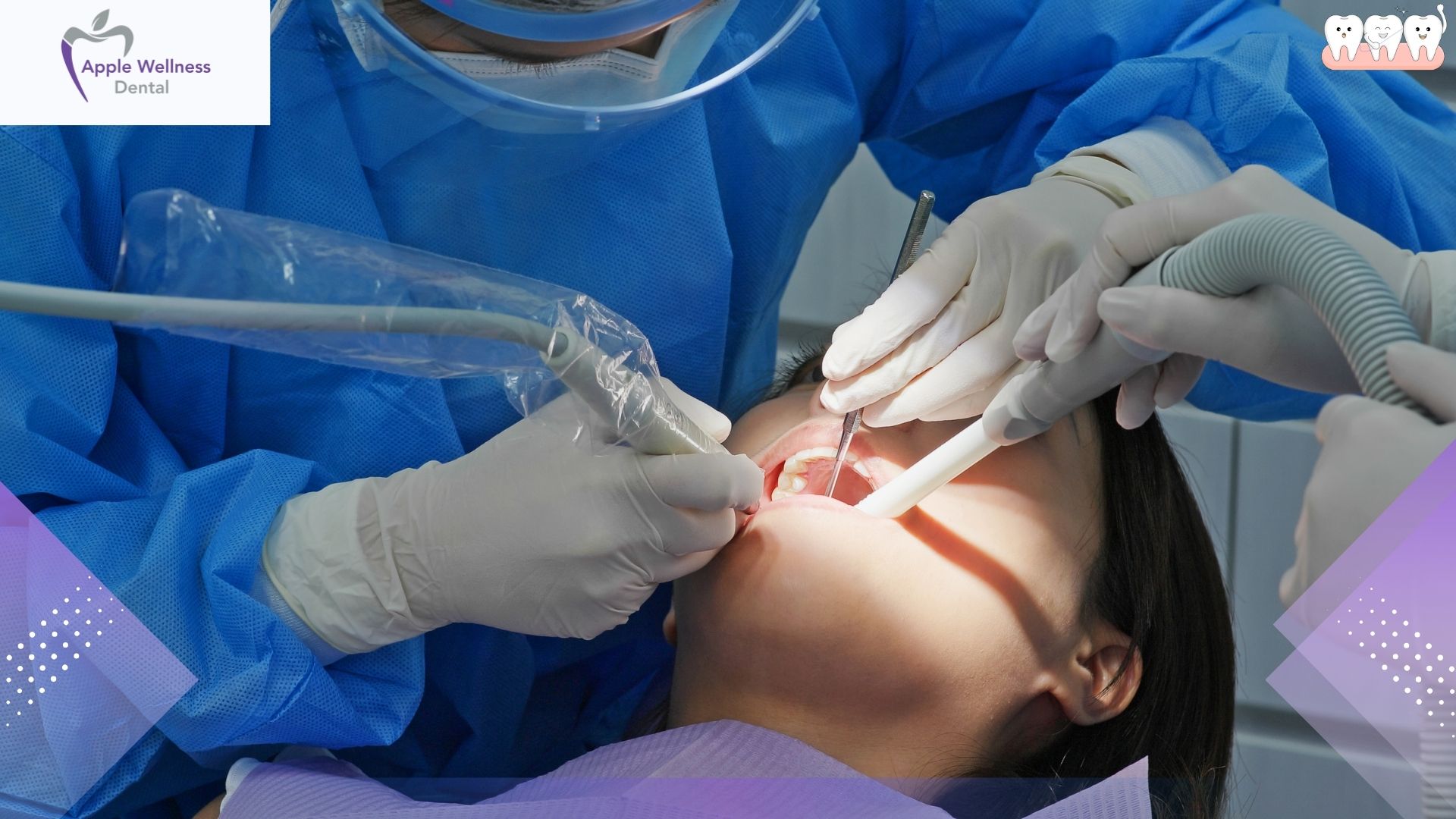
Teeth scaling is a professional dental procedure that removes calculus, which is hardened plaque, and bacterial deposits from tooth surfaces both above and below the gumline. Unlike a standard polish, scaling specifically targets the areas inside the periodontal pockets, where ordinary brushing and flossing simply cannot reach. This makes it a foundational treatment for managing and preventing gum disease rather than just improving the appearance of your teeth.
The reason frequency matters so much is biological. After a thorough scaling session, the bacterial load in your gum pockets is significantly reduced. But bacteria do not stay away permanently. Studies in periodontal medicine consistently show that bacterial colonies begin to re-establish within weeks of treatment, and that without a follow-up visit at the appropriate interval, the inflammation and tissue breakdown associated with gum disease can resume. Your scaling schedule is therefore not just a maintenance routine. It is an active part of your treatment plan. You can learn more about what the teeth scaling procedure involves and what to expect during the appointment itself.
The Link Between Timing and Gum Health
Think of scaling frequency as a cycle of control rather than a cure. Each visit resets the bacterial environment in your mouth, giving your gum tissue a window to heal and stabilize. If that window is respected with regular appointments, the pockets stay shallow, the bone remains intact, and the disease stays managed. If the interval is stretched too long, the bacterial population rebuilds, toxins continue to irritate the tissue lining, and the pockets can deepen again. The right frequency is the one that keeps you ahead of that cycle, and it is different depending on how quickly your mouth accumulates deposits and how your body responds to treatment.
How Often Should Scaling Be Done for Different Patients?

The most practical way to understand scaling frequency is to look at it through the lens of your current gum health status. The Canadian Dental Association recognizes that gum disease management is a long-term process that requires individualized care, and that is exactly the approach we follow at Apple Wellness Dental.
Patients With Healthy Gums
If your gum tissue is healthy, your pocket depths are within the normal range of one to three millimeters, and you have no significant history of periodontal disease, then a scaling appointment every six months is generally appropriate. This twice-yearly schedule aligns with standard preventive dental care guidelines and is sufficient to remove the tartar that builds up over time even in well-maintained mouths. However, healthy gums are not an invitation to become less attentive. Gum disease can develop gradually and without noticeable symptoms, which is why regular check-ups between scaling sessions remain important even when everything looks stable.
Patients With Gingivitis or Early Gum Disease
Gingivitis, which is the earliest stage of gum disease, involves gum inflammation caused by bacterial plaque and tartar accumulation, but it has not yet progressed to affect the bone. At this stage, scaling every three to six months is often recommended, depending on how much improvement is seen after initial treatment. The goal at this interval is to prevent gingivitis from advancing into periodontitis, which involves deeper tissue and bone loss. Many patients are surprised to learn that gingivitis is entirely reversible with professional treatment and consistent oral hygiene at home, but the window for reversal narrows if appointments are skipped or delayed.
Patients With Moderate to Advanced Periodontitis
For patients already managing moderate or advanced periodontitis, the recommended interval is typically every three to four months for moderate cases, and every two to three months for more severe presentations. At this stage, the goal of scaling shifts from prevention to active disease management. Bacterial recolonization happens faster in deeper pockets, and the tissue surrounding those pockets is more susceptible to ongoing damage. The American Dental Association identifies periodontal maintenance as a critical component of long-term disease control, and the three-to-four month interval is supported by decades of clinical research showing it best matches the bacterial re-establishment cycle in compromised gum tissue. Understanding what scaling and root planing involves can help patients in this category prepare for what comprehensive treatment looks like.
What Factors Influence Your Recommended Scaling Schedule?
Beyond your diagnosed gum disease stage, several individual characteristics shape how often scaling should be done for you specifically. Your dentist does not arrive at a recommendation arbitrarily. It is based on a combination of clinical measurements and your personal health history.
Systemic Health Conditions and Lifestyle Habits
Certain systemic conditions are strongly associated with a higher risk of gum disease progression. Diabetes is one of the most significant, as elevated blood sugar levels impair the immune response in gum tissue, making infections harder to control and scaling results harder to sustain. Patients managing diabetes are frequently placed on three-to-four month scaling cycles even if their gum disease has not reached advanced stages. Smoking is another major variable. Tobacco use reduces blood flow to gum tissue, masks bleeding that would otherwise signal inflammation, and significantly slows the healing response after treatment. Patients who smoke generally require more frequent appointments to keep bacterial levels in check.
Pregnancy also increases gum sensitivity and inflammation due to hormonal changes, and pregnant patients may be advised to increase their scaling frequency during the second and third trimesters. Other conditions that can affect your recommended schedule include cardiovascular disease, immunosuppressive medications, and a dry mouth caused by certain prescription drugs that reduce saliva flow, since saliva plays a protective role in controlling oral bacteria. Reviewing these signs of gum disease can help you recognize when your condition may need earlier attention.
Tartar Buildup Rate and Oral Hygiene Habits
Not everyone accumulates tartar at the same rate, and this biological variability matters. Some patients produce more mineral-rich saliva, which accelerates the hardening of plaque into calculus. Others have anatomy that makes certain areas of the mouth harder to clean effectively, such as tightly spaced teeth or deep natural grooves. Your oral hygiene habits at home also influence how quickly deposits return after a professional cleaning. Patients who brush twice daily, floss consistently, and use adjunct tools like interdental brushes will generally maintain cleaner teeth between appointments compared to those who are less thorough. That said, even exemplary home care cannot fully prevent tartar formation, which is precisely why professional scaling remains necessary regardless of how disciplined your routine is.
What Happens If Scaling Is Done Too Infrequently?
Postponing or spacing out scaling appointments beyond your recommended interval has direct clinical consequences. As time passes without professional cleaning, the bacterial deposits inside your pockets grow thicker and more calcified. The gum tissue remains in a state of chronic inflammation, which over time breaks down the connective tissue and bone that anchor your teeth. This process, once it has advanced significantly, cannot be fully reversed. The bone that is lost to advanced periodontitis does not regenerate on its own.
The Cost of Waiting Too Long
Patients who delay scaling over several years often find that by the time they return for treatment, the disease has progressed to a point where scaling alone is no longer sufficient. Surgical intervention, bone grafting, or tooth extraction may become part of the conversation. None of these outcomes are inevitable if the appropriate scaling frequency is maintained. The financial and physical cost of advanced periodontal treatment is substantially higher than consistent preventive care, and the recovery process is far more involved. Protecting your gum health by keeping up with your scheduled appointments is not just about comfort in the short term. It is an investment in the long-term stability of your teeth. The Mayo Clinic outlines the serious systemic health associations linked to untreated periodontitis, including increased cardiovascular risk. Knowing what to expect from gum care after treatment also helps you maintain the results between visits.
What Happens If Scaling Is Done Too Often?
It is worth addressing the opposite concern. Some patients worry that having scaling done frequently will damage their teeth or wear down the enamel. When scaling is performed clinically, based on actual pocket readings and clinical evidence of buildup, it does not harm healthy tooth structure. The instruments used are designed to target calcified deposits without stripping sound enamel or root surface.
Where concern is warranted is if scaling were performed at an aggressive frequency without a clinical basis for it. An experienced dental professional will not recommend scaling more often than your mouth actually needs it. The decision is always grounded in what the clinical assessment shows, not a blanket routine. If your hygienist recommends three-month intervals, it is because the measurements support that schedule, not because it is being done arbitrarily.
Signs You May Need Scaling Sooner Than Scheduled
Even if you are on a set maintenance schedule, there are signs that suggest your next scaling appointment should come sooner rather than later. Gum tissue that bleeds consistently during brushing or flossing, persistent bad breath that does not resolve with regular hygiene, gum tissue that appears red or swollen at the margins, visible tartar accumulation along the gumline, and any looseness in your teeth are all indicators that bacterial activity in your mouth has escalated. In these situations, calling your dental office to move up your appointment is the right course of action rather than waiting until your scheduled date. Catching a change early keeps the treatment simpler and the outcome better.
How Your Dentist Determines Your Scaling Frequency
Your scaling schedule is not something your dentist decides intuitively. It follows a structured clinical process designed to match your treatment plan to the actual state of your mouth. Understanding what that process involves helps explain why two patients sitting in adjacent chairs can leave with entirely different recommendations.
What a Periodontal Assessment Involves
A periodontal assessment includes measuring the depth of the pockets around each tooth using a graduated probe, recording any bleeding on probing, assessing bone levels through X-rays, noting areas of recession or furcation involvement, and reviewing your systemic health and medication history. These data points together form a clinical picture of your current periodontal status. The pocket depth measurements are particularly informative. Healthy pockets measure between one and three millimeters. Pockets between four and six millimeters indicate moderate disease activity. Anything deeper signals advanced disease and typically triggers a more intensive treatment schedule. Our team uses these findings at Apple Wellness Dental to build a scaling and maintenance plan that reflects where you actually are, not where the average patient is.
The Cleveland Clinic describes how scaling and root planing outcomes depend significantly on appropriate post-treatment maintenance, reinforcing why the follow-up schedule matters as much as the initial procedure itself. Keeping up with your regular dental check-ups provides your dental team with the ongoing data needed to adjust your scaling frequency as your oral health changes over time.
Ready to Find Out Your Recommended Scaling Frequency?
If you have been wondering how often scaling should be done for your specific situation, the most reliable answer comes from a clinical assessment rather than a general guideline. At Apple Wellness Dental, our team takes the time to review your complete oral health picture before recommending a schedule, because your mouth deserves a plan that fits your actual needs. We are here to help you stay ahead of gum disease rather than manage the consequences of it. Visit us at 229 1st Street SW, Airdrie, AB, or call us at +1 587 332 6767 to book your periodontal assessment. Our team is ready to answer your questions and work with you on a realistic, personalized plan for your gum health.
Common Questions About How Often Scaling Should Be Done
Is every six months the right scaling interval for everyone?
Q: Is every six months the right scaling interval for everyone?
A: Not necessarily. Every six months is the standard recommendation for patients with healthy gums and no active gum disease. However, patients managing gingivitis, periodontitis, or specific systemic conditions like diabetes or a history of heavy tartar buildup will likely need more frequent appointments, often every three to four months. Your dentist determines the appropriate schedule based on clinical pocket measurements and your overall health history, not a fixed calendar rule.
Can I go back to a six-month schedule after treating gum disease?
Q: Can I go back to a six-month schedule after treating gum disease?
A: It is possible, but only if your follow-up assessments show that your gum tissue has stabilized, pocket depths have reduced to a healthy range, and there is no active inflammation or bleeding. Your dentist will monitor your progress over several appointments before deciding it is appropriate to space out your visits. Many patients who have had periodontitis continue on a three-to-four month maintenance cycle long term because their gum tissue remains more susceptible to bacterial recolonization even after treatment.
What happens if I skip a scheduled scaling appointment?
Q: What happens if I skip a scheduled scaling appointment?
A: Skipping an appointment allows bacteria to re-establish in the periodontal pockets, which can restart or accelerate the inflammatory process in your gum tissue. For patients managing active gum disease, even one missed session can set back the progress made during previous treatments. If you need to reschedule, try to do so as soon as possible rather than waiting until your original appointment window would have come up again. Consistency in your scaling schedule is one of the most impactful things you can do for long-term gum health.
Does daily brushing and flossing reduce how often I need scaling?
Q: Does daily brushing and flossing reduce how often I need scaling?
A: Good home hygiene slows tartar accumulation and supports the healing that happens between appointments, but it cannot eliminate the need for professional scaling. Once plaque has hardened into calculus, it bonds firmly to the tooth surface and cannot be removed by brushing or flossing regardless of technique or frequency. Professional instruments are required. Excellent home care is a complement to your scaling schedule, not a substitute for it.
Are there patients who only need scaling once every year or less?
Q: Are there patients who only need scaling once every year or less?
A: Yes, patients with excellent periodontal health, minimal tartar accumulation, no systemic risk factors, and a consistent home hygiene routine may be assessed as appropriate candidates for annual scaling. However, this is a clinical determination, not a patient preference. Your dentist reviews your pocket depths, tissue condition, and tartar rate before making this call. It is not recommended to self-determine a longer interval without discussing it with your dental team first.
Does smoking change how often scaling should be scheduled?
Q: Does smoking change how often scaling should be scheduled?
A: Yes, significantly. Tobacco use slows the healing of gum tissue after treatment, reduces blood flow to the gums, and masks early warning signs like bleeding that would otherwise indicate active disease. Patients who smoke are at higher risk for periodontal disease progression and typically require more frequent scaling, often every three to four months, to keep bacterial levels from rebuilding at a rate that outpaces the body’s healing response.
How is the pocket depth measurement used to decide scaling frequency?
Q: How is the pocket depth measurement used to decide scaling frequency?
A: Pocket depth is one of the most important clinical indicators your dentist uses to assess gum disease severity and treatment needs. Healthy pockets typically measure between one and three millimeters. Depths of four to six millimeters indicate moderate disease activity, and deeper pockets suggest advanced periodontitis. Deeper pockets harbor more bacteria and are harder to clean, which is why patients with greater pocket depth measurements are placed on more frequent scaling schedules. These measurements are taken at each assessment to track your progress over time.
Is scaling frequency different during pregnancy?
Q: Is scaling frequency different during pregnancy?
A: Yes. Hormonal changes during pregnancy increase gum sensitivity and susceptibility to inflammation, a condition sometimes called pregnancy gingivitis. Pregnant patients are generally advised to maintain their regular scaling schedule and, in many cases, to have an additional appointment during the second trimester if gum inflammation is present. Treating gum disease during pregnancy is considered safe and clinically appropriate. Postponing it can allow the inflammation to worsen, which has implications for both oral health and overall well-being during pregnancy.
What is the difference between a routine cleaning and periodontal maintenance scaling?
Q: What is the difference between a routine cleaning and periodontal maintenance scaling?
A: A routine prophylaxis cleaning is designed for patients with healthy gums and addresses the visible tooth surfaces and the area just at the gumline. Periodontal maintenance scaling is a more targeted procedure performed on patients with a history of gum disease. It involves cleaning below the gumline into the pockets, re-measuring pocket depths, and assessing tissue response to previous treatment. The two procedures are distinct, and patients transitioning from active periodontal treatment to maintenance should not revert to routine cleaning intervals without clinical confirmation that their disease has fully stabilized.
How does diabetes affect how often scaling should be done?
Q: How does diabetes affect how often scaling should be done?
A: Diabetes impairs the immune response in gum tissue and slows healing after treatment, which means bacterial infections in the gum pockets take longer to resolve and are more likely to recur. Patients with diabetes, particularly those with poorly controlled blood sugar, are typically recommended to have scaling every three to four months. There is also a reciprocal relationship between gum disease and blood sugar control: untreated periodontitis can make blood glucose harder to manage, which makes treating gum disease a meaningful part of overall diabetes care.
Conclusion
Understanding how often scaling should be done is not a matter of following a calendar. It is a matter of understanding your own mouth, your risk profile, and the clinical findings that guide your dental team’s recommendations. Whether your current schedule calls for twice-yearly visits or more frequent appointments every three months, that interval exists for a clear clinical reason and keeping to it is one of the most practical steps you can take to protect your gum health for the long term.
Gum disease progresses quietly, often without pain, and the consequences of advanced periodontitis go beyond your teeth. But with the right maintenance schedule and a dental team that tracks your progress at each visit, it is a condition you can stay ahead of. Do not let uncertainty about frequency become a reason to postpone care. Call Apple Wellness Dental at +1 587 332 6767 or visit us at 229 1st Street SW, Airdrie, AB to get a clear, clinically grounded answer about how often scaling should be done for your specific situation. Book your assessment today and take ownership of your gum health with a plan built around your actual needs.