
Does a Tooth Extraction Hurt? What You Feel Before, During and After
Quick Answer: Does a tooth extraction hurt? Not during the procedure. The NHS says a local anaesthetic injection numbs the gum so you will not feel any pain. Soreness starts once the freezing wears off. The CDA says pain is usually worst in the first 24 to 48 hours, and discomfort may last 3 to 5 days.
Does a tooth extraction hurt is often the first thing nervous patients ask, and it is a fair question. The honest answer is that the procedure itself should not be painful, while the recovery brings some soreness that you can plan for. This guide breaks the experience into phases so you know what to expect at each step. Our earlier post, does tooth extraction hurt, gives a shorter overview.
Last updated: November 3, 2026. Main source: NHS, CDA, Cleveland Clinic and MyHealth Alberta guidance. Full links are in the Sources section.
Key Takeaways
- The injection: a brief sting for most people, then numbness.
- During: local anaesthetic means you should not feel pain (NHS). Tell your dentist if anything feels sharp.
- First 24 to 48 hours: usually the most pain (CDA).
- Day 3: Cleveland Clinic says it is usually the worst day; others describe a steady decrease.
- Pain that worsens after 2 to 3 days can signal dry socket. Call your dentist.
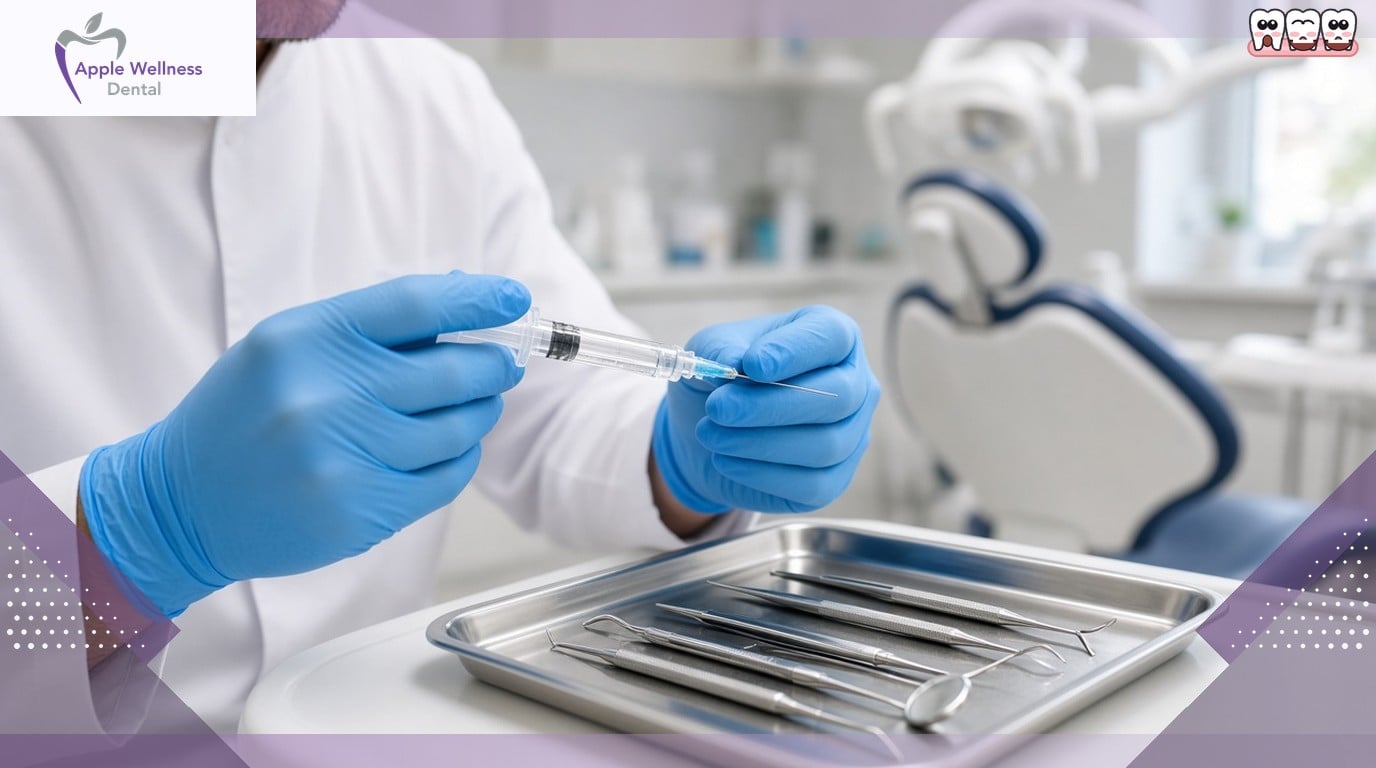
Phase by phase: what you are likely to feel
| Phase | What you may feel | What official sources say |
|---|---|---|
| Numbing injection | A quick sting, then warmth and tingling | NHS: you will usually have a warm, tingling feeling as the anaesthetic starts to work |
| During the extraction | No pain; you may be aware of movement | NHS: the area should feel totally numb |
| First few hours | Numb lip, tongue or cheek | NHS: move carefully until the anaesthetic wears off |
| First 24 to 48 hours | Soreness, some bleeding and swelling | CDA: most pain in the first 24 to 48 hours |
| Days 3 to 5 | Easing soreness; some people feel day 3 is worst | CDA: soreness may last 3 to 5 days; Cleveland Clinic: day 3 usually worst |
| About 1 week | Most side effects gone | Cleveland Clinic: side effects should go away within a week |
Before: the injection
Most extractions are done with a local anaesthetic. The NHS explains that a local anaesthetic may be given as an injection, cream, gel, ointment or spray, and that as it starts working you will usually have a warm, tingling feeling. Many dentists apply a numbing gel first. Once the area is numb, the extraction can start.
If you are very anxious or the tooth is harder to remove, the NHS wisdom tooth page notes you may be offered sedation to help you relax, or a general anaesthetic where you are asleep. Ask about options at your consultation.
During: should it hurt?
No. The NHS wisdom tooth page states that you will usually have a local anaesthetic injection to numb the gum, so you will not feel any pain. Local anaesthetic blocks pain, but you may still be aware that the dentist is working, such as movement around the tooth. That is expected. If you ever feel something sharp, raise your hand or tell your dentist; that is the signal for them to stop and check the numbness.
After: when the freezing wears off
The CDA says that once the anesthetic (freezing) wears off, feeling some pain is normal, and that you might have the most pain in the first 24 to 48 hours. It adds that some soreness or discomfort may last for 3 to 5 days. MyHealth Alberta says the pain should steadily decrease in the days after the extraction.
Cleveland Clinic gives a slightly different picture: it says day three is usually the worst day of pain after a tooth extraction, and that side effects should go away within a week. Both views are common, and your own experience will depend on the tooth and the procedure.

Simple vs surgical vs wisdom tooth
| Type | Typical experience | Source |
|---|---|---|
| Simple extraction | Shorter procedure; soreness for a few days | CDA, MyHealth Alberta |
| Surgical extraction | More soreness and swelling possible; jaw may be stiff | CDA: jaw may be sore and hard to open for up to 7 to 10 days |
| Wisdom teeth | Pain and swelling for up to 2 weeks, improving after 1 or 2 days | NHS |
The NHS says that for up to 2 weeks after wisdom tooth removal you will usually have some pain and swelling, which should start to improve after 1 or 2 days. See how long pain lasts after extraction for more detail.
Your comfort plan checklist
- ☐ Ask your dentist which pain reliever to take, and when
- ☐ Have it at home before the appointment
- ☐ Bite on gauze as instructed; change it every 30 to 60 minutes until bleeding stops (MyHealth Alberta)
- ☐ Use ice or a cold pack on your cheek for 10 to 20 minutes at a time (MyHealth Alberta)
- ☐ Rest and keep your head raised
- ☐ Eat soft foods and chew on the other side
- ☐ Skip straws, smoking and vigorous rinsing
- ☐ Know the warning signs and your clinic phone number
Managing pain at home
MyHealth Alberta says to take any prescription pain medicine as prescribed, and if you are not taking one, to ask your dentist if you can take an over-the-counter medicine. The NHS wisdom tooth page suggests paracetamol or ibuprofen. Cleveland Clinic also lists acetaminophen and ibuprofen. Always follow the label and the advice of your dentist or pharmacist, especially if you have other health conditions. The CDA warns not to drink alcohol when taking pain relief medication.
For more ideas, read how to relieve pain after tooth extraction and best painkiller for tooth extraction.
Normal soreness vs a problem
| Usually normal | Call your dentist |
|---|---|
| Pain that peaks early and slowly eases | Pain that gets worse after 2 to 3 days |
| Mild oozing the first night | Bleeding that will not stop with pressure |
| Some swelling and stiffness | Swelling that keeps increasing |
| A slightly sore jaw | Fever, pus or a bad taste |
| Soreness that responds to pain relievers | Severe pain not helped by medicine |
MyHealth Alberta notes that dry socket may last several days and can cause severe pain. The NHS describes dry socket as a painful condition where the blood clot does not form properly or is dislodged. The CDA advises calling if pain does not get any better within 48 hours, or any time you think there is a problem. Cleveland Clinic lists a fever of 38 C or higher, pus around the site and severe pain that does not improve with medication as reasons to call.
Tips that make the day easier
- Eat a light meal before your appointment unless told otherwise.
- Arrange a ride if you are having sedation; the NHS says do not drive for 24 hours after a sedative injection.
- Plan a quiet day; Cleveland Clinic advises skipping strenuous activity for 48 to 72 hours.
- Stock soft foods such as yogurt, soup and pudding.
- Tell your dentist about your nerves; a good team will go at your pace.
Hypothetical example: Leah, 34, is nervous about having a broken lower tooth removed. Her dentist applies numbing gel and gives the injection, which she describes as a quick pinch. During the extraction she feels no pain. That evening she is sore and takes the pain reliever her dentist recommended, with an ice pack on her cheek. By day 4 the soreness is mild, and by the end of the week she is back to normal foods.
Why the tooth often hurts more than the extraction
Many teeth are removed because they are already painful: badly decayed, cracked or infected. In those cases, the extraction removes the source of the pain, and the healing soreness is often easier to manage than the toothache that came before. If you have a painful tooth right now, see our emergency dental treatment page.
Questions to ask before your extraction
- Is this a simple or surgical extraction?
- How long will the numbness last?
- Which pain reliever should I take, how much and how often?
- Do I need stitches, and will they dissolve?
- Is sedation an option for me?
- What should I do if pain gets worse after a few days?
Knowing the answers ahead of time takes much of the fear out of the day. Write them down and keep them with your aftercare sheet. If you forget, call the clinic; no question is too small.
Gentle tooth extractions in Airdrie
At Apple Wellness Dental, Dr. Sanjay Rajpal and Dr. Hammad Qasim care for patients from Airdrie and nearby communities at 229 1st Street SW, where the clinic has served the city since 1993. We follow the Alberta Dental Fee Guide, direct bill insurance, accept the Canadian Dental Care Plan and offer payment plans. Tell us if you are anxious, and we will explain each step before we start. We do not take online bookings, so call (587) 332-6767 to speak with our team.
Frequently asked questions
Does a tooth extraction hurt during the procedure?
It should not. The NHS says a local anaesthetic injection numbs the gum so you will not feel any pain. Tell your dentist if anything feels sharp.
Does the numbing injection hurt?
Most people feel a brief sting. The NHS says you will usually feel warmth and tingling as the anaesthetic starts to work.
When is pain worst after an extraction?
The CDA says the most pain is usually in the first 24 to 48 hours. Cleveland Clinic says day three is usually the worst.
How long does pain last?
The CDA says soreness may last 3 to 5 days. After wisdom teeth, the NHS says pain and swelling can last up to 2 weeks, improving after 1 or 2 days.
What helps the pain?
Pain relievers your dentist recommends, ice packs for 10 to 20 minutes at a time, rest and soft foods.
When should I worry?
If pain gets worse after 2 to 3 days, bleeding will not stop, or you have fever, pus or a bad taste, call your dentist.
Can I be sedated for an extraction?
The NHS notes sedation or general anaesthetic may be used if teeth are harder to remove or you are anxious.
Sources
- NHS, “Wisdom tooth removal” (last reviewed June 12, 2024)
- NHS, “Local anaesthetic” (last reviewed December 17, 2025)
- Canadian Dental Association, “Care after Minor Oral Surgery” (undated)
- Cleveland Clinic, “Tooth Extraction” (last updated April 4, 2025)
- MyHealth Alberta, “Tooth Extraction: Care Instructions” (current as of July 31, 2024)
Apple Wellness Dental
Dental care in Airdrie, Alberta. This article is general education and does not replace an examination by a dental professional. It is not medical, legal, tax or financial advice.
Nervous about an extraction? Call our Airdrie team. Book a call or Contact Us, or call 587-332-6767.