
What Is Prophylaxis in Dentistry? The Terms and Codes on Your Bill
Quick Answer: What is prophylaxis in dentistry? It is the routine, preventive cleaning for people with healthy teeth and gums. Cleveland Clinic describes it as the most common type of cleaning, removing plaque and tartar with scaling and then polishing. In Alberta, it usually appears on your bill as separate scaling and polishing codes, billed in units of time.
What is prophylaxis in dentistry is a question many people only ask after seeing the word on an estimate or insurance statement. The term sounds clinical, but the idea is simple: prevention. This guide explains what the word means, how it differs from other cleanings, and how to read the scaling, polishing and exam codes that show up on an Alberta dental bill.
Last updated: November 3, 2026. Main source: Cleveland Clinic, “Dental Cleaning,” last updated January 5, 2026. Full links are in the Sources section.
Key Takeaways
- Prophylaxis means a preventive cleaning. Cleveland Clinic calls routine prophylaxis the most common type, meant for people with healthy teeth and gums.
- It includes scaling and polishing. Cleveland Clinic says every cleaning includes both.
- It is different from deep cleaning. Scaling and root planing reaches beneath the gum line and smooths the roots.
- In Alberta, it is billed by codes and units, such as scaling 11111 and polishing 11101 in the 2026 Alberta Blue Cross schedule.
- Most dentists recommend a cleaning every six months, according to Cleveland Clinic, though your interval may differ.
The word, in plain language
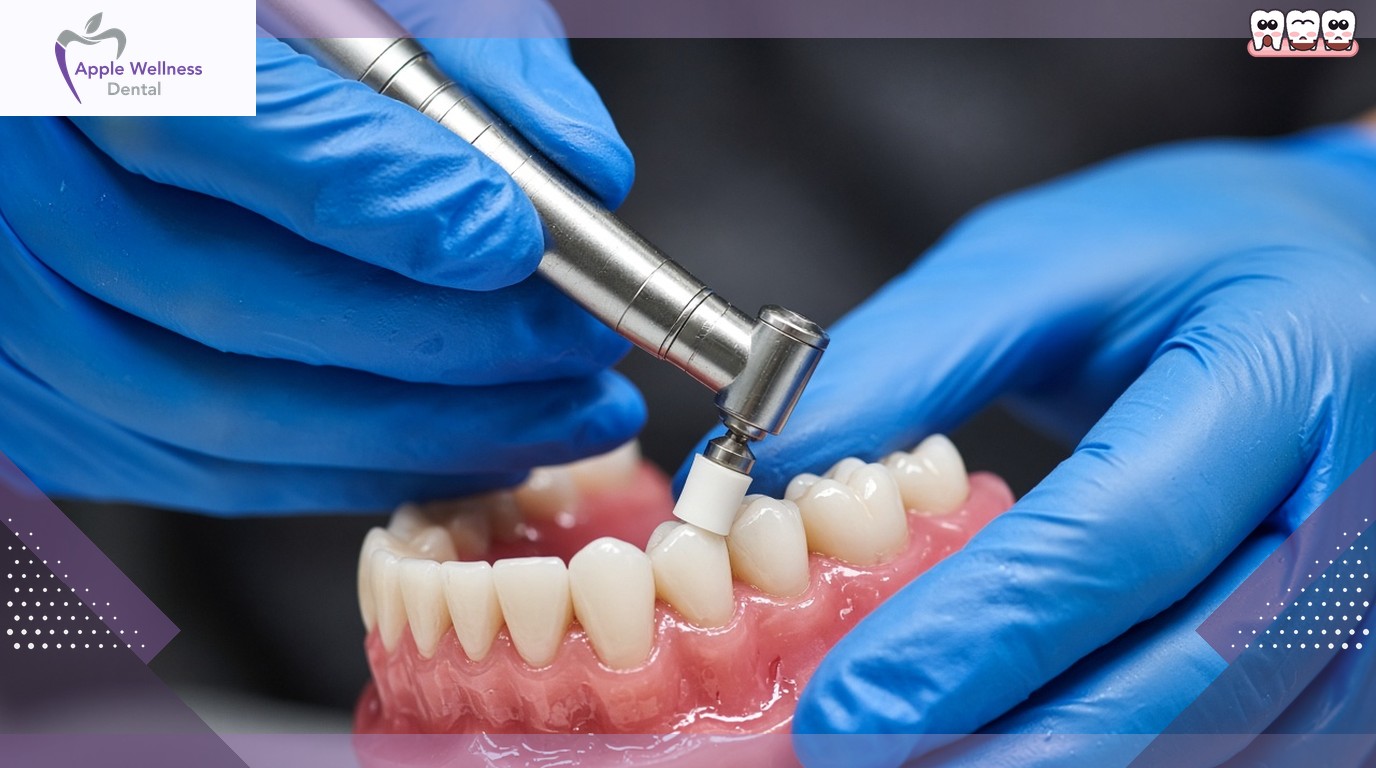
Prophylaxis comes from a Greek word meaning to guard against. In medicine it describes any action taken to prevent disease. In dentistry, it has come to mean the professional cleaning that removes plaque and tartar before they cause gum disease or decay.
Cleveland Clinic’s gum disease treatment page puts it simply: “Dental prophylaxis is a routine dental cleaning.” It removes plaque and tartar from the teeth. Because it is preventive, it is aimed at people whose gums are healthy or have only mild, reversible inflammation.
A glossary of cleaning terms
Dental offices and insurers use several overlapping words. Here is how they usually relate:
| Term | What it means | Typical situation |
|---|---|---|
| Prophylaxis (prophy) | Routine preventive cleaning: scaling plus polishing | Healthy teeth and gums (Cleveland Clinic) |
| Scaling | Removing plaque and tartar from tooth surfaces with hand or ultrasonic instruments | Part of every cleaning (Cleveland Clinic) |
| Polishing | Smoothing tooth surfaces and removing surface stain with a gritty paste | Part of every cleaning (Cleveland Clinic) |
| Gross debridement | Removing heavy tartar buildup so the dentist can examine the teeth | Years without a cleaning (Cleveland Clinic) |
| Scaling and root planing (SRP) | Deep cleaning beneath the gum line that smooths the roots, often with numbing | Gum disease with pockets (Cleveland Clinic) |
| Recall exam | Check-up for an existing patient | Usually paired with a cleaning |
What happens during a prophylaxis visit
Cleveland Clinic describes a cleaning as taking 30 to 60 minutes. A routine prophylaxis visit usually looks like this:
- Review and check. Your hygienist reviews your health history and looks at your teeth and gums.
- Scaling. Plaque and tartar are removed from above and just below the gum line.
- Polishing. A gritty paste smooths the surfaces and lifts surface stain.
- Flossing. Between-tooth areas are cleaned.
- Fluoride, if recommended. Some patients receive a fluoride treatment.
- Exam. The dentist checks for decay, gum problems and other concerns, and may take X-rays.
For a full walk-through, see what happens during a dental cleaning.
Prophylaxis versus deep cleaning
The key difference is what is being treated. Prophylaxis prevents disease in a healthy mouth. Scaling and root planing treats existing gum disease. Cleveland Clinic explains that SRP reaches beneath the gum line and smooths the roots so the gums can reattach. It is often done with numbing and may take more than one visit.
Cleveland Clinic also notes that gingivitis, the earliest stage of gum disease, can often be reversed. That is one reason regular prophylaxis matters: catching inflammation early may avoid the need for deeper treatment later.
How prophylaxis shows up on an Alberta bill
Alberta dental bills do not usually use the single word prophylaxis. Instead, cleaning is broken into scaling and polishing, each billed in units of time. The 2026 Alberta Blue Cross Dental Schedule lists these benchmark fees:
| Code | Description (2026 ABCDS) | Benchmark fee |
|---|---|---|
| 01202 | Examination, limited, previous patient (recall) | $67.11 |
| 11101 | Polishing, one unit of time | $64.38 |
| 11107 | Polishing, one half unit | $32.17 |
| 11111 | Scaling, one unit of time | $72.24 |
| 11112 | Scaling, two units | $144.49 |
| 11113 | Scaling, three units | $216.73 |
| 43421 | Root planing, one unit of time | $78.20 |
These are benchmark fees from a public schedule, not any clinic’s price list. The Government of Alberta says fee guide amounts are recommended, not mandatory, and dentists set their own fees.
Hypothetical example: A patient with healthy gums comes in for a six-month visit. Their bill shows a recall exam (01202), two units of scaling (11112) and a half unit of polishing (11107). Using 2026 ABCDS benchmarks, that adds up to $67.11 + $144.49 + $32.17 = $243.77 before any X-rays or fluoride. A patient with heavier tartar might need three or four scaling units instead.
Why units of time matter
Because scaling is billed by units of time, two people can get very different bills for the same “cleaning”. Heavier tartar, more bleeding gums, or longer gaps between visits usually mean more units. Your hygienist decides how many units are needed based on what they find, which is why estimates often show a range.
Insurance plans may also limit the number of scaling units they pay for each year. If you are unsure, ask the clinic to check your coverage before the appointment.
It also helps to know that the exam and the cleaning are billed separately. If you only see the hygienist that day, there may be no exam code. If the dentist finds something that needs a closer look, extra codes such as X-rays may be added, and your hygienist can explain each one before you leave.
How often should you have prophylaxis?
Cleveland Clinic says most dentists recommend a cleaning every six months. People with a history of gum disease, diabetes, or heavy tartar buildup may be advised to come more often, while some people with very healthy mouths may be fine with longer gaps. Your dentist will recommend an interval based on your own risk.
Not to be confused with antibiotic prophylaxis
You may also hear the phrase antibiotic prophylaxis at a dental office. This is a different thing entirely. It means taking an antibiotic before certain dental procedures to lower the risk of infection elsewhere in the body, and it is only recommended for some people with specific medical conditions. Your dentist and physician decide together whether you need it. If a form asks whether you have ever been told to take antibiotics before dental work, answer carefully, and bring the name of any medicine you were prescribed.
Prophylaxis and tooth stain
Polishing is the part of prophylaxis most people notice afterward, because teeth feel smooth and look brighter. The American Dental Association notes that a professional prophylaxis can reduce extrinsic stain, the surface stain caused by things like coffee, tea, wine and tobacco. It does not change the natural colour of the tooth underneath. If you want a whiter shade after your cleaning, that is a separate treatment; see teeth whitening in Airdrie.
Making your next prophylaxis easier
Plaque that stays on teeth hardens into tartar, and only a professional cleaning removes tartar. The less buildup there is, the fewer scaling units you may need. Simple daily habits help:
- Brush twice a day with a fluoride toothpaste, paying attention to the gum line.
- Clean between your teeth every day with floss or interdental brushes.
- Limit frequent sugary snacks and drinks between meals.
- Tell your hygienist about bleeding gums, sensitivity or a dry mouth so they can tailor your care.
Checklist: reading your cleaning estimate
- ☐ Is there an exam code (complete 01103 or recall 01202)?
- ☐ How many units of scaling are listed?
- ☐ Is polishing listed as a full or half unit?
- ☐ Is root planing (43421 and up) listed? If so, ask whether this is a deep cleaning for gum disease.
- ☐ Are X-rays or fluoride included?
- ☐ Has the clinic checked your plan’s annual scaling unit limit?
Coverage: insurance and CDCP
Most dental plans treat preventive cleanings as basic care. The Canadian Dental Care Plan lists preventive services, including scaling and polishing, among the care it covers, subject to its rules and any co-payment. Check your own plan details or ask the clinic to confirm before your visit.
Cleanings in Airdrie
At Apple Wellness Dental, our hygienists Vicki, Danielle and Renae provide preventive cleanings, and Dr. Sanjay Rajpal and Dr. Hammad Qasim complete your exam. We have served Airdrie from 229 1st Street SW since 1993, follow the Alberta Dental Fee Guide, direct bill insurance and accept the Canadian Dental Care Plan. Learn more about dental exams and cleanings, read our prophylaxis dental guide, or see what to expect as a new dental patient.
Frequently asked questions
Is prophylaxis the same as a regular cleaning?
Yes. Cleveland Clinic describes routine cleaning (prophylaxis) as the most common type of dental cleaning, meant for people with healthy teeth and gums.
What is the difference between prophylaxis and scaling?
Scaling is one part of prophylaxis. A prophylaxis visit includes scaling to remove plaque and tartar and polishing to smooth the teeth.
Is prophylaxis the same as a deep cleaning?
No. Deep cleaning, or scaling and root planing, treats gum disease beneath the gum line and smooths the roots. Prophylaxis is preventive care for healthy gums.
How long does dental prophylaxis take?
Cleveland Clinic says a dental cleaning usually takes 30 to 60 minutes.
Does dental prophylaxis hurt?
Most people feel scraping and pressure but not pain. Sensitive areas can feel uncomfortable. Tell your hygienist, as they can adjust their approach.
How much does prophylaxis cost in Alberta?
It depends on how many units of scaling and polishing you need. 2026 Alberta Blue Cross benchmarks list scaling at $72.24 per unit and polishing at $64.38 per unit. Clinic fees may vary.
Is prophylaxis covered by CDCP?
The Canadian Dental Care Plan lists preventive services including scaling and polishing among covered care, subject to plan rules and co-payments.
Sources
- Cleveland Clinic, “Dental Cleaning” (last updated January 5, 2026)
- Cleveland Clinic, “Gum Disease Treatment” (last updated January 31, 2023)
- American Dental Association, “Whitening” oral health topic (last updated August 16, 2022)
- Alberta Blue Cross, “Alberta Blue Cross Dental Schedule 2026 – General Practitioner”
- Government of Alberta, “Dental fees in Alberta” (undated)
- Government of Canada, “Canadian Dental Care Plan: What is covered” (undated)
Apple Wellness Dental
Dental care in Airdrie, Alberta. This article is general education and does not replace an examination by a dental professional. It is not medical, legal, tax or financial advice.
Due for a cleaning? Call our Airdrie team. Book a call or Contact Us, or call 587-332-6767.