
When Can I Spit After Tooth Extraction? Safe Timeline
Quick Answer: Most aftercare leaflets say to avoid hard or chewy food for the first 24 to 48 hours after a tooth extraction, and to eat soft food. Chew on the other side of your mouth. Crunchy foods such as chips or nuts can irritate the socket, so wait until your dentist says it’s comfortable.
Last updated: October 16, 2026. Main sources: Bedfordshire Hospitals NHS Foundation Trust, “Removal of Teeth, Post-Operative Care Advice” (undated), and Kent Community Health NHS Trust, “Tooth extraction after care” (undated). Leaflets differ by trust and by procedure, so follow your own dentist’s instructions first. Full links are at the end.
After a tooth extraction, many people wonder when they can go back to their normal diet. Chips, crusty bread, nuts and apples are often the first things people miss. The short answer is that the first few days matter most, and the exact timing depends on your procedure, how the socket heals, and how comfortable you feel. This guide walks through the first days and weeks, explains why crunchy foods are a concern, and tells you what to watch for so you can return to eating normally without setbacks.
The first few hours
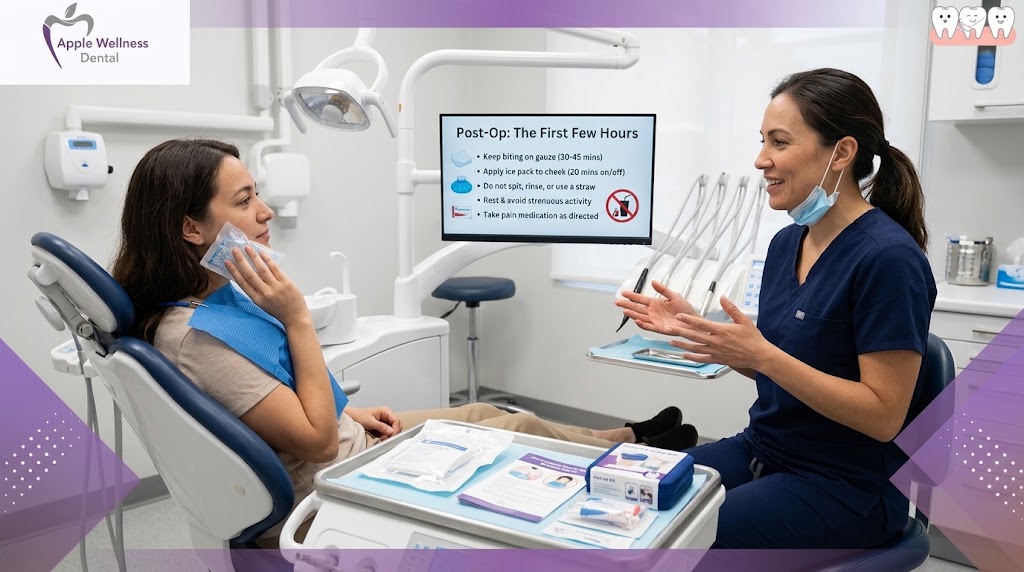
The Kent Community Health leaflet says not to eat or drink for three hours after the extraction, and it advises you to drink normally after that, as long as you avoid rinsing and spitting. The Bedfordshire Hospitals leaflet advises avoiding hot food and drinks on the day of surgery. Both leaflets are written for local procedures, so if you had sedation or a surgical extraction, follow the timing your dentist or surgeon gives you. Once the numbness wears off, the area may feel sore, and this is normal.
The first 24 to 48 hours
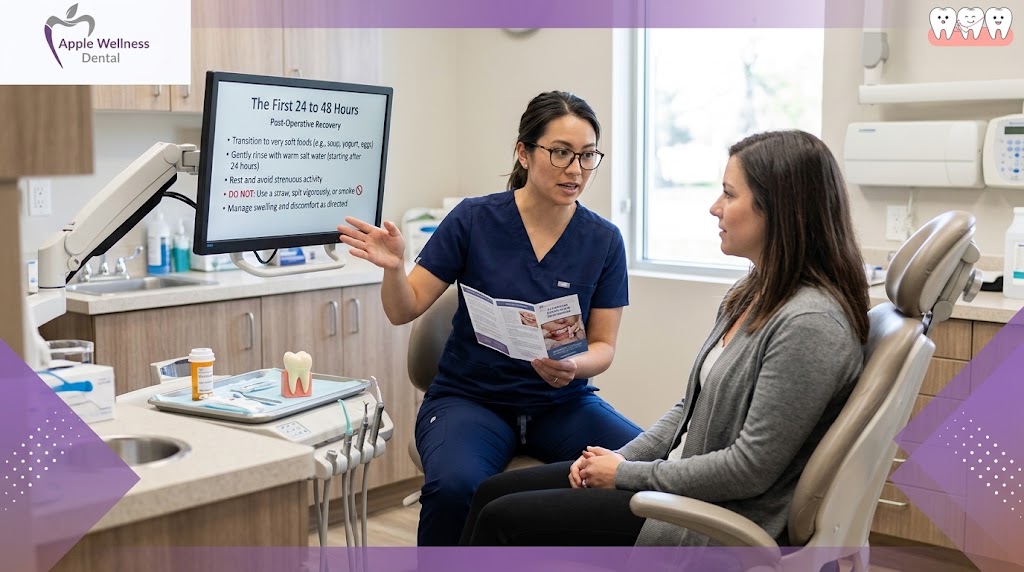
The Bedfordshire Hospitals leaflet advises avoiding hard or chewy food for the first 24 to 48 hours, and says a soft diet is recommended during this period. The Kent leaflet recommends eating soft food and chewing on the other side of the mouth. Soft food is easier to chew, less likely to disturb the healing area, and less likely to leave small particles near the socket.
Good soft options include yogurt, soup at a comfortable temperature, scrambled eggs, mashed potatoes, oatmeal, smoothies eaten with a spoon rather than a straw, and well-cooked pasta. Cut food into small pieces, and take small bites so you are not chewing with force. Keep food away from the extraction site, and use a spoon to place it on the opposite side.
Why crunchy foods are a concern
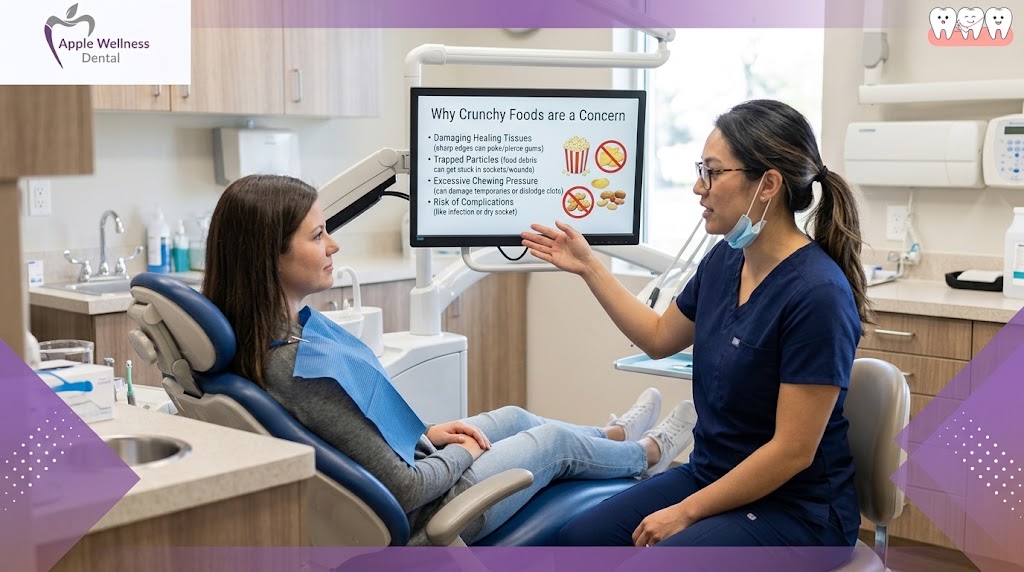
Crunchy foods can irritate the area around the socket, and small sharp pieces can lodge in it. Biting firmly on the extraction side can also disturb the healing area. Many people underestimate how often they chew on the same side without noticing, so be deliberate about it for the first few days. Hard, sticky and crumbly foods are the most likely to cause trouble. Chips, popcorn, nuts, crackers and crusty bread all fall into this category, and so do sticky sweets and very chewy meat.
For this reason, most advice is to keep chewing away from the extraction and to wait until the socket feels comfortable before returning to crisp or crusty foods. There is no single day that suits everyone, because healing depends on the procedure, your general health, and whether you smoke or have other factors that slow healing. Ask your dentist when it is safe for your case.
Bleeding and rinsing
Some blood is normal after an extraction. The Kent leaflet says you may notice some blood and can swallow it normally. If bleeding restarts, the same leaflet advises biting firmly for 30 minutes while sitting quietly. Avoid rinsing hard, spitting, or using straws in the first day, because the suction and pressure can disturb the blood clot that protects the socket. The leaflet says not to rinse your mouth out, and to wait 24 hours before rinsing and spitting.
After 24 hours, the Kent leaflet advises rinsing with warm salt water two to three times a day for three days. The Bedfordshire leaflet recommends a salty mouthwash at least three to four times a day after meals for 10 days. These two leaflets differ, so follow the instructions from your own dentist or surgeon. If bleeding continues and you are concerned, contact the dental practice. If bleeding is heavy or prolonged out of hours, seek urgent medical attention.
What to expect in the days and weeks after
Healing follows a rough pattern. Swelling usually peaks in the first couple of days and then settles. The Bedfordshire leaflet says swelling usually resolves in about 7 to 10 days. If you had stitches, they usually dissolve in about 7 to 14 days, according to the same leaflet. During this time, the socket gradually fills with new tissue. Soft food is the safest choice until the area feels comfortable and the swelling has gone down.
As the area heals, you can slowly return to a wider range of foods. Try softer textures first, such as cooked vegetables and soft bread, and then move to firmer foods while checking how the area feels. If food gets caught or the area aches afterwards, go back to softer food for a few days and try again later.
Dry socket and infection warning signs
Sometimes the blood clot in the socket is dislodged or does not form properly. This is called dry socket. It can cause pain that is stronger than expected a few days after the extraction, and the pain may spread towards the ear or jaw. A dislodged clot can expose the bone underneath, which can increase the risk of food getting trapped in the socket and of a painful infection. Signs that need a call to your dentist include pain that gets worse after the first few days, a bad taste or smell, pus, fever, or swelling that is increasing instead of easing.
Do not try to clean the socket yourself with objects, and do not poke at the area with your tongue or fingers. Keep brushing gently around the area, and rinse as advised by your dentist. Calling early is far better than waiting, because a dentist can check the socket and treat the problem quickly.
Wisdom teeth and surgical extractions
Wisdom tooth removal and other surgical extractions can involve more swelling, stitches and bone work than a simple extraction, so the timing for crunchy food may be longer. Surgeons often give more detailed instructions, including specific guidance on rinsing, sleeping position, and what to eat. Follow the advice you are given, even if it differs from a general leaflet, because your surgeon knows what was done.
Hypothetical example
Hypothetical example: Maria had a back tooth removed on Monday. For two days she eats yogurt, soup and eggs, chewing on the other side and taking small bites. By the weekend the area feels comfortable and the swelling has gone down. Before trying chips, she asks her dentist, who confirms it is safe to start with soft crunchy foods and to keep chewing on the other side for a few more days. Maria starts with crackers and checks how the socket feels afterwards.
A simple plan for the first week
- Day of the extraction. Follow the three-hour rule for eating and drinking. Eat soft, lukewarm food and avoid hot food and drinks.
- Days one and two. Stick to soft food, chew on the other side, and avoid rinsing hard or using straws until the advised time.
- Days three to seven. Begin salt-water rinses as advised, and move slowly towards softer textures you can chew comfortably.
- Days seven to fourteen. Watch for stitches dissolving and swelling settling. Return to firmer foods gradually, and ask your dentist before crunchy foods.
When to call your dentist
Call your dentist if bleeding does not stop after biting on gauze for 30 minutes, if pain gets worse after the first few days instead of better, if you notice a bad taste or bad smell, if you have a fever, or if swelling is increasing. These can be signs of a problem that needs attention, and it is always reasonable to call if you are unsure.
Questions to ask
- How long should I stick to soft food for my extraction?
- Which side should I chew on, and for how long?
- When can I eat chips, nuts or crusty bread safely?
- Should I avoid straws, and for how long?
- What should I do if the socket feels sore when I eat?
If you have questions about your recovery, contact our office. For painkiller choices after an extraction, read our guide on the best painkiller for tooth extraction, and for spitting and rinsing, read when you can spit after tooth extraction.
Frequently asked questions
Can I eat chips the day after a tooth extraction?
Most leaflets advise avoiding hard or chewy food for the first 24 to 48 hours. Ask your dentist before trying chips.
How soon can I eat normally after an extraction?
The leaflets do not give one fixed day. Ask your dentist when it is safe for your extraction.
Which side should I chew on after an extraction?
Chew on the other side of your mouth, and eat soft food while the socket heals.
How long after an extraction can I eat or drink?
One trust leaflet says not to eat or drink for three hours after the extraction.
How long do stitches last after an extraction?
Bedfordshire Hospitals says stitches usually dissolve in about 7 to 14 days.
When should I call my dentist about eating or pain?
Call if bleeding does not stop, pain gets worse after the first few days, or swelling increases.
Sources
- Bedfordshire Hospitals NHS Foundation Trust, “Removal of Teeth, Post-Operative Care Advice” (undated): bedfordshirehospitals.nhs.uk
- Kent Community Health NHS Trust, “Tooth extraction after care” (undated): kentcht.nhs.uk
Apple Wellness Dental
Dental care in Airdrie, Alberta. This article is general education and does not replace advice from your dentist or surgeon. It is not medical, legal, tax or financial advice.
Still sore after an extraction? Book a call or Contact Us, or call 587-332-6767.