
How Do I Know If I Have Gingivitis?
Quick Answer: Gingivitis is an early, usually mild form of gum disease. Common signs are red, swollen or tender gums that bleed when you brush or floss. Healthy gums are firm and pale pink. It often causes no pain, so check your gums yourself. If you see these signs, book a dental appointment soon.
Last updated: October 16, 2026. Main sources: Mayo Clinic’s “Gingivitis: Symptoms and causes” (updated November 16, 2023), Mayo Clinic’s gingivitis definition page (undated), and the Health Service Executive (HSE) of Ireland’s gum disease symptoms page (undated). Full links are at the end.
Most people only think about their gums when something goes wrong. Gingivitis is often the first stage, and it is easier to reverse when it is caught early. This guide explains the signs to check, how to tell gingivitis apart from more serious gum disease, and what to do next.
What gingivitis is
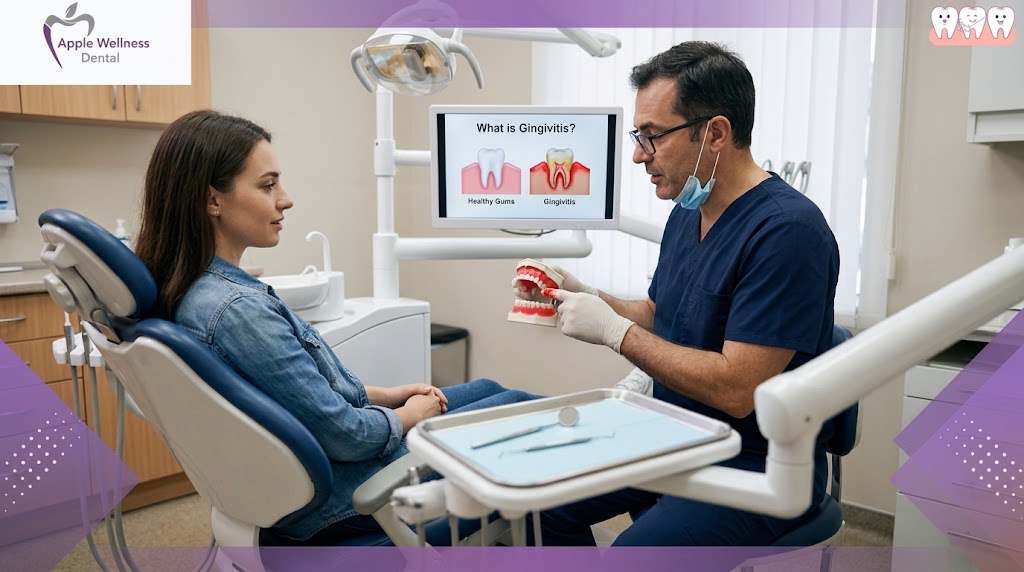
Gingivitis is a common, mild form of gum disease, also called periodontal disease. Plaque, a sticky film of bacteria, builds up on teeth. If it stays, it can harden into tartar under the gum line. The gum tissue around the teeth then becomes irritated and swollen, and it bleeds easily. Mayo Clinic notes that gingivitis does not cause bone loss, but if left untreated it can progress to a more serious gum disease called periodontitis.
The main signs of gingivitis

Mayo Clinic lists these symptoms:
- Swollen or puffy gums
- Bright red or dark red gums, or gums that look darker than usual
- Gums that bleed easily when you brush or floss
- Tender gums
- Bad breath
Healthy gums are firm and pale pink, and they fit tightly around the teeth. The HSE adds that healthy gums should not bleed when you touch or brush them. It also notes that gum disease is not always painful, so you may not realize you have it.
A two-minute self-check

| What to check | Healthy gums | Possible gingivitis |
|---|---|---|
| Colour | Pale pink | Bright red, dark red, or darker than usual |
| Shape and firmness | Firm, fitting tightly around teeth | Swollen or puffy |
| Bleeding | None when brushing or flossing | Bleeds easily |
| Comfort | Not tender | Tender to touch |
| Breath | No persistent bad breath | Persistent bad breath |
This check is a guide only. It cannot diagnose gingivitis. Only a dentist or dental hygienist can confirm it with an examination.
Who is more at risk
Mayo Clinic lists these risk factors:
- Poor oral care habits
- Smoking or chewing tobacco
- Older age
- Dry mouth
- Poor nutrition, including not getting enough vitamin C
- Repairs that do not fit properly, such as fillings, bridges, implants or veneers
- Crooked teeth that are hard to clean
- Conditions that lower immunity
- Certain medicines, and hormonal changes such as pregnancy or birth control pill use
If you have veneers or other restorations, read our guide on what veneers look like and how they fit, since fit and the gum line matter for gum health.
Gingivitis or periodontitis?
Gingivitis is the early stage. Mayo Clinic explains that untreated gingivitis can spread to the tissue and bone that support the teeth, a condition called periodontitis. The HSE lists warning signs of more advanced gum disease, including bad breath, an unpleasant taste in the mouth, loose teeth that make eating difficult, and gum abscesses (pockets of pus). If you notice any of these, see a dentist promptly.
What to do if you think you have gingivitis
- Book a dental appointment as soon as you notice symptoms. Mayo Clinic says the sooner you seek care, the better your chances of reversing it.
- Brush for two minutes at least twice a day, and floss at least once a day.
- Keep regular checkups and cleanings, usually every six to twelve months, or as your dentist recommends.
- Treatment usually involves a professional cleaning to remove tartar, according to Mayo Clinic.
To see how long gum inflammation can take to settle, read our article on how long gingivitis takes to go away. For earlier warning signs, read the early signs of gum disease.
Hypothetical example
Hypothetical example: Lee notices a little pink in the sink each morning for about a week, and the gums near the lower front teeth look darker than before. Rather than waiting, Lee books a checkup. The hygienist finds plaque and tartar along the gum line, and the plan is a professional cleaning plus a better brushing and flossing routine.
A note for Airdrie residents
Gingivitis is not a topic with local rules. The signs and the steps above are the same in Airdrie as elsewhere. The most practical step is a regular checkup, which can catch gum changes before they progress.
Frequently asked questions
Does gingivitis hurt?
Often it does not. The HSE notes gum disease is not always painful, so you may not notice it.
Can gingivitis be reversed?
Mayo Clinic says good oral health habits and regular dental care can help prevent and reverse it, and that earlier care improves the chances.
Does gingivitis cause bone loss?
Mayo Clinic says gingivitis itself does not cause bone loss. Untreated gingivitis can lead to periodontitis, which can.
Should my gums bleed when I brush?
Healthy gums should not bleed when touched or brushed, according to the HSE. Bleeding is a reason to see a dentist.
How is gingivitis treated?
Mayo Clinic says treatment usually involves a professional cleaning to remove tartar. Your dentist will confirm the plan.
Can veneers cause gingivitis?
Mayo Clinic lists repairs that do not fit properly, including veneers, as a risk factor. A good fit helps protect your gums.
Sources
- Mayo Clinic, “Gingivitis: Symptoms and causes” (November 16, 2023): mayoclinic.org
- Mayo Clinic Care Network, gingivitis definition (undated): mymlc.com
- Health Service Executive (Ireland), “Symptoms: gum disease (gingivitis and periodontitis)” (undated): hse.ie
Apple Wellness Dental
Dental care in Airdrie, Alberta. This article is general education and does not replace an examination by a dental professional. It is not medical, legal, tax or financial advice.
Noticed bleeding or swollen gums? Book a call or Contact Us, or call 587-332-6767.