
What Is the Best Painkiller for Tooth Extraction?
Quick Answer: For most adults after a simple tooth extraction, ibuprofen, acetaminophen (Tylenol), or both taken together are commonly recommended options. Trials after wisdom tooth removal found the combination relieved pain better than either drug alone. Stay within Health Canada’s daily limits, and check with your dentist or pharmacist first, especially if you take blood thinners.
Last updated: October 16, 2026. Main sources: Health Canada’s acetaminophen guidance (2016), Health Canada’s ibuprofen safety review (undated page), a 2013 review in the Journal of the American Dental Association (JADA), and an NHS England patient leaflet dated February 2023. Full links are listed at the end.
Pain after a tooth extraction is common, and most people want a clear answer about which painkiller to take. The honest answer is that the right choice depends on the extraction, your health history, and the medicines you already take. This guide covers what the research and Canadian guidance say, a simple plan to discuss with your dentist, and the warning signs that mean you should call.
Your main painkiller options at a glance
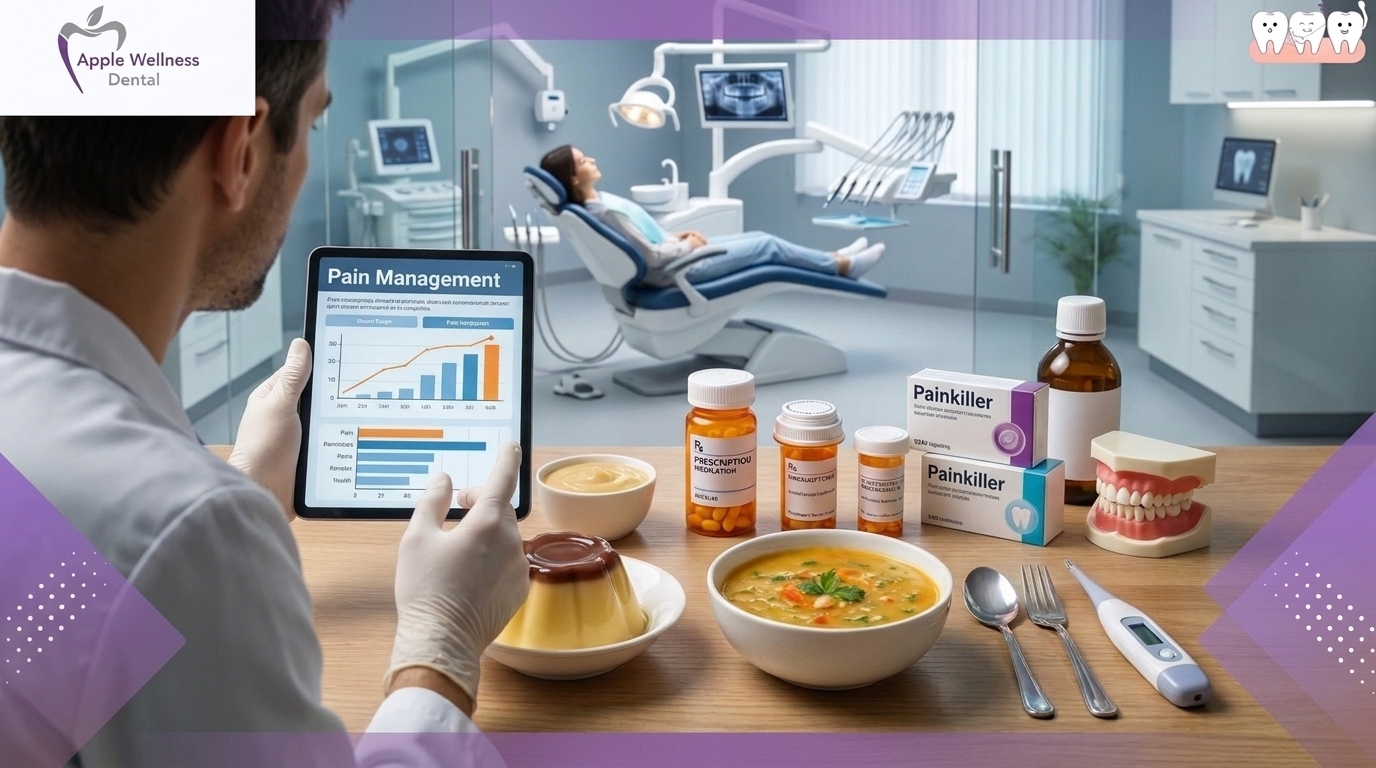
| Option | What the sources say | Adult daily limit (Canada) |
|---|---|---|
| Acetaminophen (Tylenol) | Commonly recommended after extraction. Many cold, flu and sleep products also contain it. | 4,000 mg per day from all products combined |
| Ibuprofen (Advil, Motrin) | Commonly used for dental pain. Some dentists advise caution for some patients, so ask yours. | 1,200 mg per day for over-the-counter products |
| Ibuprofen and acetaminophen together | In trials after wisdom tooth removal, the combination gave more pain relief than either drug alone. | Follow the limit for each ingredient on the label |
| Aspirin | The NHS leaflet advises against it unless a doctor has told you to take it, because it may increase bleeding. | Only as directed by a doctor |
| Prescription opioids | Only a dentist or doctor can decide whether one is needed. | As prescribed |
What the research says about combining medicines

Most of the research on combining these two painkillers comes from people having wisdom teeth removed. A 2013 JADA review, which drew on Cochrane-based evidence, reported that the combination gave greater pain relief than either drug alone in several randomized controlled trials. Because those trials mostly studied wisdom tooth surgery, the results may not map exactly onto a simple single-tooth extraction. That is one reason to ask your dentist what they recommend for your situation.
Why ibuprofen is a question for some patients

Some dentists advise against ibuprofen for some patients after an extraction, while others include it in their plan. The sources I checked do not agree on a single rule, and most are not dental regulators, so I have not stated one. Tell your dentist and pharmacist about every medicine you take and any health conditions you have, because these can change which painkiller suits you.
Canadian daily limits you need to know
Health Canada advises adults not to exceed 4,000 mg of acetaminophen per day. Health Canada’s 2016 labelling update and ISMP Canada both stress that many products contain acetaminophen, so you need to check every label. For over-the-counter ibuprofen, common Canadian product labels list a 1,200 mg daily maximum. Health Canada’s safety review found no evidence that over-the-counter ibuprofen at or below 1,200 mg per day increased heart or stroke risk.
A simple pain-relief plan to take to your appointment
- Which painkiller, or combination, is suitable for my extraction and my health history?
- Should I take it on a schedule, or only when I need it?
- What is my maximum total per day, counting every product I take?
- Is there any medicine I should avoid, including aspirin?
- Which symptoms mean I should call the office straight away?
Practical steps after your extraction
- Take the first dose about one hour after the procedure, so it starts working before the numbness wears off. This is the NHS England leaflet’s advice.
- Follow the product label and your dentist’s instructions. Treat the label’s daily maximum as a hard ceiling.
- Expect the pain to ease over a couple of days. Most people need less medicine each day.
- Contact your dentist if pain suddenly increases after a few days. The NHS leaflet links this to a possible infection.
Hypothetical example
Hypothetical example: Sam had a lower wisdom tooth removed at 9 a.m. Sam set a phone reminder for 10 a.m., wrote each dose in a notes app, and checked the total against the label before every dose. By the third day the pain had eased, and Sam needed less medicine each day.
When to get help urgently
The NHS leaflet advises placing a damp gauze over the socket and biting down for 15 minutes if bleeding occurs. If bleeding continues, call the clinic. If you cannot reach a dentist and the bleeding is heavy or keeps going, seek urgent medical care. Severe pain that gets worse after the first few days, bad breath, or a bad taste can be signs of infection or dry socket, so call your dentist promptly. For bleeding, read our guide on what to do if bleeding doesn’t stop.
For related timing questions, see how to manage pain after dental work and how to relieve pain after tooth extraction. For when you can spit and rinse, read our guide to spitting after an extraction.
Frequently asked questions
Is ibuprofen or acetaminophen better after a tooth extraction?
Neither is best for everyone. Trials after wisdom tooth removal found the combination relieved pain better than either drug alone, but your dentist should choose for your situation.
How much acetaminophen can an adult take in a day in Canada?
Health Canada advises no more than 4,000 mg per day for adults, counting every product that contains acetaminophen.
What is the daily limit for over-the-counter ibuprofen in Canada?
Common Canadian product labels list 1,200 mg per day. Follow the label of the product you have.
When should I take my first dose?
The NHS England leaflet advises about one hour after the extraction, so the medicine starts working before the numbness wears off.
Can I take aspirin after an extraction?
Not unless a doctor has told you to. The NHS leaflet says aspirin may increase bleeding.
When should I call my dentist about pain?
Call if pain suddenly increases after a few days, or if you have severe pain, bad breath or a bad taste, which can be signs of infection.
Do I need a prescription for pain relief?
Only a dentist or doctor can decide whether a prescription painkiller is needed.
Sources
- Health Canada, “Acetaminophen: know your dose” (2016): publications.gc.ca
- Health Canada, safety review of oral ibuprofen (undated page): dhpp.hpfb-dgpsa.ca
- ISMP Canada, “Spotlight on Acetaminophen”: safemedicationuse.ca
- Tylenol Canada, adult dosage table (manufacturer page, undated; used for common ibuprofen label maximums): tylenol.ca
- JADA review, “Combining ibuprofen and acetaminophen for acute pain management after third-molar extractions” (2013): pubmed.ncbi.nlm.nih.gov
- NHS England patient leaflet, “Looking after your mouth after a dental extraction” (February 2023): oxfordhealth.nhs.uk (PDF)
Apple Wellness Dental
Dental care in Airdrie, Alberta. This article is general education and does not replace advice from your dentist or pharmacist. It is not medical, legal, tax or financial advice.
Booking a tooth extraction or still in pain after one? Book a call or Contact Us, or call 587-332-6767.