
The Complete Guide to Tooth Preparation for Dental Veneers in 2026
Do they shave your teeth for veneers? The short and definitive answer is yes, but the term “shaving” is heavily misleading and often creates unnecessary fear. In modern cosmetic dentistry, clinicians do not dramatically “shave down” teeth into small pegs for veneers. Instead, they perform a highly precise process called enamel contouring or minimal preparation, typically removing only 0.3 to 0.5 millimeters of the outermost tooth structure. This amount is thinner than a standard contact lens. The goal is to preserve as much natural, healthy tooth as possible while creating the optimal surface for the veneer to bond to.
Key Takeaways
- Minimal Reduction: Modern veneer preparation usually requires removing only 0.3 to 0.5 mm of enamel, not drastic “shaving.”
- Enamel is Crucial: Dentists aim to keep the preparation strictly within the enamel layer to ensure the strongest possible bond for the porcelain.
- Why It’s Necessary: A small amount of enamel must be removed so the veneer does not look bulky and fits seamlessly at the gum line.
- Veneers vs. Crowns: Veneers only cover the front of the tooth and require minimal prep, whereas crowns require significant reduction (60-70%) around the entire tooth.
- “No-Prep” Options: While ultra-thin veneers (like Lumineers) exist, they are only suitable for specific anatomical situations to avoid a bulky appearance.
Understanding Dental Veneers and Tooth Preparation
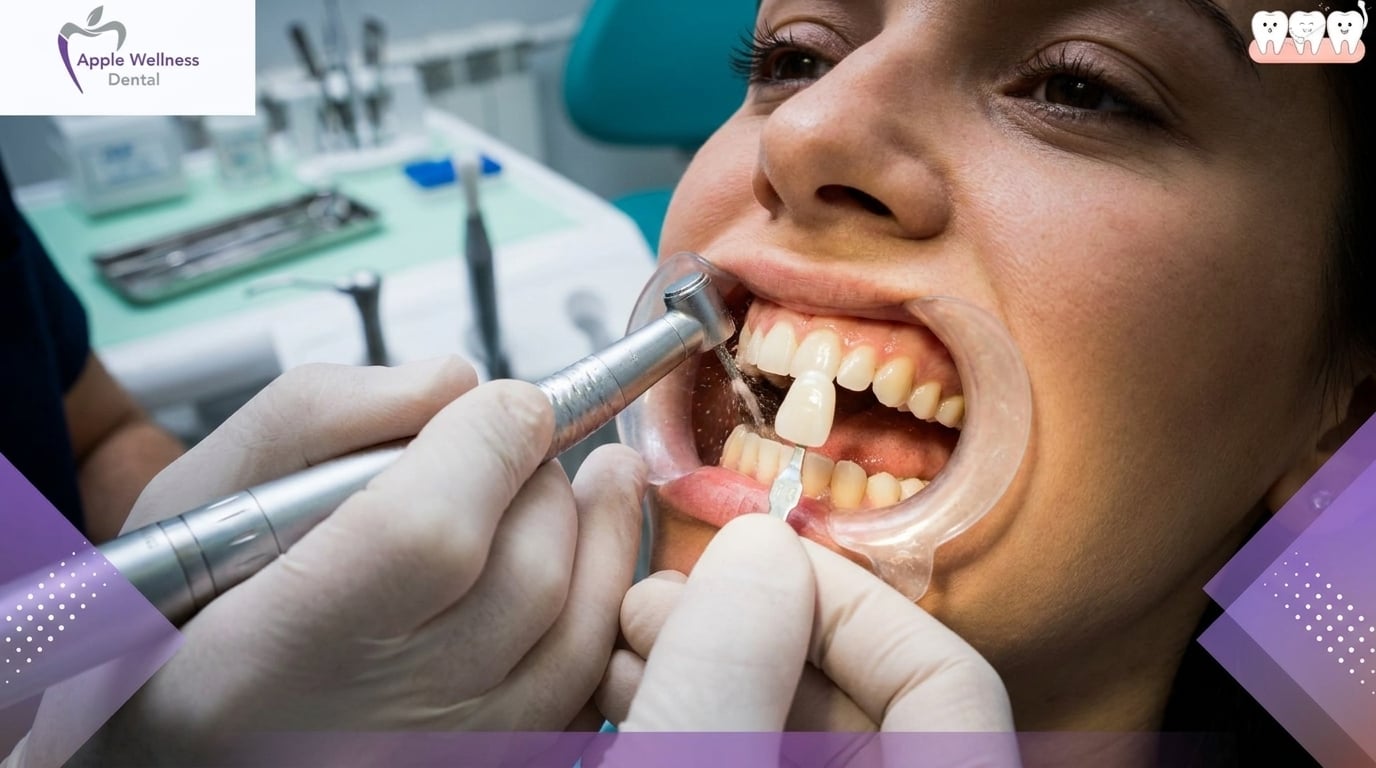
To understand why any tooth structure must be removed, it is essential to understand what a veneer is. A dental veneer is an ultra-thin shell of ceramic, porcelain, or composite resin designed to cover the facial (front) surface of a tooth. They are primarily used to correct discoloration, chipping, minor misalignment, and gaps.
Historically, older restorative materials were thick and opaque, requiring dentists to remove more tooth structure to achieve a natural look. However, as we move through 2026, advances in materials such as lithium disilicate (often known by the brand name E.max) and advanced translucent ceramics allow dentists to fabricate veneers that are incredibly strong even when pressed or milled to a thickness of just 0.2 to 0.3 millimeters.
The process of preparing the tooth is referred to clinically as reduction. The American Academy of Cosmetic Dentistry (AACD) maintains that “minimally invasive dentistry and the preservation of healthy tooth structure remain the gold standard in cosmetic veneer preparations.”
How Much Enamel is Actually Removed?
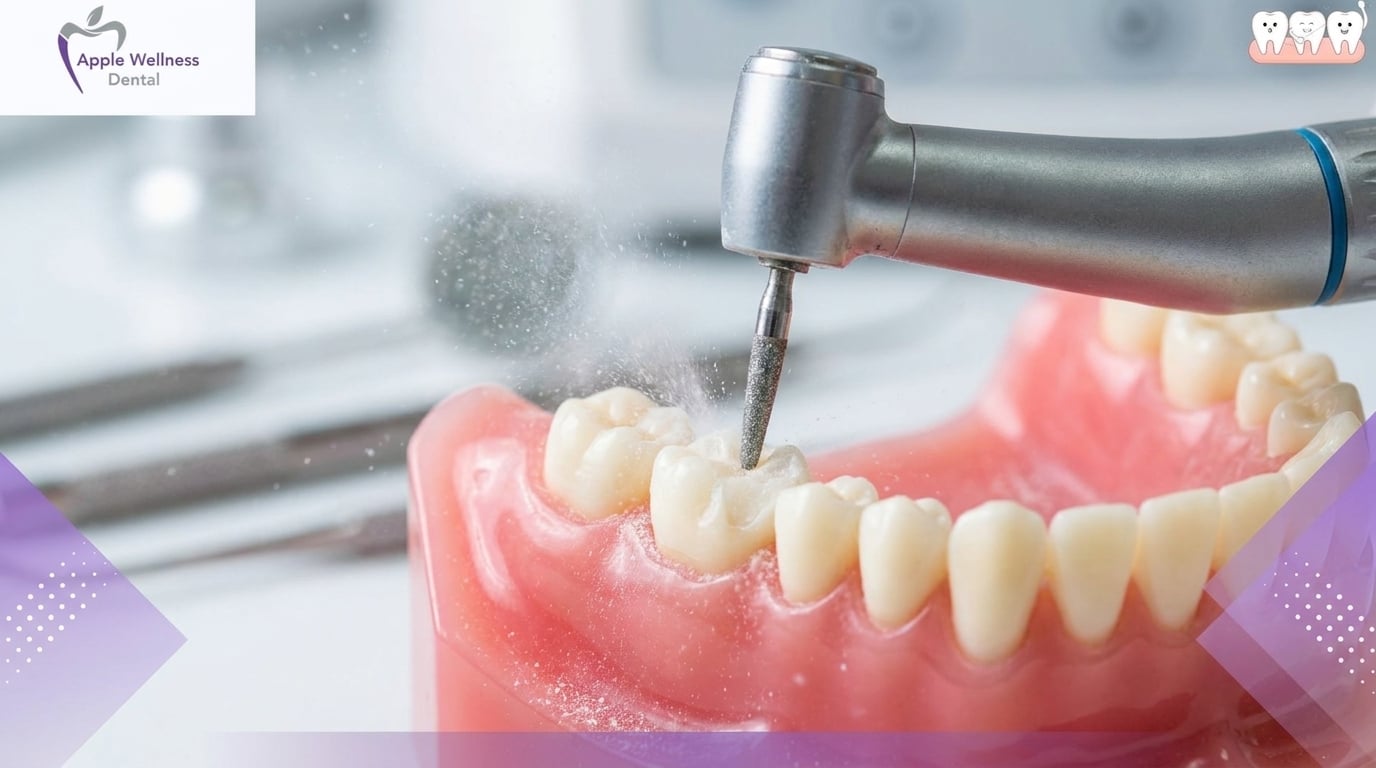
The anatomy of a human tooth consists of a soft inner pulp, a thick middle layer of dentin, and a hard, protective outer layer of enamel. Human enamel is generally about 2.58 millimeters thick on the biting surfaces (cusps) and slightly thinner near the gum line. When preparing a tooth for a standard porcelain veneer, a dentist will remove approximately 0.3 to 0.5 millimeters of this outer enamel.
To put this into perspective, removing 0.5 millimeters of enamel takes away roughly 10% to 20% of the tooth’s protective outer layer, leaving the vast majority of the enamel completely intact. The preservation of this enamel is not just a matter of structural integrity; it is a mechanical necessity.
Dental adhesives bond significantly better to enamel than they do to the underlying dentin. The microscopic hydroxyapatite crystals in enamel can be lightly etched with an acidic gel to create microscopic pores. When a bonding agent (resin cement) flows into these pores and cures, it creates a micromechanical lock that is incredibly strong and durable.
Why is Enamel Removal Necessary?
Many patients wonder why the veneer cannot simply be glued directly onto their existing, unaltered tooth. While this is sometimes possible (as discussed in the “no-prep” section below), standard preparation is required for three fundamental biological and esthetic reasons:
1. Preventing a Bulky Appearance
If you add a 0.5mm layer of porcelain to an already normally sized tooth, the tooth will instantly become 0.5mm thicker. This additive process can make teeth look excessively large, “chunky,” or inappropriately prominent. By removing half a millimeter of natural tooth, the dentist creates the physical space needed for the porcelain, ensuring the final result maintains the tooth’s original, natural volume.
2. Managing the Emergence Profile
In dentistry, the emergence profile refers to the angle and shape at which a tooth emerges from the gum tissues. A healthy tooth transitions smoothly from the root under the gums to the crown above the gums. If a veneer is placed over an unprepared tooth, it creates a distinct physical “ledge” or margin at the gum line.
This ledge acts as a trap for plaque and food debris. Over time, this bacterial accumulation leads to localized gingivitis, gum recession, and eventually periodontal disease. By preparing the tooth, the dentist creates a seamless, flush margin where the porcelain meets the natural tooth structure beneath the gum line, ensuring optimal periodontal health.
3. Color Masking
If a patient is getting veneers to mask severe intrinsic staining (such as tetracycline stains or a dead tooth), a very thin, highly translucent veneer will not hide the underlying darkness. The dentist must remove slightly more tooth structure (sometimes 0.6 to 0.8 mm) to allow the dental laboratory to build in a layer of opaque masking porcelain beneath the translucent surface porcelain.
The Difference Between Veneers and Crowns
A common source of the “shaving down teeth” myth comes from confusing veneers with dental crowns. A crown is a restorative cap that encases the entire tooth, often required when a tooth is heavily decayed, fractured, or has undergone a root canal. Preparing a tooth for a crown requires aggressive reduction—often 60% to 70% of the tooth structure—leaving behind a small stump or peg.
| Feature | Dental Veneers | Dental Crowns |
|---|---|---|
| Amount of Tooth Removed | 0.3 mm to 0.5 mm (Minimal) | 1.5 mm to 2.0 mm on all sides (Extensive) |
| Coverage Area | Front (facial) surface and biting edge | 360-degree coverage of the entire tooth |
| Primary Purpose | Cosmetic enhancement | Structural repair and strength |
| Reversibility | Irreversible, but highly conservative | Irreversible and structurally altering |
No-Prep Veneers: Are They a Realistic Alternative?
Patients searching for alternatives to tooth reduction often encounter marketing for “no-prep” or “minimal-prep” veneers, such as Lumineers or DURAthin veneers. The appeal is obvious: these procedures promise a brand-new smile without any drilling, shots, or permanent alteration of the underlying teeth.
However, the clinical reality is more nuanced. True zero-preparation dentistry is entirely additive. If your teeth are already well-positioned and normal in size, adding even 0.2mm of porcelain can make them appear bulbous. Therefore, true no-prep veneers are strictly reserved for specific edge cases, including:
- Microdontia: Patients with abnormally small teeth (e.g., “peg laterals”).
- Lingually inclined teeth: Teeth that naturally tilt inward, creating spatial room to build them outward.
- Arch widening: Patients who want to broaden a narrow smile.
Even when a “no-prep” approach is planned, dentists almost always perform some minor polishing of sharp line angles on the natural teeth to ensure the porcelain seats correctly and doesn’t fracture under biting forces.
The Step-by-Step Veneer Procedure in 2026
Understanding the clinical workflow can help alleviate anxiety regarding tooth preparation. Thanks to advancements in digital dentistry, the process is more precise and comfortable than ever.
- Digital Smile Design and Consultation: Before any physical changes are made, the dentist uses an intraoral scanner to create a 3D model of your mouth. AI-driven software allows you to preview the final outcome. A physical “mock-up” is often placed over your natural teeth using a temporary resin so you can test-drive the look.
- Anesthesia and Preparation: Once the design is approved, local anesthesia is administered to ensure complete comfort. Using specialized, fine-grit diamond burs, the dentist carefully removes the predetermined 0.3 to 0.5 mm of enamel from the front surfaces and biting edges of the teeth.
- Digital Impressions: Instead of the messy, gag-inducing putty used in the past, modern practices use a digital wand to take optical impressions of the freshly prepared teeth. These digital files are sent instantly to a specialized dental laboratory.
- Temporization: Because enamel has been removed, the teeth may be slightly sensitive. The dentist will fabricate temporary veneers out of bis-acryl resin. These temporaries protect the teeth and allow you to function normally while the final porcelain veneers are being crafted.
- Final Bonding: A few weeks later, the temporaries are removed. The teeth are thoroughly cleaned and isolated. The enamel is etched with a mild acid, and a silane coupling agent is applied to the internal surface of the porcelain. Finally, a light-cured resin cement permanently bonds the veneer to the tooth.
Potential Risks and Long-Term Considerations
While minimal, enamel removal is permanent and irreversible. Once a tooth is prepared for a veneer, it will always require a covering. If a veneer chips or fails, it must be replaced.
Post-operative sensitivity to hot and cold is the most common immediate side effect. This occurs because the fluid inside the microscopic dentinal tubules is disturbed during preparation. Fortunately, this sensitivity is usually transient, resolving within one to two weeks as the tooth’s internal nerve adapts to the new restoration.
When properly maintained, modern porcelain veneers are highly durable. According to extensive research published by the National Institutes of Health, high-quality porcelain veneers exhibit an estimated survival rate of approximately 91% at 10 years, and many last well over 15 to 20 years with diligent oral hygiene.
Frequently Asked Questions (FAQ)
Does getting veneers hurt?
No, the procedure is not painful. Dentists use local anesthesia to completely numb the teeth and surrounding gums before any enamel contouring begins. You may experience some mild soreness in the gums or temporary temperature sensitivity for a few days following the appointment.
Can veneers be removed later if I change my mind?
Because a small amount of irreversible enamel reduction is required for standard veneers, the procedure is permanent. You cannot return to your original natural teeth; if a veneer is removed, it must be replaced with a new veneer or a crown to protect the underlying tooth structure.
How long do modern porcelain veneers last?
With proper care, porcelain veneers typically last between 10 and 15 years, and frequently up to 20 years. Their longevity depends heavily on your oral hygiene habits, dietary choices, and whether you wear a protective nightguard if you grind your teeth.
Do composite veneers require the same amount of shaving?
Composite veneers (dental bonding) generally require less tooth preparation than porcelain veneers. In many cases, the composite resin can be applied directly to the lightly etched surface of an unaltered tooth, making it a highly conservative, albeit less durable, option.
Is tooth preparation bad for the overall health of your teeth?
When performed correctly by a skilled cosmetic dentist who adheres to biomimetic principles, removing 0.3-0.5 mm of enamel does not compromise the structural integrity or health of the tooth. However, overly aggressive preparation that deeply exposes dentin can lead to nerve damage and a weakened tooth.
What happens if the dentist removes too much enamel?
If too much enamel is removed and the underlying dentin is heavily exposed, the bond strength of the veneer decreases significantly, increasing the risk of the veneer falling off. Additionally, deep preparation increases the risk of permanent nerve damage and the potential need for a root canal.
Conclusion
So, do they shave your teeth for veneers? The dramatic images of severely ground-down teeth you may see on social media are not representative of standard, ethical veneer preparation; those are typically preparations for full dental crowns. True cosmetic veneer preparation is an elegant, minimally invasive procedure designed to remove less than half a millimeter of enamel. By utilizing advanced digital planning and modern ceramics, today’s dentists can dramatically transform your smile while safeguarding the long-term biological health of your teeth.
If you are considering cosmetic dental treatments and want to understand how minimally invasive techniques can improve your smile, contact us today to schedule a comprehensive consultation with our expert team.
References
- American Dental Association (ADA) – Guidelines on restorative materials and tooth preservation.
- American Academy of Cosmetic Dentistry (AACD) – Standards of care in cosmetic dentistry and minimally invasive protocols.
- National Institutes of Health (NIH) – Clinical studies on the 10-year and 20-year survival rates of porcelain veneers.
- WebMD – Patient resources on the preparation, risks, and benefits of dental veneers.