
Gingivitis Healing Time: How Long Before Your Gums Recover?
If your gums have been bleeding when you brush, looking redder than usual, or feeling tender without an obvious cause, you’ve likely come across the word gingivitis. And if you have, the first question most people ask is a simple one: how long does it take for gingivitis to go away? The good news is that gingivitis is the only stage of gum disease that is fully reversible. The not-so-good news is that it won’t go away on its own — and the timeline for recovery depends heavily on how quickly you act and whether you get the right level of care.
This guide gives you a clear, evidence-based picture of what gingivitis actually is, how the healing timeline breaks down by severity, what slows recovery, and when professional dental treatment becomes necessary rather than optional. Whether your symptoms are mild or you’ve been dealing with them for months, understanding the recovery process gives you the knowledge to make informed decisions about your oral health.
Key Takeaways
- Mild gingivitis can begin to improve within 7 to 10 days with consistent oral hygiene and a professional cleaning.
- Moderate cases typically take 2 to 4 weeks to resolve, often requiring professional tartar removal that brushing and flossing alone cannot accomplish.
- Severe or long-standing gingivitis may take several weeks to a few months, sometimes requiring deeper cleaning procedures like scaling and root planing.
- Gingivitis does not go away on its own — active treatment is required at every severity level.
- Once gingivitis progresses to periodontitis, it is no longer fully reversible, making early treatment essential.
- Professional dental care significantly accelerates healing and prevents relapse more effectively than self-managed care alone.
Overview
This article covers the complete gingivitis recovery timeline, from the earliest signs of gum inflammation through the different stages of healing. We explain what gingivitis is, why it develops, and what the body needs to reverse it. You’ll find a detailed breakdown of recovery timelines based on severity, a clear explanation of how professional dental treatment affects healing speed, and an honest look at the factors that can slow or complicate recovery. We also address some of the most common misconceptions about gingivitis — including the idea that it will resolve on its own. Our FAQ section tackles the most-searched questions on this topic, and throughout the article we explain why partnering with a dental professional consistently leads to better outcomes than attempting to manage gum disease independently.
What Is Gingivitis and Why Does It Develop?

Gingivitis is the earliest and most treatable stage of gum disease. The word comes from the Latin gingiva (gum) and the suffix -itis (inflammation) — so the name is literally just “gum inflammation.” At this stage, the inflammation is confined entirely to the soft gum tissue surrounding the teeth. The underlying bone and connective tissue attachments that hold the teeth in place have not yet been affected. This is what makes gingivitis fully reversible when treated properly — a distinction that separates it from the more advanced forms of gum disease that follow.
The primary cause of gingivitis is the accumulation of dental plaque along and just below the gumline. Plaque is a soft, sticky film composed of bacteria, their waste products, and food particles that forms on tooth surfaces continuously throughout the day. When plaque is not removed through regular brushing and flossing, the bacteria within it release toxins that trigger an inflammatory response in the gum tissue. The gums become irritated, red, swollen, and prone to bleeding — particularly when brushed or flossed. Over time, plaque that is not removed hardens into tartar (also called calculus), a calcified deposit that cannot be removed by regular brushing and that requires professional dental instruments to eliminate. Understanding early signs of gum disease gives you the awareness to catch gingivitis before it requires more intensive intervention.
Several factors increase a person’s susceptibility to developing gingivitis beyond poor oral hygiene alone. These include smoking or tobacco use, hormonal changes (particularly during pregnancy, menstruation, or menopause), certain medications that reduce saliva flow or cause gum changes, systemic conditions like diabetes, a weakened immune system, and nutritional deficiencies — particularly vitamin C deficiency. Dry mouth, poorly fitting dental appliances, and misaligned teeth that are harder to clean thoroughly also contribute. Even patients with otherwise good habits can develop gingivitis if specific contributing factors are present and unaddressed.
How Long Does It Take for Gingivitis to Go Away: The Timeline by Severity
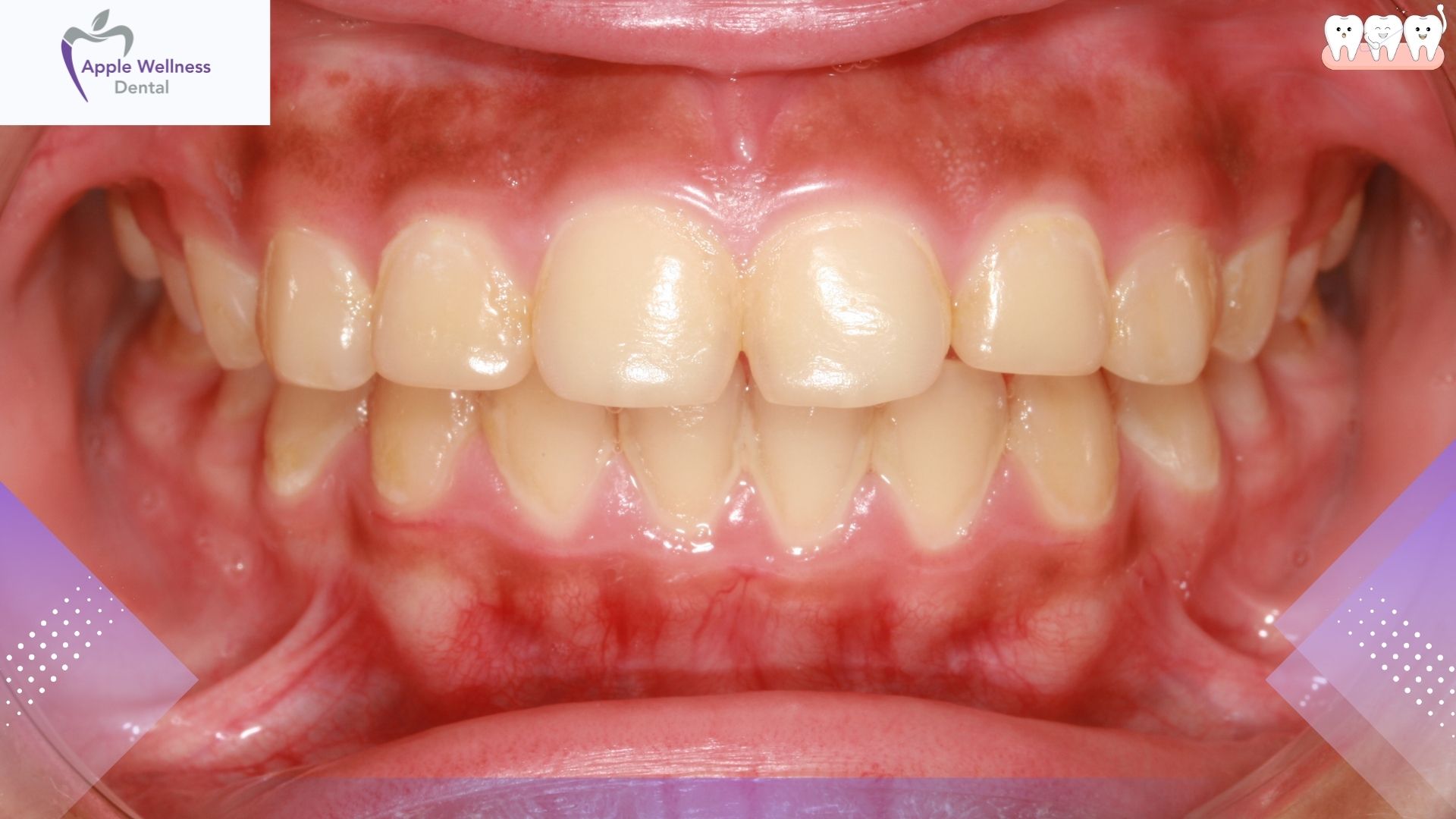
There is no single answer to how long it takes for gingivitis to clear up, because recovery time depends directly on how far the condition has progressed before treatment begins. The earlier you catch and address it, the faster your gums can return to a healthy state.
Mild Gingivitis: 7 to 14 Days
In its mildest form, gingivitis presents as slightly red, puffy gums that may bleed lightly during brushing or flossing. There is no pain, the gums have not visibly pulled away from the teeth, and the condition has likely been present for only a short time. At this stage, improvement can begin within days of starting consistent, thorough oral hygiene and receiving a professional cleaning. Most patients with mild gingivitis see significant reduction in symptoms — less bleeding, reduced redness, firmer gum tissue — within one to two weeks. According to dental health guidance published by Harvard Medical School, even more extensive cases can begin recovering within two weeks once plaque and tartar are properly addressed.
The critical factor at this stage is the removal of tartar. No matter how diligently you brush and floss at home, you cannot remove hardened tartar deposits yourself — that requires the ultrasonic and hand instruments used during a professional dental cleaning. Once tartar is removed, the primary irritant driving the inflammation is gone, and the gum tissue can begin repairing itself. For more on what this professional process involves, our overview of what happens during a dental cleaning walks through each step of the appointment.
Moderate Gingivitis: 2 to 4 Weeks
If gingivitis has been present for longer — or if plaque accumulation has been substantial — the gums may be more significantly inflamed, bleed more readily, and feel tender when touched. At this stage, the gum tissue has been irritated for an extended period, and the inflammatory response is more entrenched. Healing still falls within the reversible window, but it takes longer because the tissue has more repair work to do once the irritants are removed.
Recovery at this stage typically takes two to four weeks, provided that professional cleaning is performed to remove all tartar deposits and that consistent at-home oral hygiene is maintained throughout the healing period. A single professional cleaning appointment is often sufficient for moderate gingivitis, though some patients may benefit from a follow-up visit to assess healing and address any areas that need additional attention. The gum tissue’s ability to heal is actually quite impressive once the bacterial load is brought under control — but that healing depends entirely on the bacteria not returning through inconsistent brushing and flossing.
Severe or Long-Standing Gingivitis: Several Weeks to Several Months
In cases where gingivitis has been present for a prolonged period — or where contributing factors like heavy smoking, uncontrolled diabetes, or significant tartar accumulation have accelerated the condition — the timeline for recovery extends considerably. The gum tissue may be substantially thickened, highly sensitive, or visibly receding in some areas. There may be pockets of depth forming between the gum and the tooth root, though if bone has not been lost, the condition may still technically qualify as gingivitis rather than periodontitis.
At this level of severity, a standard cleaning appointment is often not sufficient. Scaling and root planing — sometimes called a deep cleaning — may be required to remove tartar deposits that have migrated below the gumline onto the root surfaces of the teeth. This procedure typically involves local anesthesia and is performed in quadrants (sections of the mouth) over one or two appointments. After treatment, healing of the gum tissue can take four to six weeks per treated area, with full resolution sometimes requiring several months of consistent follow-up care. Our detailed explanation of what scaling and root planing involves provides a thorough picture of what to expect from this procedure and why it makes such a significant difference for more advanced cases.
What Happens in Your Gums During the Healing Process
Understanding the biological steps of gum tissue repair helps explain why the recovery timeline is what it is and why rushing the process — or skipping steps — undermines the outcome. Gum tissue has a good blood supply and is capable of healing relatively quickly compared to other body tissues, but only when the conditions for healing are in place.
The Inflammatory Phase
In the first stage of recovery — typically the first few days after treatment and improved hygiene — the inflammatory response begins to wind down. With tartar and plaque reduced or removed, the bacterial toxins that were triggering the immune response are no longer present in the same concentrations. White blood cell activity in the gum tissue starts to decrease. Swelling begins to reduce. You may notice your gums looking less red and puffy, and bleeding on brushing will likely decrease. This does not mean healing is complete — it means the tissue has moved out of its most acute inflammatory state.
The Proliferative Phase
Over the following one to three weeks, the gum tissue actively repairs itself. Fibroblasts — the cells responsible for producing collagen, the structural protein of connective tissue — begin laying down new tissue to replace what was damaged by prolonged inflammation. Blood vessel formation in the area increases, supporting the metabolic demands of active repair. This is the phase during which gum color transitions from deep red back to the healthy pink that indicates well-vascularized but non-inflamed tissue. During this phase, maintaining excellent oral hygiene is critical — any reintroduction of significant bacterial load can restart the inflammatory cycle and interrupt repair.
The Remodeling Phase
The final phase of gum tissue healing involves the maturation and remodeling of the newly formed connective tissue. The collagen laid down during the proliferative phase is reorganized and strengthened, and the gum architecture — the firm, stippled, tightly adapted tissue seen in healthy gums — is gradually restored. This phase can continue for several weeks after initial symptoms resolve, which is why follow-up dental visits are important even after visible improvement has been achieved. A healthy appearance on the surface does not always mean healing is complete at a structural level.
Factors That Affect How Quickly Gingivitis Heals
Two patients with the same severity of gingivitis can have meaningfully different recovery timelines based on a range of individual factors. Knowing what accelerates or slows healing helps you understand your own situation more clearly and reinforces why personalized professional guidance matters.
Consistency of Oral Hygiene at Home
The most important determinant of recovery speed is how consistently and thoroughly you clean your teeth and gums between dental appointments. Brushing twice daily for at least two minutes and flossing once daily disrupts the plaque biofilm that drives inflammation. Missing even a few days of thorough cleaning allows plaque to re-establish along the gumline and restimulate the inflammatory response. The quality of your daily routine is not just supportive — it is the mechanism through which healing actually happens. Professional treatment removes the tartar that home care can’t address, but it is your home hygiene habits that determine whether inflammation stays under control long enough for tissue repair to complete.
Smoking and Tobacco Use
Smoking significantly impairs gum tissue healing in multiple ways. Nicotine constricts blood vessels, reducing the oxygen and nutrient delivery that healing tissue requires. Tobacco chemicals suppress immune cell function, reducing the body’s ability to manage the bacterial load in the gum pockets. Smoking also masks one of the key early warning signs of gingivitis — bleeding gums — because the vasoconstrictive effects reduce gum bleeding even when significant inflammation is present. This can give smokers a false sense that their gum health is better than it actually is. Research consistently shows that smokers have worse outcomes from gingivitis treatment and higher rates of disease progression than non-smokers. Our article on the broader health risks of gingivitis covers the systemic implications of prolonged gum disease in more depth.
Systemic Health Conditions
Diabetes is the systemic condition most closely linked to impaired gum healing. Elevated blood sugar reduces the function of immune cells, impairs collagen formation, and compromises the blood vessel integrity needed for tissue repair. People with uncontrolled diabetes often see slower gum healing and are at higher risk of gingivitis progressing to periodontitis. Conversely, improving blood sugar control can meaningfully improve gum disease outcomes — the relationship between oral and systemic health runs in both directions. Other conditions that may slow gum healing include autoimmune diseases, certain cancers, HIV, and conditions requiring immunosuppressant medications.
Nutrition and Hydration
Vitamin C plays a direct role in collagen synthesis — the process by which gum tissue repairs itself after inflammation. Deficiency in vitamin C is one of the few nutritional factors directly linked to gum disease development and poor healing. Adequate protein intake also matters, as amino acids are the building blocks of the connective tissue proteins needed for gum repair. Staying well hydrated supports saliva production, which is the mouth’s natural defense mechanism against bacterial overgrowth. Patients with generally poor nutrition may find their recovery timelines extended even when dental treatment is appropriate.
When Home Care Is Not Enough: The Role of Professional Treatment
A common misconception is that gingivitis can always be resolved through improved brushing and flossing alone. For very mild, very early-stage gingivitis, this may occasionally be true. But for the vast majority of patients — particularly anyone who has had symptoms for more than a few weeks — professional treatment is necessary to achieve full resolution. The reason is tartar.
Once plaque hardens into tartar, it cannot be removed by any toothbrush, floss, or over-the-counter product. Tartar provides a rough, porous surface that bacteria colonize aggressively, and it acts as a continuous source of irritation to the gum tissue regardless of how well you clean the tooth surfaces above it. Professional cleaning physically removes this material, which is the single most important intervention for gingivitis treatment. Without it, the gum tissue is attempting to heal while the primary irritant is still present. Think of it like trying to heal a splinter wound while the splinter is still in place — the tissue cannot recover until the foreign irritant is removed. Partnering with a dental hygienist for regular hygiene therapy appointments is the most reliable way to stay ahead of tartar accumulation and prevent gingivitis from developing or returning.
What Happens If Gingivitis Is Left Untreated
Gingivitis that is ignored or inadequately treated does not stay at the same level indefinitely — it progresses. As the bacterial environment in the gum pockets deepens and becomes more complex, the inflammation begins to affect not just the soft gum tissue but the bone and connective tissue that anchor the teeth in the jaw. At this point, the condition has moved into periodontitis — a significantly more serious form of gum disease that causes permanent structural damage.
Unlike gingivitis, periodontitis is not reversible. The bone lost to advanced gum disease does not regenerate through standard treatment. While periodontitis can be managed and stabilized to prevent further progression, it cannot be cured in the same sense that gingivitis can. Patients with periodontitis often require ongoing maintenance appointments every three to four months for the rest of their lives to keep bacterial levels under control and prevent continued bone loss. This trajectory — from treatable, reversible gingivitis to permanent structural damage — underscores why acting at the earliest sign of gum inflammation is so much better than waiting. Recognizing symptoms early and visiting a dental professional promptly is the most effective strategy for avoiding this outcome entirely.
Recognizing When Your Gums Are Actually Getting Better
One of the more counterintuitive aspects of gingivitis treatment is that some patients experience increased bleeding and sensitivity in the first few days after starting improved oral hygiene. If your gums have been inflamed and you begin flossing consistently after a long gap, the initial response may be more bleeding — not less. This is actually normal and expected. The inflamed tissue bleeds more readily than healthy tissue because it is engorged with blood vessels as part of the inflammatory response. As you maintain consistent cleaning and the inflammation decreases, the gum tissue becomes firmer and less vascular, and bleeding reduces progressively.
Signs that your gums are healing include: reduced bleeding during brushing and flossing; a transition in gum color from deep red or purple back to a healthy pink; firmer, less puffy gum tissue that sits more snugly against the tooth surface; less sensitivity or tenderness when touched; and the absence of persistent bad breath that originates from the gum pockets. These changes typically begin within the first week of treatment for mild cases and are clearly visible within two to three weeks for moderate cases. Tracking these changes is a useful way to gauge progress and identify whether your current care plan is working as expected.
Talk to Our Team Before Your Next Checkup
If you’ve been noticing the signs of gingivitis — or if you’re simply overdue for a professional cleaning — the most important step you can take today is booking an appointment with a dental professional who can assess your gum health accurately and create a clear plan for restoring it. At Apple Wellness Dental, our team in Airdrie provides thorough gum health assessments, professional cleanings, and personalized guidance for every stage of recovery. We’re located at 229 1st Street SW, Airdrie, AB, and you can reach us by phone at +1 587 332 6767. Whether your gums have just started showing symptoms or you’ve been dealing with recurring inflammation, we’re here to help you understand exactly where you stand and what needs to happen next to get your gum health back on track.
Common Questions About How Long Does It Take for Gingivitis to Go Away
Q: Can gingivitis go away without seeing a dentist?
A: In very mild, very early-stage cases, improved brushing and flossing can reduce gum inflammation if there is no significant tartar buildup present. However, once tartar has formed — which happens in most cases that have been present for more than a few weeks — professional cleaning is necessary to remove it. Tartar cannot be eliminated at home, and without its removal, gingivitis cannot fully resolve regardless of how consistent your oral hygiene is.
Q: How long does it take for gingivitis to go away with brushing and flossing alone?
A: For the mildest cases without significant tartar accumulation, consistent twice-daily brushing and once-daily flossing may produce noticeable improvement within one to two weeks. However, this applies only to very early-stage gingivitis. Most cases that have been present long enough to cause noticeable symptoms also involve tartar deposits that require professional removal before the gums can fully recover.
Q: What does healthy gum tissue look and feel like after gingivitis heals?
A: Healthy gums are firm, pale pink in color, and have a stippled texture similar to an orange peel. They fit snugly around the base of each tooth without puffiness or visible swelling. Healthy gums do not bleed during routine brushing or flossing and are not painful or tender to touch. The transition from inflamed to healthy tissue is gradual — you’ll notice improvements week by week rather than a sudden change.
Q: Can gingivitis come back after it has been treated?
A: Yes. Gingivitis is completely reversible, but it is also completely capable of returning if the underlying causes — primarily plaque accumulation and tartar buildup — are not managed consistently. Patients who complete treatment and then return to inconsistent oral hygiene or skip regular professional cleanings are at high risk of recurrence. Maintaining six-monthly hygiene appointments and a daily home care routine is the most effective way to prevent gingivitis from returning after successful treatment.
Q: Does gingivitis cause permanent damage to the gums?
A: No — this is what distinguishes gingivitis from periodontitis. Gingivitis affects only the soft gum tissue and causes no permanent damage to the underlying bone or connective tissue attachments. Once treated, the gum tissue fully recovers. However, if gingivitis is allowed to progress into periodontitis, the bone loss and tissue attachment damage that result are not reversible. Acting at the gingivitis stage is critical to avoiding permanent structural consequences.
Q: How long does it take to see improvement after a professional dental cleaning for gingivitis?
A: Many patients notice a reduction in bleeding and gum sensitivity within a few days of a professional cleaning. Visible improvements in gum color and firmness typically become apparent within one to two weeks for mild cases, and within two to four weeks for more moderate presentations. The full extent of healing — including complete normalization of gum tissue architecture — may take several weeks even after symptoms have largely resolved.
Q: Is gingivitis painful?
A: Gingivitis is often not painful in the traditional sense, which is one reason many people don’t seek treatment promptly. Tenderness and sensitivity during brushing or flossing are common, but spontaneous pain is not a hallmark symptom at the gingivitis stage. The absence of significant pain can give patients the impression that the condition is not serious — but the progression to periodontitis and its permanent consequences can occur even without significant discomfort along the way.
Q: What is the difference between gingivitis and periodontitis?
A: Gingivitis is inflammation confined to the soft gum tissue. It is fully reversible and causes no permanent damage when treated appropriately. Periodontitis is the advanced form of gum disease in which inflammation has extended below the gumline to affect the bone and connective tissue that hold the teeth in the jaw. Periodontitis causes progressive, irreversible bone loss and increases the risk of tooth loss. It requires more intensive treatment and long-term maintenance, but cannot be cured in the same way gingivitis can.
Q: Can I speed up gingivitis recovery with a special diet or supplements?
A: Good nutrition supports gum tissue healing, but dietary changes and supplements cannot substitute for professional treatment and consistent oral hygiene. Vitamin C is the nutrient most directly linked to gum tissue repair, and correcting a deficiency can improve recovery outcomes. Staying hydrated to support healthy saliva flow is also beneficial. However, these measures work alongside professional dental care — not instead of it. Your dentist is the right person to advise on whether nutritional factors are contributing to your gum health challenges.
Q: Is bleeding when brushing always a sign of gingivitis?
A: Bleeding gums during brushing or flossing is the most common symptom of gingivitis and should always be taken seriously rather than dismissed as normal. While occasional minor bleeding from brushing too aggressively or using a stiff-bristled brush can occur without gum disease, persistent or recurrent bleeding is a strong indicator that gum inflammation is present. Any bleeding that continues after improving your brushing technique warrants a professional dental evaluation to determine the cause and the appropriate response.
Conclusion
Gingivitis is one of the few dental conditions that is completely reversible — but only if you act before it progresses. The answer to how long it takes for gingivitis to go away is directly shaped by severity: mild cases can resolve within one to two weeks, moderate cases in two to four weeks, and more serious presentations over several months with appropriate professional treatment. What never changes is the fundamental requirement for professional care. No amount of at-home effort can replace the tartar removal that only a dental professional can provide, and no recovery timeline will hold if professional cleaning is skipped.
The most important thing you can take from this guide is that your window for a full, complete recovery is open right now — at the gingivitis stage — and it closes if the condition advances. If you have questions about your gum health or are ready to take the next step in reversing gingivitis, reach out to the team at Apple Wellness Dental in Airdrie. Your gums have a remarkable capacity to heal when given the right support — the question is whether you’ll give them that chance before it becomes harder to do so.