
How Much Do Pop-On Veneers Cost Compared to Professional Alternatives?
A brighter, more even smile is one of the most commonly desired cosmetic changes people seek — and pop-on veneers have positioned themselves as the fast, affordable shortcut to getting there. You’ve likely seen them advertised online: a removable set of tooth-colored shells that clip over your existing teeth and instantly transform your smile without any drilling, injections, or dental appointments. They sound almost too good to be true. And in many ways, they are.
But before we get into the limitations, it’s worth acknowledging the question that brings most people to this topic in the first place: how much are pop-on veneers? The price range varies more than most people expect — from relatively inexpensive over-the-counter kits to higher-end custom versions that approach the lower end of professional cosmetic dentistry pricing. Understanding where that money goes, what you actually receive for it, and how it compares to clinical veneer options is what this article is built around.
Whether you’re genuinely considering pop-on veneers as a smile solution or simply trying to understand your options, this guide gives you the full picture — the costs, the limitations, the risks, and the professional alternatives that deliver results pop-on products simply cannot match.
Key Takeaways
- Pop-on veneers typically range from $20 to $600 USD depending on quality, with most consumer-grade options falling between $20 and $150.
- Higher-priced custom pop-on veneers may look more natural but still carry the same functional limitations as cheaper versions.
- Pop-on veneers are removable cosmetic devices — they do not fix underlying dental problems, improve oral health, or function like professional veneers.
- Long-term use of poorly fitted snap-on veneers can contribute to gum irritation, bacterial buildup, and even tooth damage.
- Professional porcelain or composite veneers cost more upfront but offer durability, a natural appearance, and results that are clinically supervised.
- A consultation with a dental professional is the most reliable way to identify which cosmetic option is right for your specific teeth, budget, and goals.
What This Guide Covers
This article walks you through everything you need to know about pop-on veneer pricing — from the cheapest over-the-counter options to higher-end custom versions — and compares that cost against professional cosmetic dental alternatives. We cover what pop-on veneers actually are, how they work, their real limitations, the risks of unsupervised use, and why so many patients who start with snap-on veneers ultimately find their way to a dental office for a more lasting solution. We also answer the most common questions patients ask about this topic, so you can make a fully informed decision before spending a single dollar.
What Are Pop-On Veneers?

Pop-on veneers — also called snap-on veneers or clip-on veneers — are removable dental appliances made from thin resin or acrylic material that fit over your existing teeth. They are not permanently bonded to your teeth the way professional veneers are, and they require no preparation of the tooth surface. You simply press or snap them onto your teeth, wear them while you want the cosmetic effect, and remove them when you’re done.
Most pop-on veneers are sold directly to consumers without any involvement from a dental professional. Some are sold as one-size-fits-most generic products, while others are marketed as custom-fit options where you take an impression of your teeth at home using a provided kit and mail it in for a set to be manufactured. Neither version is made with the precision or material quality of professionally fabricated veneers.
They are primarily used for cosmetic purposes — covering discolored, chipped, gapped, or uneven teeth for photographs, special events, or everyday wear. They do not address the underlying condition of the teeth beneath them, and they cannot be used for eating in most cases without risk of breakage or displacement. The American Dental Association provides a clear overview of what dental veneers are and how professional versions differ significantly from consumer snap-on products.
How Much Are Pop-On Veneers? A Full Price Breakdown
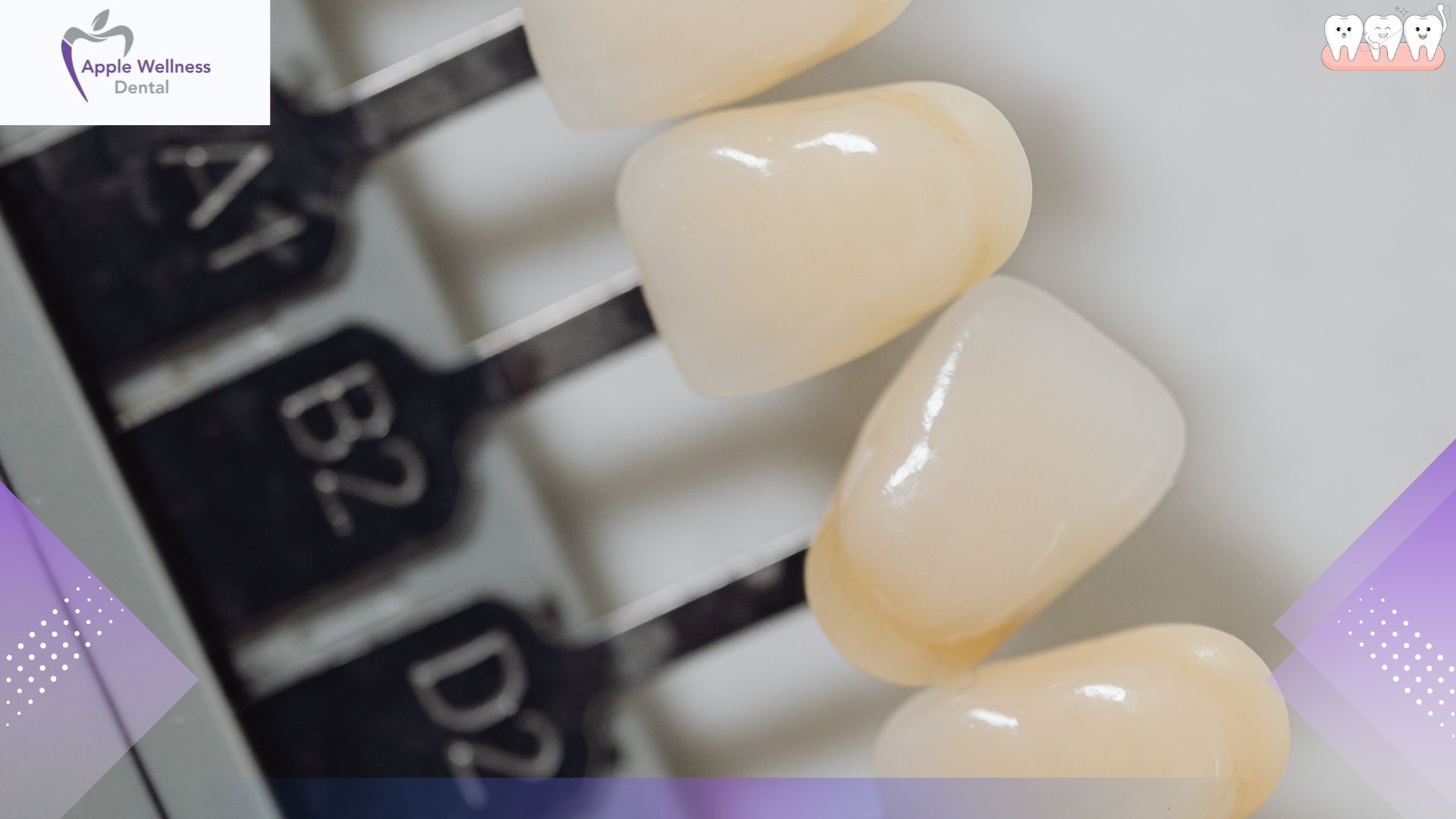
Budget and Over-the-Counter Options
At the lowest end of the market, generic pop-on veneers are available for as little as $20 to $50. These are mass-produced products made from low-grade resin that are not shaped to fit any individual’s teeth. They come in a standard size and shape, often look visibly artificial up close, and have a short lifespan — typically measured in weeks rather than months. For many buyers, the gap between what these products look like in promotional images and what they look like in real life is significant.
In the $50 to $150 range, you’ll find slightly better-quality consumer products — still generic in fit but made from more durable materials and with more attention to shade and shaping. Some in this range include basic molding putty that lets you partially shape the veneer to your teeth by warming and pressing, though the result is still far from a precise fit. These are the products most commonly purchased on impulse and most commonly returned or discarded within the first month.
Mid-Range and Custom Mail-Order Options
The $150 to $400 range is where custom mail-order pop-on veneers typically live. These products ask you to take impressions of your teeth using a home kit, send those impressions in, and receive a set of veneers made to fit your specific dental arch. The fit is meaningfully better than generic versions, and the material quality is usually higher — some use a semi-flexible resin that more closely resembles the appearance of natural enamel under light.
However, “custom” in this context still means custom to an impression taken by someone with no dental training, in a home environment, without any clinical assessment of the underlying teeth or gums. There is no dentist evaluating whether the fit is appropriate, whether there are gum health issues that would make wearing a veneer device inadvisable, or whether the bite relationship between upper and lower teeth is being affected. The custom fit is better than generic — but it still carries meaningful limitations and risks that a professionally supervised process would catch and address.
Premium Consumer Pop-On Veneers
At the top end of the consumer pop-on market — typically $400 to $600 or slightly above — you’ll find products that are marketed with language borrowed from professional dentistry: phrases like “dental-grade materials,” “precision fit,” and “natural-looking results.” These products often have longer warranties, more shade options, and more detailed impression processes. Some use a material called ethylene vinyl acetate (EVA), which is more flexible and arguably more comfortable than standard acrylic.
At this price point, it’s worth pausing to compare what you’re getting against what professional composite veneers — applied and supervised by an actual dentist — would cost. In many markets, you can access professional-grade cosmetic dental work for a comparable investment, with results that are bonded to the tooth, do not need to be removed for eating, last for years rather than months, and are supported by ongoing clinical care. The price gap between high-end pop-on products and professional entry-level cosmetic dentistry is often smaller than most consumers assume.
The Real Limitations of Pop-On Veneers
Price is only part of the picture. Before committing to any pop-on veneer purchase, it’s important to be clear-eyed about what these products cannot do — regardless of how much they cost.
They do not treat underlying dental problems. If you have cavities, gum disease, worn enamel, or bite issues, covering your teeth with a removable shell does nothing to address those conditions. In fact, wearing poorly fitted pop-on veneers for extended periods can trap food and bacteria against the tooth surface and gum line, accelerating decay and gum inflammation in ways that won’t be visible until the veneers are removed.
They are not suitable for eating. Most pop-on veneers are not designed to withstand the pressure and lateral forces involved in normal chewing. Eating while wearing them risks cracking or snapping the veneer, and the motion of chewing can displace the fit entirely. This limits their practical use to situations where you’re not eating — which for many people is more restrictive than they initially anticipated.
They look artificial at close range. Even the best consumer-grade pop-on veneers cannot replicate the light transmission, translucency, and surface texture of natural tooth enamel or professionally fabricated porcelain. In photos taken from a distance, the effect may be passable. In face-to-face conversations, the difference between pop-on veneers and real teeth is often noticeable.
They do not last. The average lifespan of a pop-on veneer set ranges from a few months to roughly two years under careful use. Professional porcelain veneers, by comparison, typically last between ten and twenty years with proper care. The cost-per-year comparison often tilts significantly in favor of professional options once longevity is factored in.
Health and Safety Concerns With Snap-On Veneers
Beyond the cosmetic limitations, there are legitimate health considerations that anyone thinking about extended pop-on veneer use should understand. These are not scare tactics — they are documented concerns raised by dental professionals about the unsupervised use of devices that sit against tooth and gum tissue for extended periods.
Ill-fitting veneers create gaps and edges where food particles and bacteria accumulate. Over time, this contributes to plaque buildup in areas that are difficult to clean, which increases the risk of both tooth decay and gum disease. The gum line is particularly vulnerable — pressure from the edge of a poorly fitted veneer can cause gum recession and irritation that may not reverse on its own once the veneer use stops.
There are also concerns about bite interference. Even a fraction of a millimeter of additional thickness on the biting surface of your teeth affects how your upper and lower jaw meet when you close your mouth. Wearing pop-on veneers regularly over a prolonged period can contribute to jaw soreness, headaches, and in some cases, temporomandibular joint (TMJ) discomfort. These effects tend to be subtle at first and cumulative over time.
None of these risks mean that wearing pop-on veneers for a single event or a short period is immediately dangerous. But they do mean that using them as a long-term cosmetic solution — without any dental oversight — is something that carries real consequences that are worth weighing carefully. The NHS guidance on protecting your teeth and gums reinforces why professional supervision matters for any device that contacts tooth and gum tissue regularly.
Pop-On Veneers vs. Professional Veneers: What’s the Real Difference?
How Professional Veneers Are Made and Applied
Professional dental veneers — whether porcelain or composite — are fabricated and applied through a clinical process that begins with a comprehensive examination of your teeth, gums, and bite. Your dentist assesses the health of the underlying teeth, discusses your cosmetic goals, and determines whether veneers are the appropriate solution or whether other treatments should come first. The preparation involves removing a thin layer of enamel from the tooth surface so that the veneer sits flush and bonds securely without adding uncomfortable bulk.
Porcelain veneers are fabricated in a dental laboratory from highly precise digital or physical impressions, and are bonded to the tooth using dental adhesive under clinical conditions. Composite veneers can often be applied directly in the dental chair in a single visit. Both result in a surface that is bonded to the tooth, matches the natural translucency and color of surrounding teeth, and requires no removal for eating, drinking, or sleeping.
Cost Comparison: Professional Veneers vs. Pop-On Products
Professional porcelain veneers typically range from $900 to $2,500 per tooth in most North American markets, depending on location, the complexity of the case, and the materials used. Composite veneers are generally more affordable, ranging from $250 to $1,500 per tooth. These figures reflect a per-tooth cost, and most smile transformations involve treating six to ten front teeth — so the total investment for a full professional veneer treatment can be significant.
That said, the comparison should account for longevity. A set of porcelain veneers lasting fifteen years represents a very different cost-per-year proposition than a set of pop-on veneers that need replacing every one to two years. It also doesn’t account for the dental treatment costs that can accumulate when oral health issues are masked rather than addressed — a calculation that often surprises patients who delayed professional care in favor of cheaper cosmetic shortcuts.
For patients who have genuine cosmetic concerns but face budget constraints, composite bonding and composite veneers offer a more accessible entry point to professional-grade cosmetic dentistry without the higher per-tooth cost of full porcelain fabrication. A conversation with your dentist about your goals and your budget can often identify a professional option that works within your financial reality.
Who Might Reasonably Consider Pop-On Veneers
Despite their limitations, pop-on veneers have a small number of genuinely appropriate use cases. For someone who needs to look their best in a single set of photographs — a wedding, a reunion, a professional headshot — and who does not have the time or budget for professional cosmetic work before that event, a good-quality pop-on set worn for a few hours is a low-risk way to temporarily improve the appearance of their smile.
They may also provide a useful visual reference for patients who are considering professional veneers and want to understand roughly what a covered, more uniform smile would look like on their face before committing to any permanent dental work. In this context, they function more as a cosmetic trial than a long-term solution.
What pop-on veneers are not appropriate for is as a substitute for professional dental care, as a solution for structural or health-related dental issues, or as a long-term cosmetic device worn daily. If the desire for a better smile is genuine and ongoing, the more honest and ultimately more cost-effective path is a conversation with a dental professional about what clinical options are available to you.
Thinking About a Smile Upgrade? Let’s Talk About What Actually Works
If you’ve been wondering how much pop-on veneers cost and whether they’re the right answer for your smile goals, the best next step isn’t another online search — it’s a conversation with a dental professional who can actually look at your teeth and give you an honest assessment. At Apple Wellness Dental, we work with patients at every stage of their smile journey, from those exploring cosmetic options for the first time to those ready to move forward with professional veneers or other restorative treatments. We believe every patient deserves clear information and clinical guidance before investing in any cosmetic solution — and we’re here to provide exactly that. Visit us at 229 1st Street SW, Airdrie, AB or call +1 587 332 6767 to schedule a consultation and find out which professional options are the right fit for your smile, your oral health, and your budget.
Common Questions About How Much Are Pop-On Veneers
Q: How much do pop-on veneers cost on average?
A: Pop-on veneers range from about $20 for basic generic products to $600 or more for premium custom-fit versions. Most commonly purchased options fall between $50 and $300. The price generally reflects material quality and fit precision, but even the most expensive consumer pop-on veneers have significant limitations compared to professionally made veneers applied by a dentist. Cost alone is not a reliable indicator of how safe or effective they are for regular use.
Q: Are pop-on veneers worth the money?
A: For occasional cosmetic use — like a single event or a photoshoot — a quality pop-on veneer set may offer reasonable short-term value. For ongoing daily wear, however, the cost-per-year calculation and the health risks associated with unsupervised use make them a less compelling option than professional alternatives. Most patients who use pop-on veneers regularly eventually seek professional cosmetic dental treatment for lasting results that don’t need to be managed and removed daily.
Q: Can pop-on veneers damage your teeth?
A: Yes — extended or improper use of pop-on veneers can contribute to several oral health problems. Poorly fitted edges trap bacteria against the gum line, increasing the risk of decay and gum inflammation. Pressure from the veneer on the gum tissue can cause recession over time. Bite interference from the added thickness of the veneer can also strain the jaw joint. These risks are most significant with daily long-term use rather than occasional short-term wear.
Q: Can you eat with pop-on veneers in?
A: Most pop-on veneers are not designed to withstand normal eating forces. Chewing — especially on harder foods — can crack, dislodge, or permanently deform the veneer. Many manufacturers explicitly advise against eating while wearing them. This is a significant practical limitation for anyone considering pop-on veneers as a daily solution, since it means removing them for every meal and snack throughout the day.
Q: How long do pop-on veneers last?
A: The lifespan of pop-on veneers depends heavily on the quality of the product and how carefully they are used and stored. Budget versions may last only a few weeks with regular use. Higher-quality custom options may last one to two years under careful handling. By comparison, professional porcelain veneers typically last ten to twenty years, making them a considerably more durable investment despite the higher initial cost.
Q: Do pop-on veneers look natural?
A: The appearance of pop-on veneers varies widely by product quality, but most do not fully replicate the look of natural teeth at close range. Natural tooth enamel has translucency, subtle color variation, and surface texture that consumer resin products cannot accurately reproduce. In photographs taken from a distance, the effect may be more convincing. In face-to-face interactions under normal lighting, the difference between pop-on veneers and real teeth is often detectable.
Q: What is the difference between pop-on veneers and professional veneers?
A: Professional veneers are permanently bonded to prepared tooth surfaces using dental adhesive and are fabricated from high-quality porcelain or composite resin matched precisely to your natural teeth. Pop-on veneers are removable resin shells that clip over teeth without any preparation or bonding. Professional veneers function normally during eating and last over a decade; pop-on veneers cannot be used for eating and have a lifespan measured in months to a couple of years at most.
Q: Can I sleep with pop-on veneers in?
A: Sleeping with pop-on veneers is not recommended by most dental professionals or product manufacturers. During sleep, most people engage in some degree of unconscious clenching or grinding. This puts significant pressure on the veneer material, accelerating wear and increasing the risk of fracture. It also prolongs the contact between the veneer and your gum tissue, increasing bacterial buildup overnight. Pop-on veneers should be removed, cleaned, and stored properly each night.
Q: Is there a safer and more effective alternative to pop-on veneers?
A: Yes — professional cosmetic dental treatments offer results that are clinically supervised, durable, and tailored to your actual dental anatomy. Options include composite bonding, composite veneers, porcelain veneers, and teeth whitening, depending on what your smile concerns are. These treatments are performed by a licensed dentist who can evaluate your oral health first, which means the cosmetic result is supported by a healthy foundation rather than placed over unassessed or untreated dental issues.
Q: Should I consult a dentist before buying pop-on veneers?
A: Yes — and this is particularly important if you have existing dental health concerns. Placing any device over teeth that have active decay, gum disease, or significant structural issues can mask those problems and allow them to worsen undetected. A brief dental consultation will tell you whether your teeth are in the condition to safely support any cosmetic overlay — and may reveal that professional options are more accessible than you expected. Many dental offices offer cosmetic consultations specifically to help patients explore their options without pressure.
Conclusion
So, how much are pop-on veneers? Anywhere from $20 to $600, depending on where you look and how much customization is involved. But the more important question isn’t the price tag — it’s what you’re actually getting for that money, and whether it genuinely serves your smile goals and your oral health.
Pop-on veneers occupy a specific and limited space in the cosmetic options available to you. For a short-term cosmetic boost, they can serve their purpose. As a long-term solution or a substitute for professional dental care, they fall well short — and in some cases, they can quietly create problems that cost more to fix than a professional veneer treatment would have in the first place.
The most durable, safest, and ultimately most satisfying smile improvements come from working with a dental professional who understands both the cosmetic and clinical picture. If you’re ready to explore what your options really are, the team at Apple Wellness Dental is here to walk you through professional veneer solutions that go well beyond what any pop-on product can offer — because your smile deserves more than a temporary fix.