
The Complete 2026 Guide to Tooth Replacement Options in Airdrie, Canada
Residents seeking tooth replacement options in Airdrie, Canada, have access to three primary restorative solutions: dental implants, fixed dental bridges, and modern removable dentures. The ideal choice depends on your specific oral health condition, jawbone density, budget, and lifestyle preferences. Dental implants offer a permanent, surgically placed titanium root that prevents bone loss; dental bridges provide a fixed prosthetic anchored to adjacent teeth; and contemporary dentures offer a removable, cost-effective way to replace multiple missing teeth. By consulting with a local dental professional, patients can select a customized treatment plan that restores both the functional mechanics of their bite and the aesthetic appeal of their smile.
Key Takeaways
- Dental Implants: Considered the gold standard for replacing missing teeth, offering a 95% to 98% success rate and preventing jawbone deterioration.
- Dental Bridges: A reliable, non-removable solution that utilizes adjacent healthy teeth to support a prosthetic tooth (pontic).
- Modern Dentures: Available in full and partial variations, utilizing advanced 2026 acrylics and flexible resins for improved comfort.
- Bone Health: Replacing a missing tooth promptly is critical to prevent alveolar bone resorption, which can reduce bone width by 25% in the first year alone.
- Customization: Advanced 3D imaging and digital impressions ensure that every restorative prosthetic is perfectly tailored to the patient’s unique oral anatomy.
The Critical Importance of Replacing Missing Teeth
Losing a permanent tooth is more than just a cosmetic concern; it is a complex medical issue that triggers a cascade of oral health complications. When a tooth is extracted or lost to trauma, the underlying alveolar bone—the portion of the jawbone that anchors the tooth roots—no longer receives the mechanical stimulation required to maintain its density. According to the Canadian Dental Association, this lack of stimulation leads to rapid bone resorption.
Research indicates that patients can lose up to 25% of their supporting jawbone width within the first year of tooth loss. As the bone deteriorates, adjacent teeth begin to shift and drift into the empty space. This migration alters the patient’s bite (occlusion), leading to uneven wear on remaining teeth, temporomandibular joint (TMJ) disorders, and an increased risk of periodontal disease. Furthermore, missing teeth can severely impact a person’s ability to chew nutritious foods and articulate words clearly.
As Dr. Marcus Thorne, Director of Restorative Sciences at the International Dental Implant Association, explains: “The human dentition is a highly interdependent system. Removing even a single component without replacing it compromises the structural integrity of the entire arch, accelerating the aging of the lower third of the face.” Understanding these risks highlights why exploring common restorative dentistry options is essential for long-term health.
Comprehensive Restorative Solutions Available Locally
As of 2026, advancements in dental materials and technology have dramatically improved the quality of prosthetics available to patients. Whether you are missing a single incisor or an entire arch of teeth, there is a clinically proven solution tailored to your needs.
1. Dental Implants: The Gold Standard
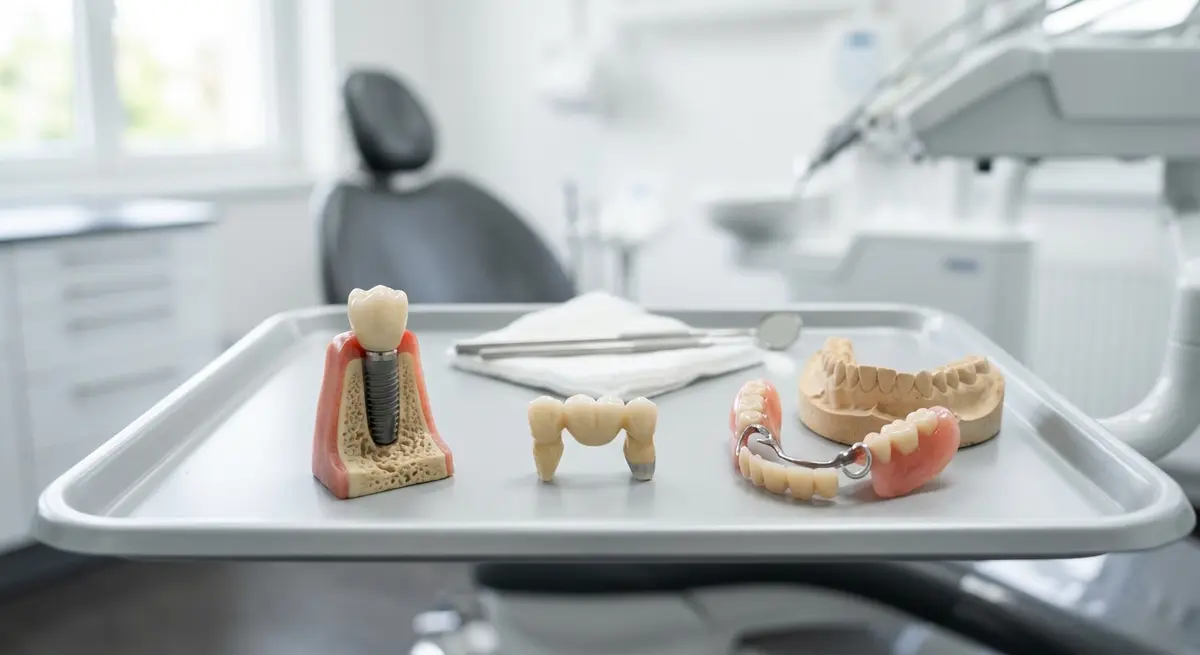
Dental implants represent the pinnacle of modern restorative care. Unlike other options that merely sit on the gums or rely on neighboring teeth, implants replace both the visible crown and the invisible root of the tooth. The dental implant placement process involves surgically embedding a biocompatible titanium post directly into the jawbone.
Over a period of three to six months, a biological process called osseointegration occurs. Research published by the National Institutes of Health demonstrates that titanium naturally fuses with living bone tissue, creating an anchor of unparalleled strength. Once healed, an abutment is attached to the post, which then supports a custom-milled porcelain or zirconia crown.
Advantages of Implants:
- Stimulates the jawbone, halting resorption and preserving facial structure.
- Does not require the alteration or grinding down of adjacent healthy teeth.
- Boasts an impressive 95% to 98% clinical success rate.
- Can last a lifetime with proper oral hygiene and regular professional cleanings.
2. Dental Bridges: A Reliable Fixed Prosthetic
For patients who may not be ideal candidates for surgery due to inadequate bone density or specific medical conditions, fixed dental bridges offer a highly effective alternative. A traditional bridge consists of two crowns placed on the healthy teeth adjacent to the gap (the abutment teeth), which hold a false tooth (the pontic) suspended between them.
Bridges are typically crafted from high-grade ceramics, porcelain fused to metal (PFM), or monolithic zirconia, ensuring they blend seamlessly with the natural dentition. While they do not prevent bone loss beneath the pontic, they immediately restore chewing function and prevent surrounding teeth from shifting out of alignment.
The typical lifespan of restorative treatments like bridges ranges from 5 to 15 years, depending heavily on the patient’s commitment to flossing under the pontic and maintaining overall periodontal health.
3. Modern Dentures: Removable and Refined
Dentures have evolved significantly from the bulky, uncomfortable appliances of the past. Today, they are precision-engineered using lightweight, durable materials. Patients can choose between partial dentures (for replacing a few scattered missing teeth) and full dentures (for replacing an entire upper or lower arch).
Understanding the difference between partial and full dentures is crucial. Partial dentures often utilize a discreet metal or flexible resin framework that clasps onto remaining natural teeth for stability. Full dentures rely on suction, anatomical retention, or the aid of dental adhesives to stay in place. According to the American College of Prosthodontists, millions of adults rely on dentures to restore their smile and dietary capabilities.
Furthermore, the materials used in modern dentures—such as cross-linked acrylic resins and advanced composites—ensure a highly realistic appearance that mimics the translucency of natural enamel and the stippled texture of healthy gum tissue.
Comparing Your Restorative Choices
To help visualize the differences between these treatments, consider the following comparison of the primary tooth replacement options:
| Feature | Dental Implants | Dental Bridges | Dentures |
|---|---|---|---|
| Bone Preservation | Excellent (stimulates bone) | None (bone may recede) | None (accelerates bone loss) |
| Longevity | Lifetime (with proper care) | 5 to 15 years | 5 to 7 years (requires relining) |
| Impact on Adjacent Teeth | None (standalone structure) | Requires enamel removal | May cause wear from clasps |
| Removability | Fixed permanently | Fixed permanently | Removable by patient |
Step-by-Step: The Tooth Replacement Journey
Embarking on a restorative dental journey requires careful planning and execution. While the exact timeline varies based on the chosen prosthetic, the general process follows a structured clinical pathway:
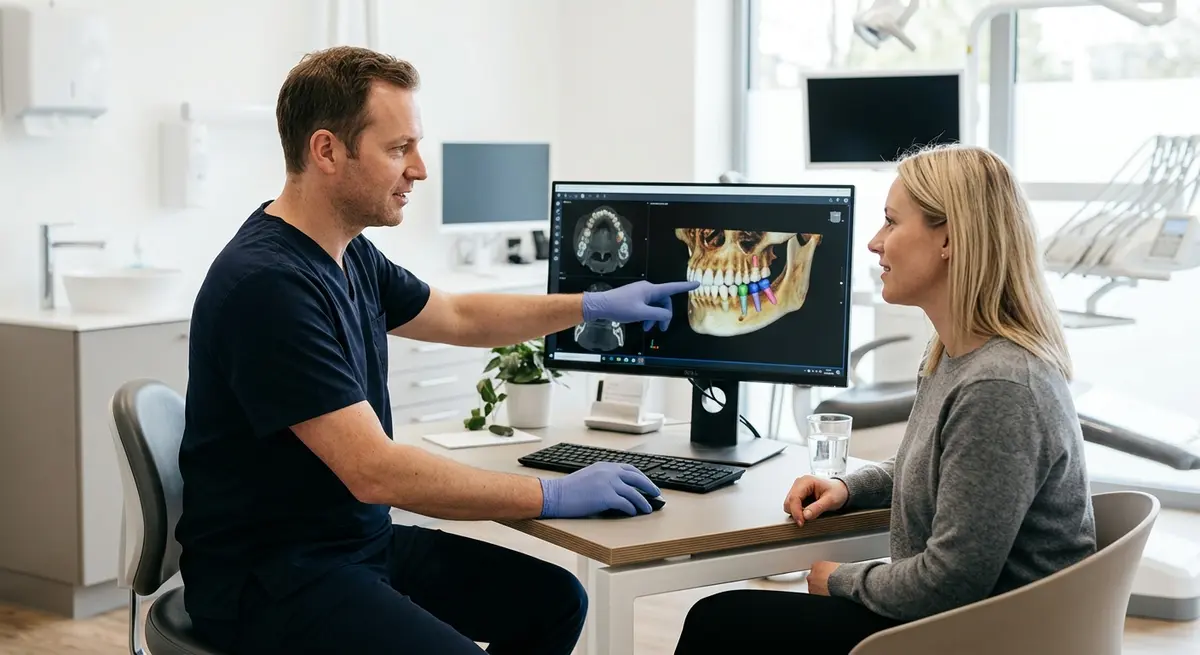
- Comprehensive Consultation and Diagnostics: The process begins with a thorough clinical examination. Dentists utilize 3D Cone Beam Computed Tomography (CBCT) scanners to evaluate jawbone density, nerve pathways, and sinus cavities.
- Treatment Planning: Based on the diagnostic data, a customized treatment plan is formulated. This is the stage where patients discuss their budget, timeline, and aesthetic goals.
- Preparatory Procedures: If a patient lacks sufficient bone volume for an implant, a bone grafting procedure may be required. Alternatively, if a bridge is chosen, the abutment teeth are reshaped. Patients preparing for oral surgery will receive specific pre-operative instructions.
- Placement or Impressions: For implants, the titanium post is surgically inserted. For bridges and dentures, highly accurate digital impressions are taken using an intraoral scanner, eliminating the need for messy traditional putty.
- Fabrication: The digital files are sent to a specialized dental laboratory where the final prosthetic is milled or cast to exact specifications.
- Final Fitting and Adjustments: The permanent crown, bridge, or denture is placed in the patient’s mouth. The dentist checks the occlusion (bite) and makes micro-adjustments to ensure optimal comfort and function.
Factors Influencing Your Treatment Decision
Choosing the right tooth replacement strategy is a highly individualized process. Several critical factors must be weighed during your consultation.
First, jawbone density plays a pivotal role. Implants require a certain volume and quality of bone for successful osseointegration. If severe resorption has already occurred, extensive bone grafting might be necessary, which extends the treatment timeline and increases costs. In such cases, a bridge or partial denture might be a more immediate and pragmatic solution.
Second, overall systemic health must be evaluated. Conditions such as uncontrolled diabetes, autoimmune disorders, or a history of radiation therapy to the head and neck can impair the body’s healing capabilities, potentially contraindicating surgical implant placement. The World Health Organization notes that systemic health and oral health are deeply interconnected, requiring a holistic approach to dental surgery.
Finally, aesthetic expectations are paramount. While all modern options can improve your smile aesthetically, implants and high-grade ceramic bridges offer the most lifelike translucency and emergence profile (the way the tooth appears to grow naturally out of the gum line).
2026 Innovations in Restorative Dental Technology
The landscape of restorative dentistry in 2026 is defined by digital precision and minimally invasive techniques. The integration of Artificial Intelligence (AI) into diagnostic software allows dentists to predict surgical outcomes with unprecedented accuracy. AI-guided implant surgery utilizes custom-printed surgical stents that direct the drill to the exact depth and angulation required, reducing surgical time by up to 30% and minimizing post-operative discomfort.
Furthermore, the advent of biocompatible 3D printing has revolutionized the fabrication of temporary prosthetics and dentures. Patients can now receive highly durable, aesthetically pleasing temporary teeth on the same day as their extractions, ensuring they never have to leave the clinic with a visible gap in their smile.
Frequently Asked Questions (FAQ)
Are dental implants painful to get?
The implant placement procedure is performed under local anesthesia, ensuring the surgical site is completely numb. Most patients report that the post-operative discomfort is milder than a tooth extraction and can be easily managed with over-the-counter pain relievers for a few days.
How much do tooth replacement options cost?
Costs vary widely depending on the chosen method and materials. Dentures are generally the most cost-effective upfront, while dental implants require a higher initial investment but offer greater long-term value due to their lifetime durability.
Can I switch from dentures to implants later?
Yes, many patients transition from traditional removable dentures to implant-supported dentures (often called All-on-4). This process involves placing several implants into the jaw to securely anchor a full arch prosthetic, providing superior stability and chewing power.
How long does it take to get a dental bridge?
A traditional dental bridge typically requires two appointments spaced about two weeks apart. The first visit involves preparing the abutment teeth and taking digital impressions, while the second visit is dedicated to fitting and cementing the final ceramic bridge.
Will my insurance cover tooth replacement?
Most Canadian dental insurance plans provide partial coverage for restorative procedures like bridges and dentures. Coverage for dental implants varies by provider; some plans cover the crown portion, while others may offer a specific allowance for the surgical placement.
How do I clean my new replacement teeth?
Dental implants and bridges should be brushed twice daily and flossed using specialized tools like water flossers or interdental brushes. Removable dentures must be taken out nightly, brushed with a non-abrasive denture cleaner, and soaked in water or a mild cleaning solution to maintain their shape and hygiene.
Conclusion
Navigating the various tooth replacement options in Airdrie, Canada, does not have to be overwhelming. Whether you opt for the permanent stability of a dental implant, the reliable function of a fixed bridge, or the affordability of modern dentures, restoring your missing teeth is a vital investment in your overall health, nutrition, and self-confidence. With the advanced dental technologies available in 2026, achieving a seamless, natural-looking smile is more accessible and comfortable than ever before.
If you are ready to reclaim your smile and explore which restorative option is best suited for your unique anatomical needs, professional guidance is your next step. Contact us today to schedule a comprehensive consultation and begin your journey toward optimal oral health.