
How to Care for Dentures Properly
Adjusting to life with dentures is a significant milestone. You have invested time and resources into restoring the function and appearance of your smile, and now you hold the result in your hands. However, the journey doesn’t end with the final fitting. The longevity and comfort of your new smile depend entirely on what you do next. Many patients assume that because false teeth cannot get cavities, they require less attention than natural teeth. This misconception can lead to discomfort, bad breath, and even the need for premature replacement.
To protect your investment and maintain your oral health, you need a specific routine. Understanding how to care for dentures properly involves more than just a quick rinse; it requires adopting a daily regimen that addresses hygiene, storage, and handling. Whether you are a first‑time wearer or have had dentures for years, refreshing your knowledge on maintenance practices is the best way to keep your smile looking brilliant and feeling comfortable.
Key Takeaways
-
Daily brushing is mandatory: Just like natural teeth, dentures accumulate plaque and tartar and must be brushed daily with a non‑abrasive cleaner.
-
Skip the toothpaste: Regular toothpaste is often too abrasive for denture materials and can cause microscopic scratches where bacteria hide.
-
Hydration is key: Dentures must be kept moist when not in use to prevent them from warping or cracking; overnight soaking is standard practice.
-
Protect your gums: Your oral hygiene routine must include brushing your gums, tongue, and palate to stimulate circulation and remove bacteria.
-
Handle with care: Always clean your dentures over a water‑filled sink or a folded towel to prevent breakage if they are accidentally dropped.
-
Professional maintenance: Avoid DIY repair kits; professional relines and adjustments are safer and more effective for long‑term comfort.
Overview
Learning how to care for dentures properly centers on three main pillars: cleaning, soaking, and handling. Unlike natural teeth, dentures are typically made of acrylic resin, which is softer than enamel and requires non‑abrasive cleaners rather than standard toothpaste. Effective care involves brushing daily to remove food particles and plaque, followed by soaking them overnight in a mild solution to maintain their shape and hygiene. It is also critical to clean your mouth—gums, tongue, and cheeks—before inserting your appliance. Avoiding hot water (which causes warping) and harsh chemicals like bleach is essential. Finally, regular checkups allow us to check the fit and professional condition of your prosthetic, preventing issues like gum irritation or fungal infections.
The Daily Cleaning Routine
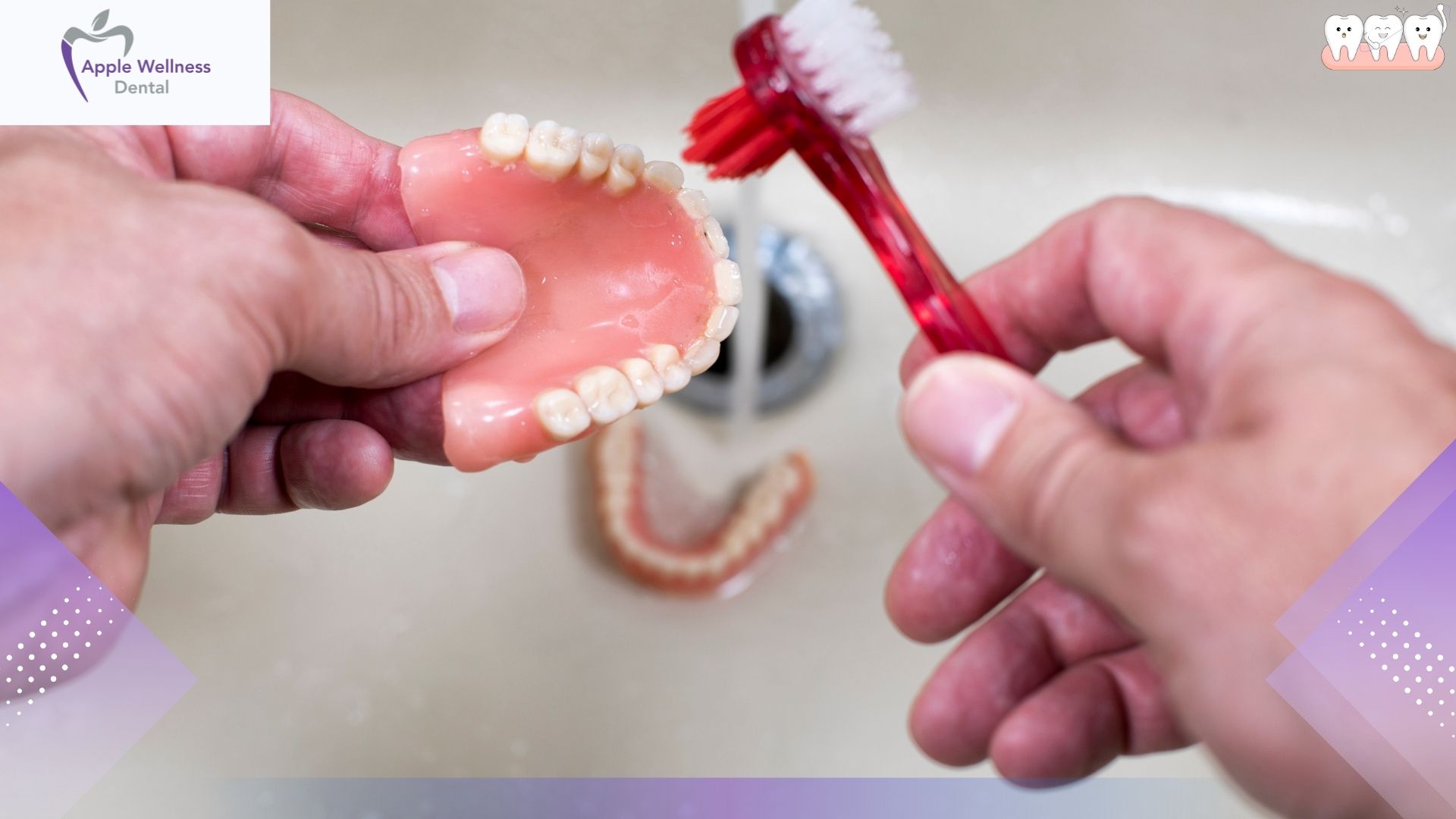
Consistency is the cornerstone of denture maintenance. While your prosthetic teeth are artificial, the bacteria that live in your mouth are very real. Plaque can build up on dentures just as it does on natural teeth, leading to bad breath, unsightly stains, and irritation of the soft tissues beneath.
Brushing Techniques for Acrylic
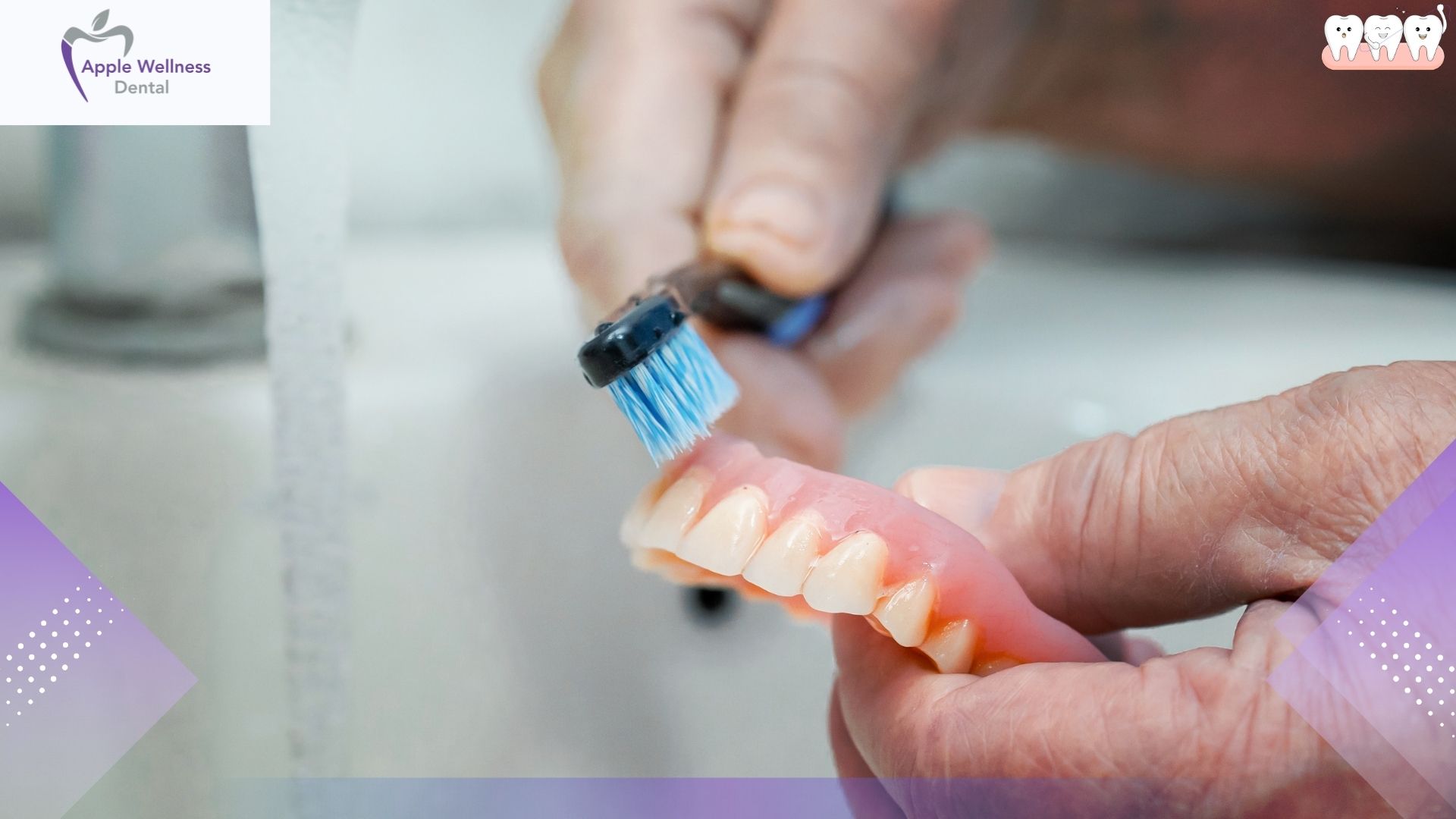
The material of your dentures is strong but not invincible. Acrylic resin can easily be scratched by hard bristles or gritty pastes.
Choose the Right Tool
Use a soft‑bristled brush specifically designed for dentures. These brushes often have two heads: a flat one for the smooth surfaces and a tapered one for reaching into the crevices of the clasps or the ridge that fits against your gums.
The Process
Remove your dentures after eating and rinse them to dislodge loose food. Apply a small amount of mild hand soap or a denture‑specific cleaner to your brush. Gently scrub every surface, paying close attention to the area that touches your gums, as this is where adhesive residues and bacteria tend to gather.
What to Avoid
Steer clear of stiff‑bristled brushes and whitening toothpastes. These products are designed for natural enamel and are too harsh for acrylic, creating rough spots that attract stains.
For more insights on maintaining a routine that benefits your whole household, you can read our family‑friendly dental care tips on the Apple Wellness Dental blog, which cover hygiene basics for all ages.
Handling Accidents Before They Happen
One of the most common ways dentures are damaged is by dropping them during cleaning. Acrylic can shatter on impact with porcelain sinks or tiled floors.
The Safety Net
Before you begin cleaning, fill your sink with a few inches of water or place a folded towel in the basin. This acts as a cushion. If the denture slips from your wet fingers, it will land softly rather than cracking against the hard ceramic.
If you do experience an accident, knowing what to do next is vital. We discuss common causes of dental trauma in our guide on the 5 most common ways to break a tooth, which offers relevant advice for handling dental emergencies and when to seek immediate care.
The Science of Soaking
You might wonder why taking your teeth out at night is so strongly recommended. It isn’t just to give your gums a rest; it’s crucial for the appliance itself.
Maintaining Shape and Hygiene
Dentures are made of a porous material that needs to remain moist to keep its shape. If they dry out, the acrylic can contract and warp, leading to a poor fit that might require professional adjustment or even replacement.
Overnight Soaking
Place your dentures in a soaking solution or plain water while you sleep. This keeps the material hydrated.
Chemical Cleaning
Many soaking tablets contain mild oxidizing agents that help break down plaque and stains that brushing might miss. This deep clean helps control the population of bacteria and fungi, such as Candida albicans, which can cause denture stomatitis (a painful fungal infection).
What NOT to Soak In
Hot Water
Never use boiling or very hot water. The heat can cause the acrylic to distort permanently, ruining the precise fit.
Bleach
Avoid using household bleach or products containing chlorine, especially if your denture has metal components. Chlorine can corrode the metal framework and discolor the pink acrylic, making it look unnatural.
Caring for Your Mouth
A common mistake is thinking that once natural teeth are gone, oral hygiene is obsolete. This could not be further from the truth. Your gums, tongue, and palate still require attention to stay healthy and support your dentures comfortably.
Gum Massage and Cleaning
Every morning before you put your dentures in, and every night after you take them out, use a soft toothbrush or a washcloth to wipe your gums, tongue, and the roof of your mouth.
Stimulation
This action removes plaque and stimulates blood circulation in the tissues, which keeps them firm and healthy.
Adhesive Removal
If you use denture adhesive, it is critical to remove every trace of it from your gums daily. Leftover adhesive can trap bacteria against the soft tissue, leading to inflammation.
Diet and Lifestyle Considerations
What you eat and how you live impacts your prosthetics. While high‑quality dentures are durable, they have limitations compared to natural teeth.
Eating with Care
Hard, sticky, or chewy foods can dislodge your dentures or even damage them.
Cut it Up
Cut tough foods like apples, steak, or crusty bread into small, bite‑sized pieces.
Chew Evenly
Try to chew on both sides of your mouth simultaneously. This distributes the pressure evenly, preventing the denture from tipping or destabilizing.
The Impact of Smoking
Smoking is detrimental to oral health for many reasons, but for denture wearers, it poses specific problems. Nicotine and tar can permanently stain the acrylic teeth, turning them yellow or brown. More importantly, smoking constricts blood flow to the gums, which can accelerate bone loss and gum shrinkage, leading to a loose fit much faster than normal.
Professional Maintenance vs. DIY Repairs
There is a vast difference between cleaning your dentures at home and attempting to repair them yourself. We often see patients who have tried to fix a crack with superglue or adjust a clasp with pliners.
The Dangers of DIY
Toxic Materials
Standard household glues contain chemicals that are not safe for internal use and can release toxins into your mouth.
Irreversible Damage
Attempting to grind down a sore spot yourself often results in removing too much material, ruining the suction and stability of the denture.
Bone Health
A poorly repaired denture that doesn’t fit right will cause uneven pressure. This can speed up the resorption of your jawbone.
If your denture feels loose or breaks, professional intervention is the only safe option. We can perform a laboratory reline or repair that restores the appliance to its original strength and fit. For those considering long‑term options that require less maintenance, our comparison article on dental implants vs dentures might provide a helpful perspective on stability and care requirements.
Monitoring Fit and Longevity
Even with perfect care, dentures do not last forever. The average lifespan of a denture is 5 to 7 years. This isn’t necessarily because the material fails, but because your mouth changes.
The Changing Landscape of the Jaw
Without tooth roots to stimulate the jawbone, the bone naturally recedes over time. As the bone shrinks, the denture becomes loose.
Signs You Need a Checkup
If you notice you are using more adhesive than usual, if the dentures click when you talk, or if you are developing frequent sore spots, it is time to see us.
Regular Exams
We recommend an annual exam even for patients with full dentures. This allows us to check for oral cancer, assess the health of your gums, and evaluate the fit of your appliance.
Understanding the importance of dental checkups is vital, as these visits are about much more than just checking for cavities and can help prevent more serious oral health issues.
Storage and Travel Tips
When you are not wearing your dentures, safe storage is essential.
Keep Them Wet
We cannot stress this enough. If you take them out for a nap or while swimming, place them in a container of water.
Safe Containers
Use a dedicated denture case. Wrapping them in a napkin or tissue is a recipe for disaster—countless dentures have been accidentally thrown in the trash because they were hidden in a paper towel.
Away from Pets
Dogs are notoriously attracted to the scent of saliva and the texture of acrylic. Keep your nightstand clear and your denture case closed to prevent your pet from turning your medical device into a chew toy.
Addressing Stains and Tartar
Over time, you might notice white, chalky deposits (tartar) or dark stains building up on your dentures, even with brushing.
Ultrasonic Cleaners
You can use a small ultrasonic cleaner at home, which uses sound waves to dislodge microscopic particles.
Professional Cleaning
If stubborn tartar builds up, bring your dentures to us. We have professional‑grade solutions and equipment that can remove hardened deposits and polish the acrylic back to a high shine without damaging the surface.
If you are exploring other ways to improve your smile’s function or appearance, our article on choosing the right restoration offers guidance on the various prosthetic options available, including partial and full dentures, implants, and other restorative treatments.
Common Questions About How to Care for Dentures Properly
Q: Can I use regular toothpaste to clean my dentures?
A: No, you should avoid regular toothpaste. Most commercial toothpastes contain abrasives meant to scrub enamel. These particles are too harsh for acrylic and will create microscopic scratches on your dentures, which can trap bacteria and cause staining.
Q: How often should I soak my dentures?
A: You should soak your dentures every night. This keeps the acrylic material hydrated, preventing it from warping, and allows the cleaning solution to kill bacteria that brushing alone might miss.
Q: What should I do if my dentures break?
A: Do not try to fix them yourself with superglue or store‑bought kits. Call your dentist immediately. We can often repair the fracture professionally in the lab, ensuring the fit remains accurate and the material stays strong. If this is an emergency, you can access our emergency dental services for prompt care.
Q: Can I sleep with my dentures in?
A: It is generally recommended to remove them while sleeping. This gives your gum tissues a chance to rest and recover from the pressure of the denture, promoting better blood circulation and reducing the risk of infection.
Q: How do I remove tartar buildup from my dentures?
A: If daily brushing doesn’t remove the tartar (hardened plaque), do not try to scrape it off with sharp tools. Soaking in a specific tartar‑removal solution can help, but for heavy buildup, a professional ultrasonic cleaning at your dental office is the safest method.
Q: Is it okay to use bleach to whiten my dentures?
A: No. Household bleach is too harsh. It can weaken the acrylic structure and discolor the pink portion of the denture, making it look white and unnatural. It can also corrode any metal parts on partial dentures.
Q: Why do my dentures smell bad?
A: Bad odors are usually caused by bacteria trapped in the porous surface of the acrylic or under the denture base. To combat this, verify you are brushing them daily, soaking them overnight, and brushing your gums and tongue to reduce oral bacteria.
Q: How long do dentures typically last?
A: With proper care, dentures usually last between 5 and 7 years. Over time, they will need to be relined or replaced due to normal wear and tear and the natural changes in the shape of your jawbone.
Conclusion
Mastering how to care for dentures properly is the secret to a long‑lasting, comfortable smile. By treating your prosthetic with the same level of attention you would give natural teeth—cleaning them daily, keeping them moist, and handling them with caution—you prevent unnecessary damage and oral health issues. Remember, you are not alone in this process. Our team is your partner in maintaining your oral health, offering the professional support and adjustments needed to ensure your dentures continue to serve you well for years to come.
If you need professional cleaning for your existing dentures, a fit adjustment, or a brand‑new set, our denture services page lists the full range of restorative options available. You can also contact us to schedule an appointment at 229 1st Street SW, Airdrie, AB, or call +1 587‑332‑6767. Let’s keep your smile healthy and comfortable together.