
When Can You Resume a Normal Diet After Wisdom Tooth Extraction? A Complete Timeline
Most patients can safely resume a normal diet 7 to 14 days after a wisdom tooth extraction. The exact timeline depends heavily on the complexity of the surgical procedure, whether the molars were impacted, and your individual biological healing rate. During the first 24 to 48 hours, you must adhere to a strict liquid and ultra-soft food diet to protect the fragile surgical site. By days three to five, semi-soft foods can be carefully introduced, paving the way for regular chewing habits after the first week of recovery.
Key Takeaways
- Expect to return to your regular eating habits within 7 to 14 days post-surgery.
- The initial 48 hours require a strict liquid and ultra-soft diet to protect blood clot formation.
- Never use straws, spit forcefully, or smoke, as these actions create suction that can cause painful dry sockets.
- Chew on the opposite side of your mouth when transitioning back to solid foods.
- Prioritize protein-rich, nutrient-dense soft foods to accelerate tissue regeneration.
- Consult your oral surgeon immediately if severe pain, swelling, or bleeding persists beyond day five.
The Biological Healing Process: Why Your Diet Matters
To understand the timeline for eating normally following a wisdom tooth extraction, it is essential to understand the oral wound healing process. When a tooth is removed, the body immediately initiates a complex biological response called hemostasis. Within the first 24 hours, a crucial blood clot forms in the empty alveolar socket. This clot serves as a protective biological bandage over the exposed underlying bone and sensitive nerve endings.
According to the American Association of Oral and Maxillofacial Surgeons (AAOMS), roughly 85% of adults undergo third molar extraction at some point in their lives. Despite how common the procedure is, the post-operative care dictates the success of the recovery. If the blood clot is dislodged prematurely—often due to eating hard foods or using a straw—it exposes the bone, leading to a severely painful condition known as alveolar osteitis, commonly referred to as a dry socket.
As Dr. Thomas Dodson, a leading oral surgeon, explains: “The first 48 hours dictate the trajectory of your entire recovery. The blood clot is the foundation for granulation tissue, which eventually calcifies into new bone. Disrupting this clot with crunchy foods or suction is the primary cause of post-operative complications.”

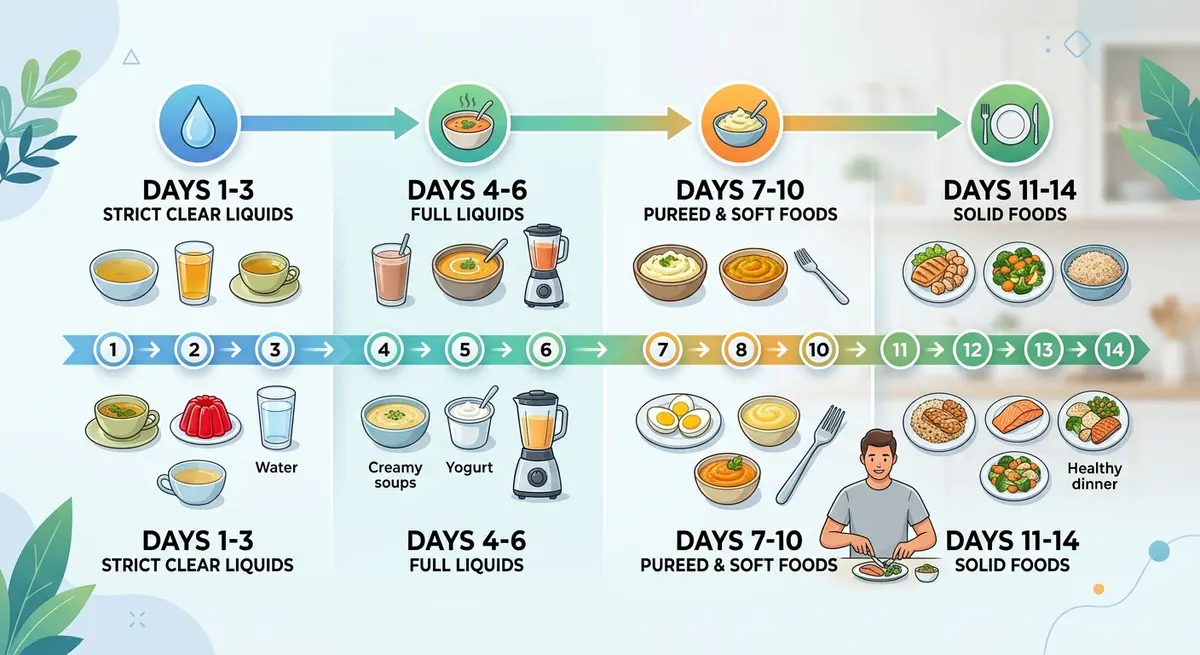
The Complete Recovery Timeline: Day by Day
Navigating your meals after oral surgery requires patience. By following a structured timeline, you can ensure optimal healing while minimizing discomfort. If you are preparing for oral surgery, stocking your pantry according to this timeline is highly recommended.
Days 1 to 2: The Liquid and Ultra-Soft Phase
Immediately following your procedure, your mouth will remain numb for several hours. Understanding when dental anesthesia wears off is critical, as attempting to eat while numb can result in severe accidental bites to your tongue or inner cheeks. During this initial 48-hour window, your diet must consist entirely of liquids and ultra-soft foods that require absolutely zero chewing.
Peak swelling typically occurs at the 48-hour mark. Consuming cold or room-temperature foods can help constrict blood vessels and reduce inflammation. Avoid hot liquids, as heat can dissolve the newly formed blood clot and increase bleeding.
Days 3 to 5: Transitioning to Semi-Soft Foods
By the third day, the initial swelling should begin to subside, and the blood clot will have stabilized into early granulation tissue. At this stage, you can begin introducing semi-soft foods that require minimal, gentle chewing. It is vital to chew using your front teeth or the side of your mouth opposite the extraction sites.
Research published in the Journal of the American Dental Association (JADA) in 2026 indicates that patients who maintain a high-protein, semi-soft diet during days three through five experience a 30% faster reduction in soft tissue inflammation compared to those who consume primarily carbohydrate-heavy liquids.
Days 6 to 14: Returning to Normal Chewing
For most patients, the one-week mark represents a significant turning point. The gums will have largely closed over the extraction sites, though complete bone healing takes up to six weeks. You can gradually reintroduce your regular diet, starting with softer meats and cooked vegetables.
Clinical data shows that 90% of patients resume normal eating by day 10. However, you should still avoid extremely hard, crunchy, or heavily seeded foods (like popcorn, nuts, and sesame seeds) until the end of the second week, as small particles can easily become trapped in the healing sockets, leading to localized infections.
Foods to Eat and Avoid: A Comprehensive Guide
Selecting the right foods is paramount for a smooth recovery. The human mouth harbors over 10,000 different species of bacteria, making oral hygiene and proper food selection critical to preventing infection during the vulnerable healing phase.
| Phase | Recommended Foods (Safe) | Foods to Strictly Avoid |
|---|---|---|
| Days 1-2 | Apple sauce, smooth yogurt, protein shakes, blended soups (lukewarm), mashed potatoes, smoothies (no seeds). | Hot coffee, spicy broths, acidic juices (orange/tomato), anything requiring chewing, anything consumed through a straw. |
| Days 3-5 | Scrambled eggs, oatmeal, soft pasta, flaky fish, ripe bananas, cottage cheese, soft bread. | Crusty bread, tough meats, chewy candies, popcorn, nuts, chips, spicy foods. |
| Days 6-14 | Chicken, cooked vegetables, rice, sandwiches, most normal dietary items. | Extremely crunchy items (hard taco shells, ice cubes), small seeds that can lodge in sockets. |
Expert Tips for Safe Chewing and Swallowing
Transitioning back to a regular diet is not just about what you eat, but how you eat. Dr. Sarah Jenkins, Clinical Director at the Dental Health Institute, advises: “Prematurely introducing hard or crunchy foods disrupts the fragile granulation tissue. Patients must practice mindful chewing, deliberately keeping food away from the surgical sites until the mucosal layer has fully regenerated.”
- Temperature Control: Extreme temperatures can trigger nerve pain and disrupt healing. Keep all meals lukewarm or cold for the first 72 hours.
- Hydration Mechanics: Staying hydrated is vital, but mechanics matter. Drink directly from a glass. The National Institute of Dental and Craniofacial Research (NIDCR) reports a 5% to 30% increased risk of dry socket when patients use straws during the first week of recovery.
- Strategic Chewing: If you had teeth removed on only one side, use the opposite side exclusively. If you had all four removed, rely on your front teeth and tongue to mash semi-soft foods against the roof of your mouth.
- Post-Meal Hygiene: After eating, gently rinse your mouth with warm salt water (starting 24 hours post-surgery). Do not swish vigorously; instead, tilt your head side to side and let the water fall out of your mouth into the sink.

Warning Signs: When Diet Progression Causes Issues
Even with meticulous care, complications can arise. It is important to differentiate between normal post-operative soreness and signs of infection or dry socket. While exploring home toothache remedies can be helpful for mild, expected discomfort, severe pain requires professional intervention.
Dr. Emily Carter, a renowned periodontist, notes: “Patients often mistake the cessation of acute pain for complete healing. They eat a handful of almonds on day five, fracture the healing tissue, and end up back in the chair with a localized infection.”
Watch for these warning signs when reintroducing foods:
- Radiating Pain: A sudden, severe throbbing pain that radiates to your ear or neck, typically occurring 3 to 5 days post-surgery, is the hallmark of a dry socket.
- Foul Taste or Odor: A persistent bad taste in your mouth, especially after eating, can indicate that food particles are trapped in the socket or an infection is developing.
- Renewed Bleeding: While slight pink-tinged saliva is normal initially, active bleeding after eating solid foods means the tissue has been traumatized.
- Increased Swelling: Swelling should peak at 48 hours and steadily decline. If swelling returns after eating certain foods, contact your dental provider.
For a broader understanding of the surgical process and what to expect, reviewing a comprehensive wisdom teeth removal recovery guide can provide additional peace of mind.
Long-Term Oral Health After Extraction
Once you have fully resumed your normal diet, maintaining excellent oral hygiene becomes the focus. The extraction sites will slowly fill in with bone over several months. During this time, a professional dental cleaning may be necessary to ensure no plaque or calculus has built up around the adjacent teeth while you were recovering and avoiding aggressive brushing.
Furthermore, understanding how your mouth reacts to anesthetics—such as dental freezing effects—can help you better prepare for any future restorative work you might need once your wisdom teeth are safely out of the picture.
Frequently Asked Questions (FAQ)
Can I eat a burger 5 days after wisdom teeth removal?
It is generally not recommended to eat a burger on day five. Burgers require significant chewing and opening the mouth wide, which can strain the healing jaw muscles and disrupt the extraction sites. Wait until at least day seven or eight.
When can I eat spicy foods again?
You should avoid spicy foods for at least 7 to 10 days. Spices like chili powder or cayenne can severely irritate the open wounds, causing intense burning sensations and potentially delaying the healing process.
Is it safe to eat rice after oral surgery?
Rice should be avoided for the first week. Small grains can easily become lodged inside the deep extraction sockets, which are difficult to clean and can quickly lead to bacterial infections.
How long until I can drink through a straw?
You must wait a minimum of 7 days before using a straw. The suction created in the mouth can easily dislodge the protective blood clot, leading to a highly painful dry socket.
Can I eat pizza a week after extraction?
By day seven, soft pizza may be acceptable if you chew carefully on the opposite side of the extraction. However, avoid hard, crusty edges or chewy toppings until the two-week mark.
What happens if food gets stuck in the wisdom tooth hole?
If food gets trapped, do not use a toothpick or sharp object to dig it out. Gently rinse with warm salt water or use a curved monoject syringe (if provided by your surgeon) to flush the area lightly.
Conclusion
Recovering from oral surgery is a gradual process that requires careful attention to your diet. While the initial days of consuming only liquids and mashed foods can be frustrating, adhering to this timeline is the most effective way to prevent complications like dry sockets and infections. By day 14, the vast majority of patients are back to enjoying their favorite meals without restriction. Always listen to your body, progress at your own pace, and prioritize soft, nutrient-dense foods to fuel your recovery.
If you are experiencing unusual pain, prolonged swelling, or have concerns about your healing progress, do not hesitate to seek professional advice. Get in touch with our team today to schedule a follow-up appointment and ensure your smile is healing perfectly.