
What Are Common Cosmetic Dentistry Treatments
Cosmetic dentistry focuses on improving how your smile looks, not just your oral health. Many people feel self‑conscious about stained, chipped, crooked, or missing teeth and wonder what are common cosmetic dentistry treatments that can help. Modern procedures offer fast, safe options that restore confidence and make your smile look balanced and natural.
At the same time, it’s important to understand that cosmetic treatments are not DIY projects. They require professional evaluation, proper planning, and ongoing care to look good and last. In this guide, you’ll learn about the most common procedures, how they work, and what to realistically expect from each one.
Key Takeaways
-
Common cosmetic dentistry treatments include teeth whitening, dental bonding, veneers, crowns, orthodontics, implants, and gum contouring.
-
Many procedures are minimally invasive, while others are more involved and may require multiple visits.
-
Cosmetic treatments often combine with preventive care to maintain long‑term results and overall oral health.
-
Most cosmetic procedures are considered elective, so they are usually not covered by standard dental insurance.
-
A personalized treatment plan depends on your goals, oral condition, and lifestyle, not just “trends” you see online.
Overview
In this article, you’ll discover what are common cosmetic dentistry treatments, why people choose them, and how they differ in terms of comfort, recovery, and long‑term care. Each section explains one main procedure, including what it does, who it’s for, and how long results typically last.
You’ll also read how to decide which option fits your situation, what to ask during a consultation, and how to keep your new smile healthy. The FAQ section at the end answers common questions and helps you understand when to see a professional and why you should avoid DIY “cosmetic hacks.” For full‑service cosmetic care, see our cosmetic dentistry services page.
What Is Cosmetic Dentistry?

Cosmetic dentistry is a branch of dental care focused on improving the appearance of your teeth, gums, and smile. It includes procedures that change color, shape, size, alignment, or spacing to create a more balanced and confident look.
Many patients use cosmetic treatments after whitening, bonding, or veneers to correct minor imperfections, while others turn to crowns, implants, or orthodontics for more extensive changes. Cosmetic work is different from purely preventive or restorative care, although most cosmetic procedures also support better oral function and hygiene.
Because cosmetic dentistry is usually elective, insurance coverage is limited, and fees vary based on the number of teeth treated and the technique used. This is why understanding what are common cosmetic dentistry treatments helps you compare options and discuss goals with a qualified dentist. For a full overview of how we blend cosmetic and general care, see our Apple Wellness Dental services page.
How Teeth Whitening Works
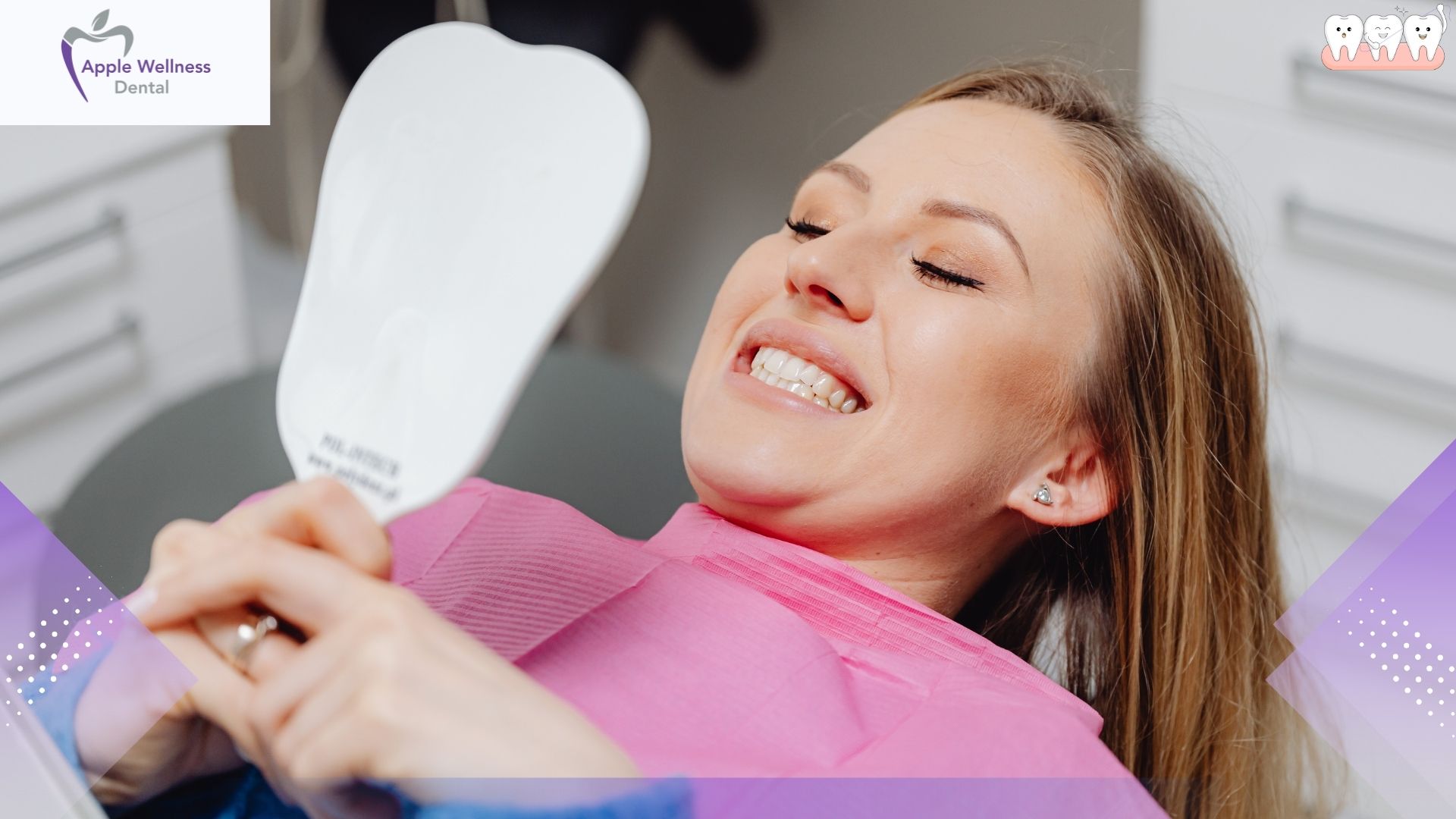
Teeth whitening is one of the most common cosmetic dentistry treatments and is used to remove stains caused by food, drinks, smoking, and aging. In‑office whitening uses a concentrated bleaching gel applied to the teeth, often with a light or laser to speed up the process.
The gel breaks down pigments in the enamel, making teeth several shades lighter in one visit. At‑home professional kits from a dentist offer similar results over a few days or weeks with custom trays that fit your mouth exactly. For more information about in‑office and at‑home whitening options, see our professional teeth whitening in Airdrie guide.
Who May Benefit from Whitening
Whitening is best for patients with healthy teeth and gums who want to brighten discolored but otherwise intact teeth. It does not correct chips, gaps, or misalignment, but it can be combined with other treatments for a more complete smile makeover.
If you have crowns, veneers, or fillings in the front area, whitening mainly affects natural tooth structure, so your restorations may not match afterward. This is why many patients choose to update restorations after whitening or plan whitening early in their cosmetic treatment journey. For stain‑removal strategies that complement whitening, read our teeth stain removal solutions article.
How Long Results Last
Professional whitening results can last from six months to three years, depending on habits like coffee, tea, red wine, and smoking. Touch‑ups with at‑home trays or in‑office sessions help maintain the brighter shade long‑term.
Maintaining results also requires regular brushing, flossing, and a dental cleaning every six months. Over‑the‑counter whitening products often provide weaker results and may cause sensitivity if used too often, so professional guidance is important.
Dental Bonding
What Is Dental Bonding?
Dental bonding is a common cosmetic dentistry treatment that uses a tooth‑colored resin to repair minor imperfections in one or a few teeth. The resin is applied directly to the tooth, shaped, and hardened with a special light, then polished to match nearby teeth.
Bonding is often used to fix small chips, cracks, gaps, uneven edges, and minor discoloration that whitening cannot fully address. The procedure is typically completed in a single visit and is more affordable than veneers or crowns. For a detailed guide on the process and benefits, see our dental bonding page.
Advantages and Limitations
Bonding is minimally invasive because it usually requires little to no enamel removal. The material can be matched closely to your natural shade, so repairs blend in with surrounding teeth.
However, bonding material is not as strong or stain‑resistant as porcelain veneers or crowns, so it may chip or wear over time. With proper care, bonding can last five to eight years, but it may need repair or replacement sooner if you grind your teeth or bite on hard objects. For a focused cosmetic bonding article that explains why it’s a “quick fix” for many smiles, read our cosmetic bonding guide.
How Veneers Improve Your Smile
Veneers are thin shells placed over the front surface of teeth to change their color, shape, length, or alignment. They are commonly made from porcelain or composite resin and are popular for closing gaps, masking stains, and creating a more uniform smile.
Porcelain veneers are stronger, more resistant to stains, and often look more natural than bonding. Because they are custom‑made in a dental lab, they require two or more visits: one to prepare the teeth and take impressions, and another to place and adjust the veneers. For an in‑depth explanation of porcelain and composite options, see our dental veneers guide.
Considerations Before Choosing Veneers
Placing veneers usually involves removing a small amount of enamel, which is not reversible. This means that once veneers are placed, you will likely need to maintain them or replace them in the future.
Veneers typically last five to 15 years, depending on oral hygiene, bite forces, and whether you protect them from grinding or trauma. They are a good option if you want a dramatic change in your smile but are not ready for full orthodontic treatment. Our veneers guide also covers candidacy, cost, and long‑term care, which can help you decide if this treatment fits your goals.
When Crowns Are Used Cosmetically
Dental crowns cover the entire tooth and are often used for cosmetic as well as restorative reasons. They can improve the appearance of severely worn, chipped, cracked, or discolored teeth, or support teeth after root canal treatment.
Crowns can be made from metal, porcelain‑fused‑to‑metal, or all‑ceramic materials, with all‑ceramic crowns offering the most natural appearance. They are custom‑fitted so that they look like natural teeth when viewed from the front and side. For more information on how crowns restore both function and aesthetics, see our dental crown care guide.
How Crowns Support Long‑Term Health
A crown protects a weakened tooth from further damage and restores function so you can chew comfortably. When several crowns are placed strategically, they can also help align the smile and improve bite and jaw comfort.
Crowns usually last 10–15 years or longer with proper oral hygiene and regular checkups. They are more involved and costly than simpler treatments like whitening or bonding, but they can completely transform one or more teeth in a targeted way. For comprehensive crown‑based restorative options, visit our Apple Wellness Dental services page.
How Orthodontics Improves Your Smile
Orthodontic treatments, such as braces or clear aligners, are common cosmetic dentistry treatments that move teeth into better alignment. Straighter teeth not only look nicer but are also easier to clean and may reduce the risk of gum disease and wear.
Traditional braces use metal brackets and wires to gradually guide teeth, while clear aligners (like clear plastic trays) offer a less visible option for many adults and teens. Treatment length varies from several months to a few years, depending on the complexity of the case. For a full overview of restorative and cosmetic options that include orthodontics, see our services page.
Cosmetic Benefits and Long‑Term Stability
Orthodontic treatment can close gaps, correct crowding and spacing, and improve bite relationships so your smile is more balanced. Proper alignment can also reduce uneven wear and jaw discomfort over time.
After treatment, many patients wear retainers to keep their teeth in the new position. This long‑term commitment is important, because teeth can slowly shift back if retainers are not used as directed. For comprehensive exam and treatment‑planning support, see our dental exams and cleanings page.
How Implants Improve Both Appearance and Function
Dental implants are a common cosmetic and restorative treatment used to replace missing teeth. An implant is a small titanium post placed in the jawbone that acts as an artificial root, supporting a crown, bridge, or denture.
Implants look and feel more natural than traditional dentures or bridges because they are fixed in place and do not slip when talking or eating. They also help preserve jawbone density, which supports facial structure and prevents a “sunken” look over time. For more information on implants and long‑term care, see our dental implants page, which explains how implants fit into broader restorative plans.
How Implants Fit Into Cosmetic Treatment Plans
Implants are often combined with veneers, crowns, or whitening to create a complete smile makeover. Because they are considered a long‑term investment, treatment planning includes imaging and careful assessment of bone health and gum condition.
Implants can last decades with proper care, making them a highly durable option for replacing missing teeth. However, they require surgery and healing time, so they are usually recommended after a thorough exam and discussion of alternatives. For more on implant‑supported restorations, see our restorative dentistry section.
What Gum Contouring Does
Gum contouring, sometimes called gum reshaping, is a cosmetic procedure that adjusts the shape or level of gum tissue around the teeth. It is often used for a “gummy smile” where excess gum tissue makes teeth look short or uneven.
A dentist can remove or reshape gum tissue using a scalpel or laser to create a more balanced gum‑to‑tooth ratio. This can make teeth appear longer and more proportional, improving the overall symmetry of the smile. For related information on how gum health affects restorative and cosmetic treatment, see our periodontal‑focused page.
Recovery and Combining With Other Treatments
Healing time after gum contouring is usually short, with most patients returning to normal activities within a few days. Mild discomfort and gum sensitivity are common immediately after the procedure but can be managed with over‑the‑counter pain relief and good oral hygiene.
Gum contouring is often combined with whitening or veneers to create a comprehensive smile transformation. This combination helps harmonize the color, shape, and gum line for a more natural and polished appearance.
Factors That Influence Your Treatment Plan
When you ask yourself, what are common cosmetic dentistry treatments that make sense for you, several factors come into play. Your oral health, budget, time frame, and personal goals all shape the best approach.
For example, a single chipped tooth may be fixed with bonding, while multiple stained or misshapen teeth respond better to veneers or a combination of whitening and crowns. Your dentist may recommend starting with a professional cleaning and addressing any gum disease before cosmetic work to ensure long‑lasting results. For a full checkup and exam prior to cosmetic treatment, see our dental exams and cleanings page.
Why Professional Evaluation Is Essential
DIY whitening kits, at‑home aligners, and online “cosmetic hacks” cannot replace a proper exam. Only a dentist can assess your gums, bone health, bite, and existing restorations to recommend safe and effective treatments.
Choosing the wrong procedure or skipping the exam can lead to uneven results, sensitivity, chipped restorations, or gum irritation. A professional smile design considers how your teeth, lips, and face work together so that your new smile looks natural, not “overdone.” For a personalized assessment, use our contact page to schedule a consultation.
How Apple Wellness Dental Can Help
At Apple Wellness Dental, located at 229 1st Street SW, Airdrie, AB, we understand how important your smile is to your confidence and daily life. Our team listens to your goals, examines your mouth carefully, and explains the pros and cons of different cosmetic dentistry treatments so you can make informed decisions.
If you are wondering what are common cosmetic dentistry treatments that can work for your smile, we invite you to book a consultation by calling +1 587 332 6767. During this visit, you’ll receive a personalized treatment plan and have all your questions answered in plain language, not technical jargon. For a full overview of cosmetic options, visit our cosmetic dentistry services page.
Common Questions About What Are Common Cosmetic Dentistry Treatments
Q: What are common cosmetic dentistry treatments for stained teeth?
A: Teeth whitening is the most common cosmetic dentistry treatment for stained teeth, especially when the discoloration is mild to moderate. For deeper stains that do not respond to whitening, veneers or bonding may be used to cover the discoloration and create a whiter appearance.
Q: Are cosmetic dentistry treatments covered by insurance?
A: Most cosmetic procedures are considered elective and are not covered by basic dental insurance. Some plans may contribute to treatments that also have restorative benefits, such as crowns or implants, but you should discuss your coverage with your dentist and provider before treatment.
Q: How long do cosmetic dentistry treatments last?
A: Results vary by procedure; whitening can last up to a few years, bonding around five to eight years, and veneers or crowns up to 10–15 years with good care. Regular brushing, flossing, and professional cleanings help extend the life of cosmetic work.
Q: Can multiple cosmetic treatments be combined?
A: Yes, many patients choose a combination of whitening, bonding, veneers, crowns, or orthodontics to achieve a complete smile makeover. A dentist can design a treatment sequence that optimizes your results and fits your budget and timeline.
Q: Is teeth whitening safe for my enamel?
A: When performed or supervised by a dentist, whitening is generally safe and does not permanently damage healthy enamel. Overuse of strong at‑home products or prolonged exposure to bleaching agents can increase sensitivity, so professional guidance is recommended.
Q: Does cosmetic dentistry hurt?
A: Many cosmetic procedures, such as whitening and bonding, are minimally invasive and cause little or no discomfort. More involved treatments like veneers, crowns, or implants may require local anesthesia and a short recovery period, but your dentist can manage discomfort effectively.
Q: Can I get cosmetic treatment if I have gum disease?
A: It is important to treat gum disease before proceeding with most cosmetic procedures. Healthy gums provide a stable foundation for bonding, veneers, crowns, and implants, and they help cosmetic results last longer.
Q: Will my teeth look fake after cosmetic treatment?
A: Modern materials and techniques are designed to create a natural appearance, and your dentist can help you choose colors and shapes that match your face and lip line. For an example of natural‑looking cosmetic results, see our veneers and bonding articles and cosmetic bonding page.