
When Is a Tooth Extraction Necessary?
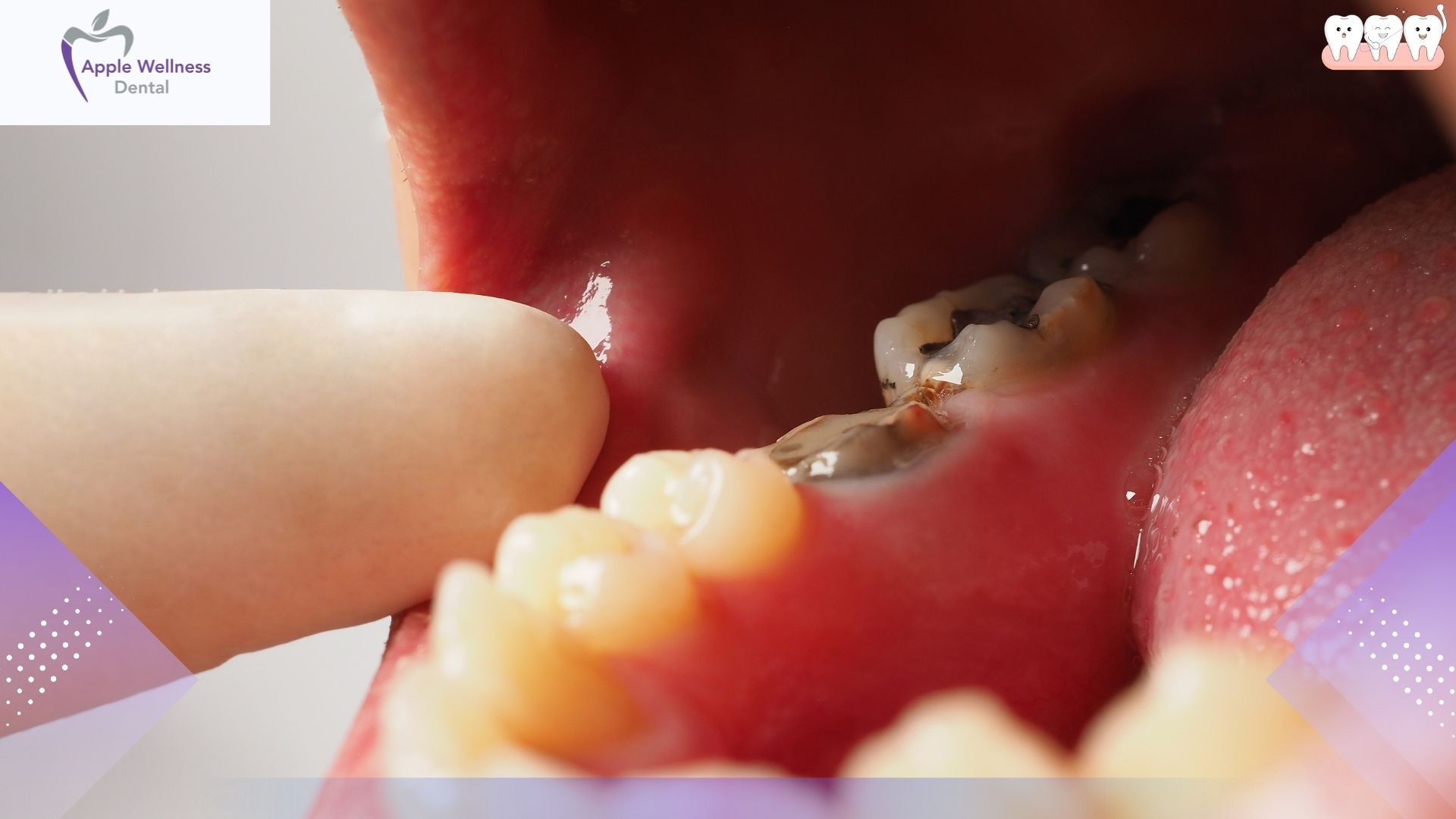
At Apple Wellness Dental, extraction is always a last resort — recommended only when a tooth cannot be adequately restored or when its presence poses a risk to the surrounding teeth and overall oral health.
- Severe decay: Decay that has destroyed too much tooth structure to support a crown or other restoration
- Advanced periodontal disease: Teeth with severe bone loss around the roots that can no longer be stabilized
- Dental abscess unresponsive to treatment: Infections that cannot be resolved through root canal therapy
- Impacted wisdom teeth: Wisdom teeth that are impacted, causing crowding, infection, or damage to adjacent teeth
- Orthodontic treatment: Extraction of select teeth to create space for proper alignment in some orthodontic treatment plans
- Fractured teeth: Fractures that extend below the gumline and cannot be structurally restored
- Supernumerary (extra) teeth: Extra teeth that are disrupting normal bite or eruption patterns
Simple vs. Surgical Extractions
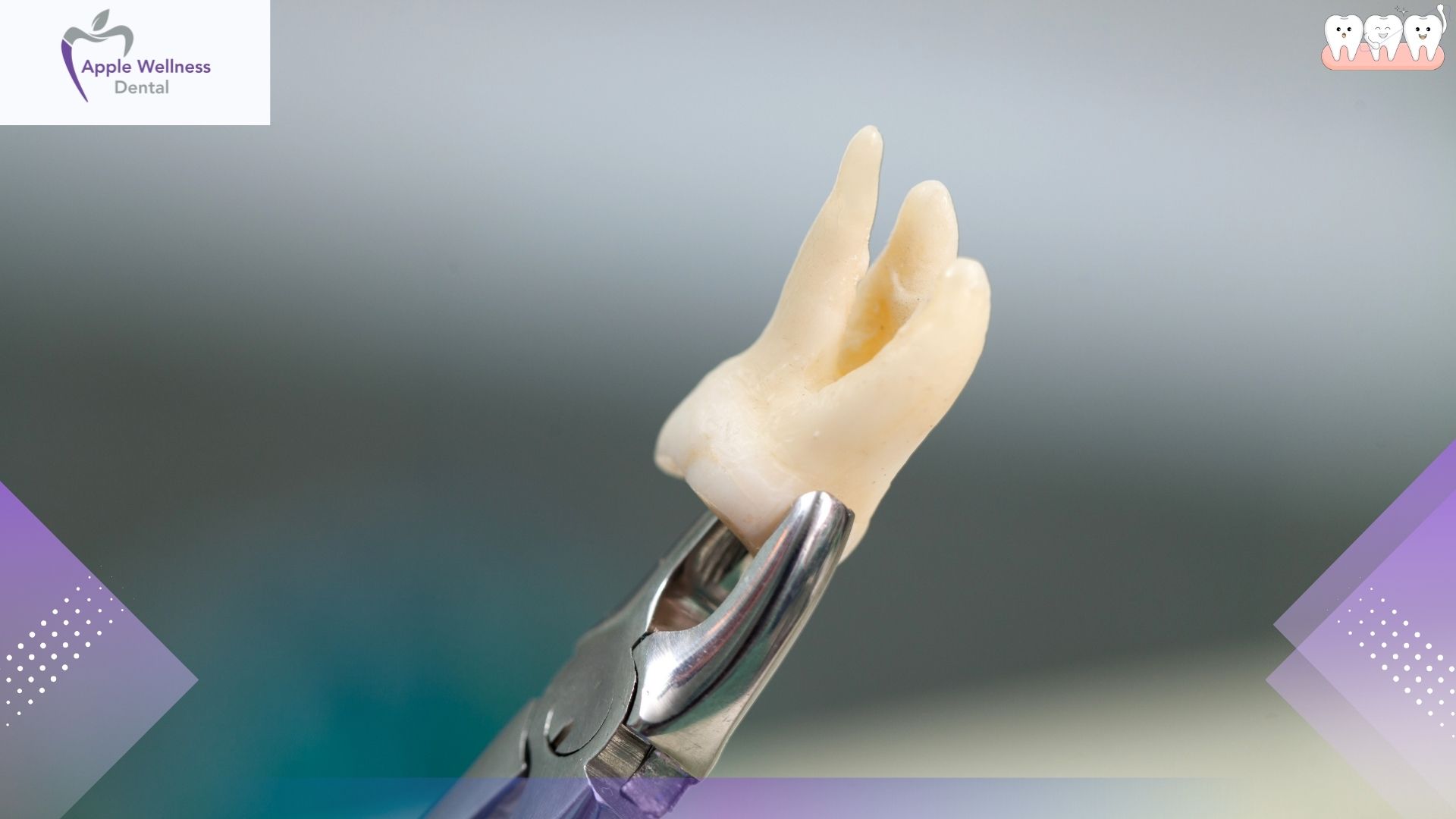
There are two main categories of tooth extraction, and the appropriate type depends on the tooth’s condition, position, and root anatomy.
- Simple extraction: Performed on teeth that are fully erupted and visible in the mouth. The tooth is loosened with a dental instrument (elevator) and removed with forceps under local anesthesia. Simple extractions are quick and straightforward — typically completed in 5–20 minutes.
- Surgical extraction: Required for teeth that are impacted (fully or partially buried in the gum or bone), broken off at the gumline, or have curved or complex root anatomy. A small incision in the gum tissue is made to access the tooth, which may be sectioned into pieces for easier removal.
The Extraction Process at Apple Wellness Dental
- Examination and X-rays: Your dentist reviews current X-rays to assess the tooth’s root anatomy, surrounding bone, and the relationship to adjacent structures
- Anesthesia: Local anesthesia is administered to completely numb the tooth and surrounding tissue — you will feel pressure but not pain
- Extraction: The tooth is gently loosened and removed using precision dental instruments
- Socket management: The socket is cleaned and any sharp bone edges are smoothed — a gauze pack is placed to control initial bleeding
- Post-operative instructions: Clear written and verbal instructions are provided for home care during the healing period
- Follow-up: A follow-up is scheduled to confirm healing and begin planning for tooth replacement if appropriate
Post-Extraction Aftercare Instructions
Proper aftercare following a tooth extraction is essential for comfortable healing and preventing complications such as dry socket (alveolar osteitis) or infection.
- Bite firmly on the gauze pack for 30–45 minutes after the procedure to control bleeding
- Avoid rinsing vigorously, spitting forcefully, or drinking through a straw for the first 24 hours — these actions can dislodge the healing blood clot
- Apply an ice pack to the outside of your face (20 minutes on, 20 minutes off) for the first few hours to minimize swelling
- Eat soft foods for the first 24–48 hours — yogurt, soup, mashed potatoes, and smoothies are ideal
- Avoid smoking for at least 72 hours — nicotine significantly impairs healing and dramatically increases dry socket risk
- Begin gentle warm salt water rinses (½ tsp salt in 8 oz warm water) starting 24 hours after extraction
- Take any prescribed medications as directed
Tooth Replacement Options After Extraction
After an extraction, replacing the missing tooth is important for maintaining bone volume, preventing adjacent teeth from shifting, and restoring bite function. Apple Wellness Dental can discuss your replacement options at the same appointment as your extraction planning.
- Dental implant: The gold standard replacement — a titanium root substitute that preserves bone and supports a natural-looking crown
- Dental bridge: A fixed restoration that replaces the missing tooth using adjacent teeth as anchors
- Partial denture: A removable option for replacing one or more missing teeth — more affordable but less permanent than implants or bridges
Post-Extraction Do’s and Don’ts
| ✅ Do | ❌ Don’t |
|---|---|
| Bite on gauze for 30–45 minutes | Rinse vigorously for first 24 hours |
| Apply ice pack to reduce swelling | Use a straw for first 24–48 hours |
| Eat soft foods for 48 hours | Smoke for at least 72 hours |
| Begin gentle salt water rinses after 24 hours | Disturb the blood clot with your tongue or finger |
| Take medications as prescribed | Eat hard, crunchy, or sticky foods too soon |
| Call us if pain worsens after day 3 | Ignore worsening pain — it may indicate dry socket |
Expert Take — Apple Wellness Dental, Airdrie: The most important thing we tell patients after an extraction is to call us without hesitation if something does not feel right during healing. Dry socket — a condition where the blood clot that forms in the extraction site is lost prematurely — affects roughly 2–5% of extractions and causes significant pain typically starting on day 3 or 4. It sounds alarming but it is easily and quickly treated in our clinic. Patients who call us early get relief the same day. Patients who wait and hope it resolves on its own suffer unnecessarily. There is no such thing as a too-small concern after a dental extraction — call us.
Frequently Asked Questions
How long does a tooth extraction take at Apple Wellness Dental in Airdrie?
A simple extraction typically takes 10–30 minutes from anesthesia to completion. Surgical extractions may take 30–60 minutes depending on complexity. Your dentist will give you a realistic time estimate at the pre-extraction consultation.
What is dry socket and how do I know if I have it?
Dry socket occurs when the blood clot that forms in the extraction socket is dislodged or dissolves before healing is complete, exposing the underlying bone. Symptoms include a significant increase in pain starting 2–4 days after the extraction, a bad taste or odor, and sometimes visible bone in the socket. If you experience these symptoms, call us immediately at +1 587-332-6767. Dry socket is treated quickly and effectively at our clinic.
Is tooth extraction covered by dental insurance in Alberta?
Many dental insurance plans in Alberta provide coverage for tooth extractions, particularly for medically necessary extractions. Coverage levels vary by plan. Our team can assist with insurance verification before your appointment. Contact us for details.
What if I need an emergency tooth extraction?
If you are in severe pain from a tooth that requires extraction, contact Apple Wellness Dental immediately at +1 587-332-6767. We prioritize emergency patients and will do our best to see you the same day. Visit our emergency dental treatment page for guidance before your appointment.