
Dental Crowns and Bridges in Airdrie: Restore Your Smile at Apple Wellness Dental
What Is a Dental Crown?
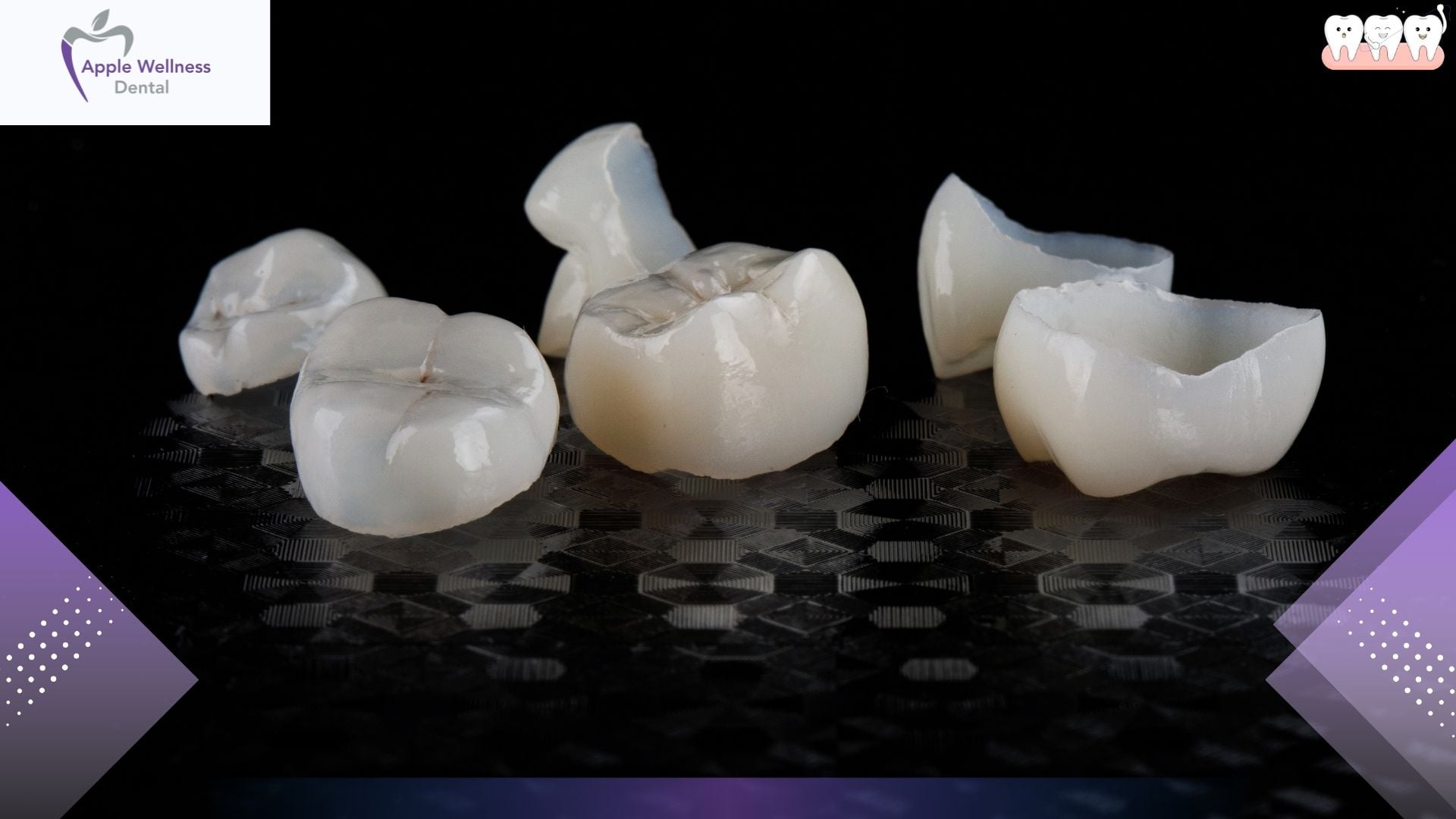
A dental crown is a custom-made cap that fits over an existing tooth — covering it from the gumline up and restoring its full shape, size, strength, and appearance. Crowns are one of the most versatile restorative tools in dentistry, used to protect weakened teeth, restore broken ones, support dental bridges, and cover teeth that have undergone root canal treatment.
Modern dental crowns are crafted from materials including porcelain, ceramic, porcelain-fused-to-metal, and zirconia — each offering different balances of aesthetics and durability. Your dentist at Apple Wellness Dental will recommend the most appropriate material based on the tooth’s location, function, and your aesthetic goals.
What Is a Dental Bridge?
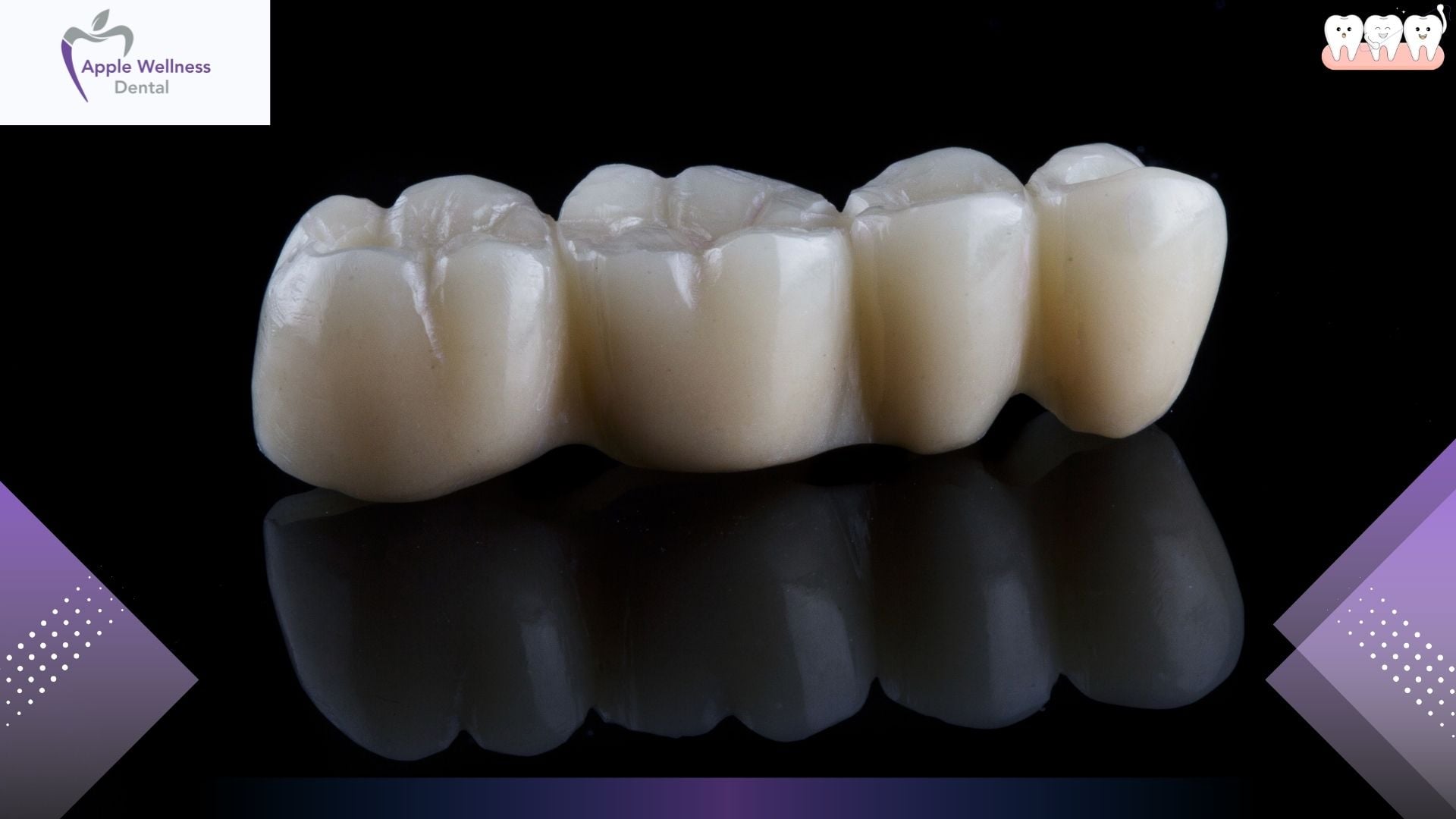
A dental bridge is a fixed prosthetic device used to replace one or more missing teeth. It consists of one or more artificial teeth (called pontics) held in place by crowns cemented onto the healthy teeth on either side of the gap (called abutment teeth). A bridge literally “bridges” the gap left by a missing tooth, restoring the appearance, function, and structural integrity of your bite.
When Is a Dental Crown Needed?
- Severely decayed tooth: When decay is too extensive for a filling to restore structural integrity
- Cracked or fractured tooth: Crowns hold cracked teeth together, preventing further splitting and the pain associated with chewing on a fractured tooth
- After root canal treatment: Root canal-treated teeth are more brittle and prone to fracture — a crown protects and strengthens the tooth
- Severely worn teeth: Teeth significantly worn by grinding (bruxism) or acid erosion may need crowns to restore proper height and function
- Cosmetic improvement: Crowns can improve the appearance of severely misshapen, discolored, or malformed teeth
- Supporting a dental bridge: The teeth adjacent to a gap require crowns to anchor the bridge in place
When Is a Dental Bridge Needed?
- One or more adjacent missing teeth with healthy anchor teeth on both sides of the gap
- Patient prefers a fixed (non-removable) tooth replacement option over a removable partial denture
- Patient is not a candidate for dental implants due to bone loss or health considerations
- Restoring chewing function and preventing remaining teeth from drifting into the gap
The Crown and Bridge Treatment Process
- Consultation and examination: Your dentist examines the tooth or gap, takes X-rays, and determines whether a crown, bridge, or alternative restoration is most appropriate
- Tooth preparation: The tooth receiving a crown is reshaped to accommodate the crown’s thickness — a small amount of enamel is removed from all surfaces
- Impressions: Precise impressions of the prepared tooth and surrounding teeth are taken to fabricate a custom-fitted crown or bridge
- Temporary restoration: A temporary crown or bridge is placed to protect the prepared tooth while the permanent restoration is being fabricated at the dental laboratory
- Final placement: The permanent crown or bridge is checked for fit, bite alignment, and appearance before being permanently cemented in place
- Follow-up: A brief follow-up appointment ensures the restoration is comfortable and functioning correctly
Crown and Bridge Materials Comparison
| Material | Appearance | Durability | Best For | Typical Lifespan |
|---|---|---|---|---|
| All-Ceramic / Porcelain | Excellent — most natural-looking | Good | Front teeth, high cosmetic priority | 10–15 years |
| Zirconia | Very good | Excellent — very strong | Back teeth, heavy bite forces | 15–20+ years |
| Porcelain-Fused-to-Metal (PFM) | Good | Very good | Any tooth, cost-effective option | 10–15 years |
| Full Metal (Gold/Alloy) | Poor (metallic appearance) | Outstanding | Back teeth, patients who grind heavily | 20–30+ years |
Expert Take — Apple Wellness Dental, Airdrie: In our experience with Airdrie patients, one of the most common reasons a tooth eventually requires extraction is a cracked tooth that was not crowned promptly when the crack was first detected. A crack identified at a routine exam can often be treated with a crown — a straightforward procedure that saves the tooth. Left untreated, that crack extends below the gumline over time and renders the tooth unrestorable. The cost difference between a crown and a full extraction with an implant or bridge is substantial. If your dentist recommends a crown at your next checkup, take that recommendation seriously.
Frequently Asked Questions
How long do dental crowns last in Airdrie’s climate?
Climate does not significantly affect crown longevity — crown lifespan is primarily determined by the material used, your bite forces, and how well you maintain the underlying tooth and gumline. With proper oral hygiene and regular professional cleanings, modern ceramic and zirconia crowns routinely last 15–20 years or longer. Visit our general dentistry Airdrie page to learn more about our restorative services.
Is getting a dental crown painful?
The crown preparation appointment is performed under local anesthesia, so the procedure itself is comfortable and pain-free. Some patients experience mild sensitivity on the prepared tooth between appointments while wearing the temporary crown — this resolves once the permanent crown is cemented. If you experience significant pain or bite discomfort after crown placement, call us at +1 587-332-6767 — adjustments are quick and easy.
Can a dental bridge replace multiple missing teeth?
Yes. A bridge can be extended to replace two or even three adjacent missing teeth, provided there are healthy anchor teeth on either side of the gap with sufficient structural integrity to support the added load. For longer spans or cases where anchor teeth are compromised, dental implants may be a more appropriate long-term solution. Contact us to discuss your specific situation.
How do I care for a dental crown or bridge?
Care for a crown or bridge exactly as you would natural teeth — brushing twice daily, flossing once daily, and maintaining regular professional cleanings. For bridges specifically, a floss threader or interdental brush is used to clean beneath the pontic (artificial tooth) where a regular floss pass cannot reach. Our hygienists will demonstrate the proper technique at your follow-up appointment.