
Can I Drink Water After Tooth Extraction? How to Sip, When to Rinse and What to Avoid
Quick Answer: Can I drink water after tooth extraction? Yes. SA Dental advises staying hydrated with water and sipping slowly and regularly. Wait until the numbness wears off, drink from a glass rather than a straw, and do not swish. Rinsing is different: the CDA says wait a full day before gently rinsing with warm water.
Can I drink water after tooth extraction sounds like a simple question, and the short answer is yes. Water is the safest drink while you heal. But there is a difference between drinking water and rinsing with it, and the way you drink matters in the first days. This guide covers the water-specific rules. For other drinks, see what you can drink besides water.
Last updated: November 3, 2026. Main source: SA Dental, CDA, MyHealth Alberta, Nova Scotia Health and Western Australia Dental Health Services guidance. Full links are in the Sources section.
Key Takeaways
- Drinking water: yes, sip slowly and regularly (SA Dental).
- Wait until numbness wears off (Western Australia Dental Health Services: do not eat or drink while numb).
- No straws: they can disturb the blood clot (Western Australia, MyHealth Alberta).
- No swishing in the first day (MyHealth Alberta).
- Rinsing: wait 24 hours, then rinse gently with warm water or salt water (CDA, MyHealth Alberta).

Drinking vs rinsing: the key difference
Drinking water means swallowing it gently. Rinsing means moving water around your mouth. The blood clot in the socket is delicate in the first day, and rinsing or swishing can disturb it. The CDA says not to rinse your mouth within the first 24 hours, even if bleeding and oozing leave a bad taste. MyHealth Alberta says to avoid swishing liquid in your mouth and not to rinse hard, as this can loosen the clot and delay healing. Drinking water calmly is not the same as rinsing.
| Action | First 24 hours | After 24 hours |
|---|---|---|
| Sipping water from a glass | Yes, once numbness wears off | Yes |
| Drinking through a straw | No | Not for the first few days (MyHealth Alberta) |
| Swishing water around | No | Gently only |
| Rinsing with warm water | No (CDA) | Yes, gently (CDA) |
| Warm salt water rinse | No | Yes, several times a day (MyHealth Alberta) |
| Spitting forcefully | No | Let water flow out instead (Nova Scotia Health) |
When to take the first sip
Two official sheets differ a little on timing. Western Australia Dental Health Services says do not eat or drink while you are numb. MyHealth Alberta says you may eat and drink between gauze changes. The common ground: let the bleeding settle, wait for the numbness to wear off so you do not bite your lip or cheek, and then sip water slowly. If your dentist gave you a specific instruction, follow that.
Water temperature
Nova Scotia Health says that for 24 hours after your procedure you should not drink hot liquids, and should choose cold or lukewarm drinks. Cool or room-temperature water is ideal. After the first day, the CDA and MyHealth Alberta recommend warm water for rinsing, not hot.
How to drink water safely: checklist
- ☐ Numbness has worn off
- ☐ Bleeding has slowed; gauze removed for the sip
- ☐ Water is cool or room temperature, not hot
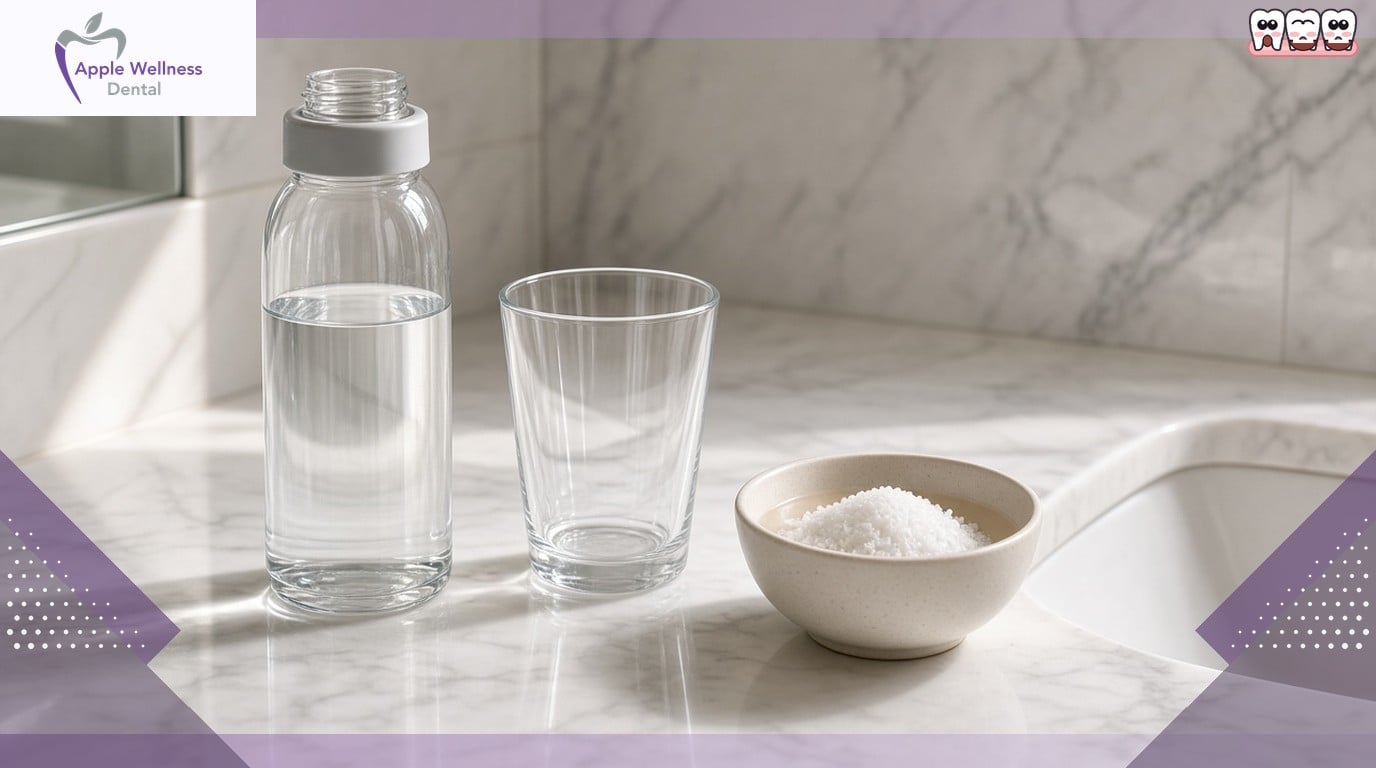
- ☐ Drink from a glass or open bottle, not a straw
- ☐ Take small sips and swallow gently
- ☐ Tilt the glass to the side away from the extraction
- ☐ Do not swish or gargle in the first 24 hours
- ☐ Keep a glass nearby and sip regularly through the day
Why water helps
SA Dental advises staying hydrated with water and sipping slowly and regularly. It also lists carbonated (fizzy) or sugary drinks among things to avoid. Nova Scotia Health says if you have nausea after sedation or pain medicine, drink fluids as you are able to and rest. Water also helps rinse food and sugar away from the rest of your mouth, though in the first day you should swallow gently rather than swish.
Bottles and sports caps
Water bottles are fine, but be careful with sports caps and narrow spouts. Squeezing or sucking on a spout can create the same pull as a straw. Western Australia Dental Health Services says do not drink from a straw as it can disturb the blood clot. Pour water into a glass, or use a wide-mouth bottle and tip it gently.
Rinsing after 24 hours
A full day after surgery, the CDA says to rinse your mouth gently with warm water, and notes your dentist may suggest adding 1/2 teaspoon of salt to a cup of warm water each time you rinse. MyHealth Alberta says to rinse gently with warm salt water several times a day after 24 hours. Nova Scotia Health suggests a pinch of salt in a glass of warm water, letting the water flow out of your mouth instead of spitting forcefully.
- Mix warm (not hot) water with the amount of salt your dentist suggests.
- Take a small mouthful.
- Tilt your head side to side gently.
- Lean over the sink and let the water fall out.
- Repeat a few times, especially after meals.
Our guide on when to start salt water rinse covers timing in more depth.
Sparkling water, flavoured water and ice water
| Type | First days | Why |
|---|---|---|
| Plain still water | Best choice | Hydrates without irritating |
| Sparkling water | Skip at first | SA Dental lists carbonated drinks to avoid |
| Flavoured or sweetened water | Skip sugary versions | SA Dental lists sugary drinks to avoid |
| Ice water | Usually fine, sipped | Avoid chewing ice |
| Hot water or tea | Not for 24 hours | Nova Scotia Health: no hot liquids for 24 hours |
If you are wondering about other drinks, read when you can drink after tooth extraction and coffee after tooth extraction.
Brushing with water
The CDA says to brush and floss as usual but stay away from the wound and use only a little bit of water. Nova Scotia Health says you may brush after 24 hours but should not brush the extraction site for 5 to 7 days. Use a small amount of water and let it fall from your mouth rather than spitting hard.
Hypothetical example: Tom has a lower molar removed at 9 a.m. By late morning, the bleeding has slowed and his lip is no longer numb. He sips cool water from a glass, swallowing gently, and keeps a glass on his desk. He avoids his usual sports bottle with a straw lid. The next morning he starts warm salt water rinses, letting the water fall out over the sink.
A simple water plan for the first week
| Time | Water habit | Notes |
|---|---|---|
| First few hours | Small sips once numb | Keep gauze in place between sips as directed |
| Rest of day 1 | Sip regularly, cool or room temperature | No rinsing, no straws, no hot drinks |
| Day 2 | Keep sipping; start gentle warm rinses | Rinse after meals, let water fall out |
| Days 3 to 7 | Normal drinking from a glass | Still skip straws for the first few days; keep rinsing gently |
| After 1 week | Back to usual habits for most people | Follow your dentist if healing is slower |
This plan reflects the CDA, MyHealth Alberta and Nova Scotia Health sheets. Your dentist may adjust it for a surgical or wisdom tooth extraction.
Water, pain medicine and nausea
Most pain relievers are taken with a glass of water, which is fine as long as you sip it. The CDA warns not to drink alcohol when taking pain relief medication, so water is the better partner for your tablets. If you feel sick after sedation or medicine, Nova Scotia Health says to drink fluids as you are able to and rest. Small, frequent sips are easier on an upset stomach than large gulps.
Common mistakes with water
- Swishing water hard to clear the taste of blood on day 1.
- Using a straw lid or sports bottle out of habit.
- Spitting forcefully after brushing.
- Choosing hot water with lemon on the first day.
- Not drinking enough because you are worried about the socket.
SA Dental explains that sucking on a straw can disturb the blood clot and lead to dry socket, which is painful inflammation of the socket. Gentle sipping does not create that suction. Read more on how dry socket is treated if you are unsure.
Warning signs
Call your dental office if bleeding restarts heavily after drinking or rinsing, if you notice pain getting worse after a few days, or if there is a bad taste, fever or swelling. MyHealth Alberta says to call if you have increased pain, swelling, warmth or redness. See how long pain lasts for the normal pattern.
Aftercare in Airdrie
At Apple Wellness Dental, Dr. Sanjay Rajpal and Dr. Hammad Qasim care for patients from Airdrie and nearby communities at 229 1st Street SW, where the clinic has served the city since 1993. We follow the Alberta Dental Fee Guide, direct bill insurance, accept the Canadian Dental Care Plan and offer payment plans. We go over drinking and rinsing rules before you leave, and you can call with any question. We do not take online bookings, so call (587) 332-6767 to speak with our team.
Frequently asked questions
Can I drink water right after a tooth extraction?
Wait until the numbness wears off and bleeding has slowed. Then sip cool water slowly from a glass. Western Australia Dental Health Services says do not eat or drink while numb.
Can drinking water cause dry socket?
Gently sipping water is not a risk. Straws, swishing and forceful spitting are what can disturb the clot.
Can I rinse with water the first day?
No. The CDA says do not rinse within the first 24 hours. After that, rinse gently with warm water or salt water.
Can I use a water bottle?
Yes, but avoid straw lids and sports caps that require sucking. Pour into a glass if unsure.
Is cold water okay after extraction?
Yes. Nova Scotia Health recommends cold or lukewarm drinks for the first 24 hours, not hot.
Can I drink sparkling water?
SA Dental lists carbonated drinks among things to avoid. Stick to still water at first.
How much water should I drink?
No official number is given for extraction recovery. SA Dental advises sipping slowly and regularly to stay hydrated.
Sources
- SA Dental, Government of South Australia, “Soft food suggestions – post tooth extraction or dental surgery” (undated)
- Canadian Dental Association, “Care after Minor Oral Surgery” (undated)
- MyHealth Alberta, “Tooth Extraction: Care Instructions” (current as of July 31, 2024)
- Nova Scotia Health, “After a Dental Extraction” (September 2026)
- Government of Western Australia Dental Health Services, “Instructions following extraction of teeth”
Apple Wellness Dental
Dental care in Airdrie, Alberta. This article is general education and does not replace an examination by a dental professional. It is not medical, legal, tax or financial advice.
Questions about your recovery? Call our Airdrie team. Book a call or Contact Us, or call 587-332-6767.